The Female Narrative in Hacks: An Interpretation of Emotional Communion from Animosity to Eternity
In a cold reality, we constantly crave another person who will fully validate our existence. The process in which two souls, wounded by others and self-isolated, meet and pierce each other with their sharp fragments yet ultimately embrace, transcends simple solidarity to become a grand narrative of salvation.
The drama Hacks relentlessly traces how two women, hidden behind glamorous lights, gaze into each other’s deepest abysses and become the sole companion completing each other’s lives.
🌿 Moments When This Drama Sinks Especially Deep
- On nights when you have locked your heart after failing to find someone truly on your side at the peak of achievement and solitude.
- When you realize, amid a brutal relationship of love and hate where you inflict wounds, that ultimately there is no one else but that person.
- When you wish to finally confront your own dignity and growth through fierce attunement with another.
Therefore, when you reach the end of this piece, you will perfectly understand why the ruin and union of these two people is another name for love.
🎞 Notes Before Watching
This work unfolds around the emotional amplitude, power inversions, and final resolution as artistic partners experienced by two female characters. Rather than focusing on provocative or light, volatile romance, it is a profound drama that explores the sticky, high-density essence of a relationship through dialogue and psychological tension.
🎬 Show Information
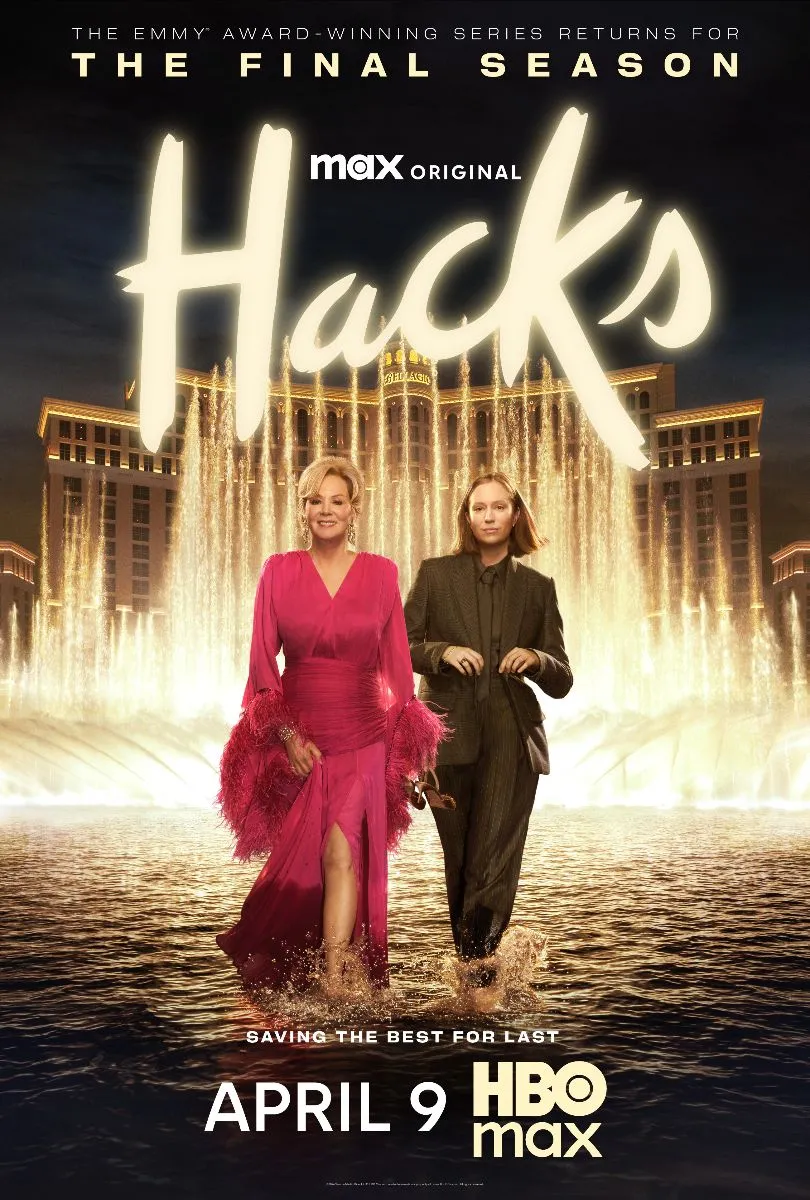
- Title: Hacks (2021)
- Director: Lucia Aniello, Desiree Akhavan
- Writer: Lucia Aniello, Paul W. Downs, Jen Statsky
- Country: USA
- Genre: Black Comedy, Drama
- Running Time: Approx. 26–38 minutes per episode
- Platform: Max (Wavve)
- Cast: Jean Smart (as Deborah Vance), Hannah Einbinder (as Ava Daniels), Lorenza Izzo (as Ruby Rojas)
📖 Hacks: A Strange Accompaniment Sparked by Ambition and Deficiency [No Spoilers]
Ava, a young comedy writer on the verge of exile after losing her career in LA due to a reckless single tweet, is hired as a writer for Deborah Vance, a legendary stand-up comedian in Las Vegas. Deborah is also fighting a lonely battle to defend her position amidst rapidly changing trends.
Clashing violently from the moment they meet due to generational gaps and conflicting values, the two paradoxically discover each other’s humorous genius within the sharp venom that seems meant to destroy one another. Ava sees the deep isolation hidden behind Deborah’s glamorous exterior, and Deborah recognizes the creative conflict and desire masked by Ava’s prickly demeanor.
In a cycle of wounding each other, firing, and reuniting, their collaboration transcends simple business to face a massive turning point that fundamentally shakes their entire lives.
🎵 The Grand Gravity of Deborah Proved by the Breakup with Ruby
In Ava’s life, her relationship with her ex-girlfriend Ruby Rojas functions as a mirror proving the sheer scale of Deborah’s presence. Ava seeks Ruby whenever she is lonely, craving a stable relationship, but her mental world is already dominated by the immense gravity of Deborah.
Rendering even couples therapy useless, Ruby’s declaration—”You’re not dating me, you’re dating Deborah”—is a pivotal passage showing that Ava’s obsession has surpassed a mere employment relationship. Even while suffering the humiliation of having a past private proposal anecdote exposed in the public space of a talk show to become gossip, Ava fails to escape Deborah’s orbit.
This relational structure implies that a conventional romantic relationship with another person has become impossible for Ava, indelibly imprinting the fact that no other human being can provide her with equivalent emotional stimulation besides Deborah.
💬 The Form of True Love Exposed by the Farce of Fake Dating
The “Fake Dating” commotion the two stir up in the final season is the most honest metaphor hidden within this work. In a performance initiated to erase surrounding suspicions, the memories of their first meeting that the two casually utter follow the exact syntax of a perfect romance film.
Ava’s teeth-gritting over-investment and Deborah’s sly compliance go beyond simple comedic devices to expose the substantial essence of the relationship they share. The sharp question from those around them—”Why do you still care about that woman’s bedsheet brand?”—points to the brutal possessiveness and intimacy hidden behind the contract they hold.
The sincerity that paradoxically leaks out in the process of deceiving each other and scamming the world proves that this fake dating was, in fact, the most honest form of confession.
🔎 Reinterpretation of the Ending: An Eternal Accompaniment Engraved on the Road to Paris
The ending in the final chapter, where the two head to Paris together after weathering all storms, does not signify mere business success or compromise. The conclusion reached by these two individuals, scarred through countless betrayals, blackmail, and power inversions, is a stage of perfect unification—an admission that neither their lives nor their careers can be completed without the other.
Deborah’s confession, “Since meeting you, I don’t need fans anymore,” and Ava’s tearful response demonstrate that each other’s existence has become salvation rather than the world’s validation. They held weapons to pierce each other to protect their secular dignity, but they ultimately accept that even those weapons have become chains binding them together.
The relationship between Deborah and Ava is the most bizarre yet beautiful form of love, one that can only be reached by passing through destructive love and hate.
❓ On Hacks’ Mode of Female Representation and Ending Interpretation
Q. Could there not be criticism that Deborah and Ava’s toxic relationality and narrative of betrayal undermine female solidarity?
For audiences expecting typical sisterhood or unconditional support, the blackmail and wounding between the two may cause discomfort. However, this work does not preserve female characters as flawless, moral entities. Instead, it exposes raw the desires of women who had to become monsters to survive in the male-centric comedy industry. By subsuming even objectionable traits as human deficiencies, it achieves an aesthetic triumph in building a “partnership of mutual understanding” that is sturdier than unconditional solidarity.
Q. Is the ending where Ava relinquishes personal romantic relationships, including Ruby, to choose Deborah ultimately an interpretation that justifies workaholism and isolation?
The process in which Ava defers personal relationships and chooses her career may appear lonely on the surface. However, this is a structural device showing that Ava, who previously sought stability by depending on others, has entered an adult stage where she takes responsibility for her own desires. Because the relationship with Deborah is not simple “work” but a conduit through which she validates her own identity, it is appropriate to interpret Ava’s choice as autonomous expansion rather than isolation. Do you, the readers, think this choice of Ava’s was an inevitable price for growth, or the beginning of another isolation?
✨ Hacks: A Record of Two Women Who Transcended All Global Languages to Become Each Other’s Abyss
The final chapter of the drama Hacks is not a simple success story, but a majestic narrative depicting the process in which two lonely souls destroy and rebuild each other’s worlds, finally possessing one another entirely. This work quietly delivers a truth to modern society about how painful yet brilliant it is to connect with another, and that the entity completing me is ultimately the single person who has gazed into even my ugliest sides. The strange devotion shown by Deborah and Ava proves that a brutal understanding can be a more intense salvation than unconditional kindness.
💬 Amid Venomous Words More Intense Than Silence, What Kind of Connection Do You Dream Of?
Sometimes, sharp venom that precisely pierces my flaws makes me breathe deeper than gentle comfort. When confronting a brutal bond where individuals wound each other yet ultimately cannot let go of each other’s hands, like Deborah and Ava, what emotions do you feel? Have you discovered that single companion who will shake and ultimately complete your life? Please share your story in the comments.
🔮 Another Depth of Female Narrative Suggested by Violet Screen
- Dead to Me (2019–2022) — Netflix
- Reason for Recommendation: A black comedy drama where Jen, who lost her husband, and Judy, who harbors a secret, share their grief and rapidly become addicted to each other. Despite a relationship stained with lies and betrayal, the bizarre interdependence—where neither can sustain life without the other—closely resembles the dynamic between Deborah and Ava in Hacks, offering an exquisite, taut tension that moves between crime and humor.
- Deadloch (2023–) — Prime Video
- Reason for Recommendation: A black comedy crime drama depicting the brutal dissonance and solidarity of two female detectives who team up to solve a series of murders in a quiet Australian town. The relationship between Dulcie, a local detective with a controlling instinct, and Eddie, an abrasive and destructive outside detective, mirrors the polar tension shown by Deborah and Ava in Hacks. It is a well-made investigative drama characterized by complex emotional lines and sharp satire, where they thoroughly loathe each other’s methods yet have no choice but to rely heavily on one another to approach the essence of the case.
To provide a more stable publishing environment, multilingual content, and better communication with our readers, we have moved our official publication to Substack.
All new film reviews and critical essays will be published on our new platform. This website will be closing down soon, so we would greatly appreciate it if you subscribed to our new space.
TODAY'S QUESTION
What's your favorite line from a WLW movie or show?
Your answer isn't saved. Feel free to share it in the comments below.


You May Also Like
Abby Parker in The Deuce: Reclaiming Agency from the Streets of Desire
Motherland: Fort Salem Review: A Narrative of Salvation Born on the Border of Life and Death