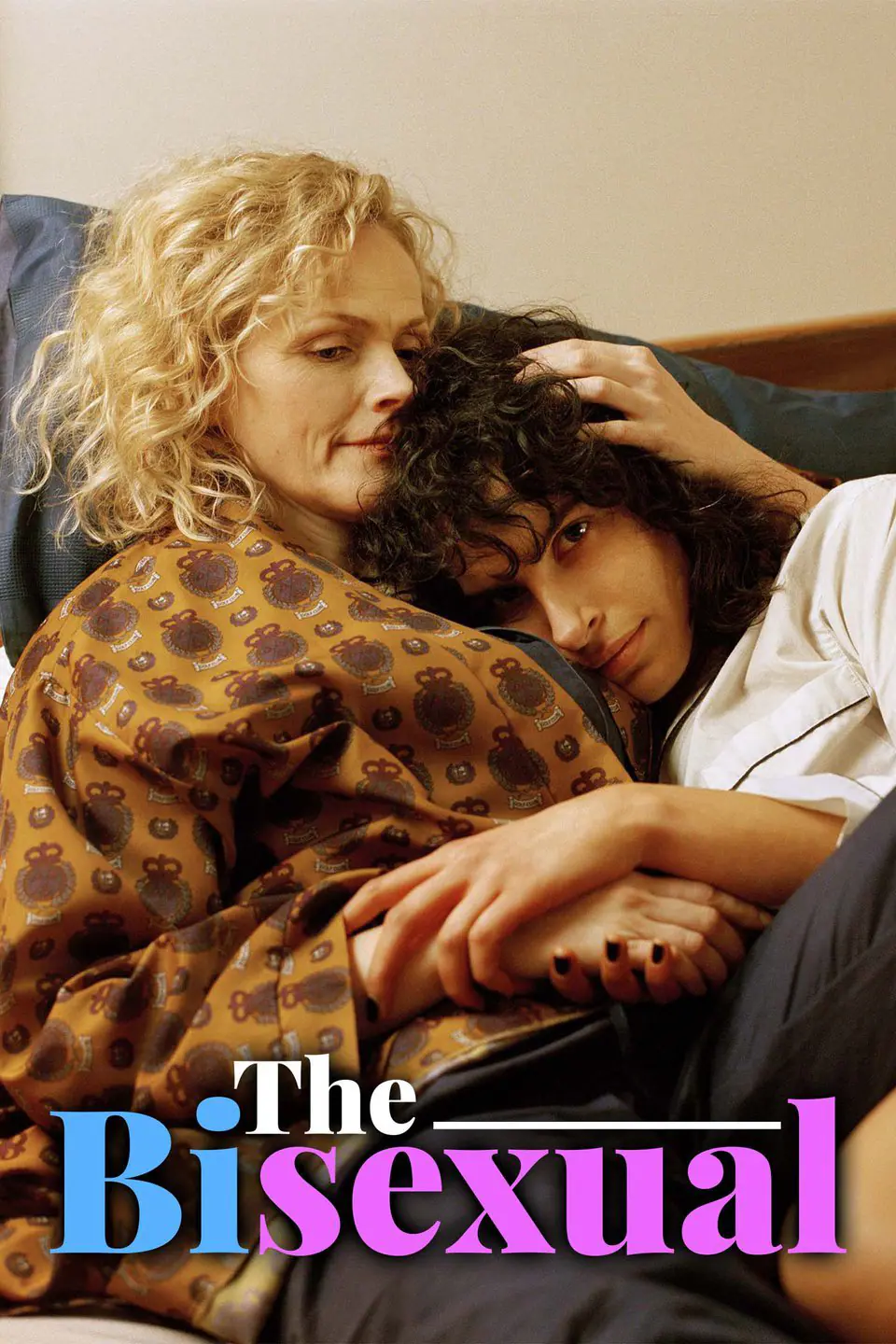
The Bisexual: Reconstructing Isolation at the Borders of Identity
Much like the moment one’s own reflection becomes a stranger in the mirror, we sometimes find ourselves lost in the face of desires we believed we understood best. When the fortress of identity, painstakingly built over a decade, collapses due to a single unfamiliar attraction, what flows through the resulting cracks is perhaps not betrayal, but a long-delayed cry toward one’s authentic self.
🌿 Moments When This Drama Resonates Deeply
- When you feel a void as if every modifier that once defined you has vanished instantly following a breakup with a long-term partner.
- When you confront the subtle shame that arises when your instincts clash with the rules of the community to which you belong.
- When you experience an identity crisis in your 30s—an age meant for “completed adulthood”—that feels more agonizing than adolescence.
- When you seek a reason to break through the prison of others’ gazes and begin carving out your own truthful trajectory.
I recommend this work to those who have experienced the end of love not as hatred, but as a “loss of direction.” It is a record for those who have decided to willingly get lost in order to find a more precise word to describe themselves, rather than settling for the comfort of stability.
🎞 Notes Before Viewing
This work frankly and unreservedly depicts physical contact and sexual discourse in the process of exploring adult female sexuality and identity confusion. However, these elements do not serve as mere provocative devices; they function as narrative tools to delve into the characters’ internal deficiencies and the essence of their relationships, presenting a deeply emotion-centered progression.
🎬 Drama Information
- Title: The Bisexual (2018)
- Director: Desiree Akhavan
- Screenplay: Desiree Akhavan, Rowan Riley
- Country: UK, USA
- Genre: Comedy Drama, Exploration of Sexual Identity
- Running Time: Approx. 30 minutes per episode (6 episodes total)
- Platform: Channel 4, Hulu
- Cast: Desiree Akhavan (as Leila), Maxine Peake (as Sadie), Brian Gleeson (as Gabe)
📖 The Bisexual Synopsis: The Start of Unfamiliar Desire Shaking Ten Years of Stability [No Spoilers]
Leila and Sadie have sustained a steadfast love for ten years while co-running a fashion-tech startup in London. Their relationship, a perfect harmony of private companions and public partners, encounters an unexpected rupture following Sadie’s sudden marriage proposal.
Unlike Sadie, who dreams of stable settlement and starting a family, Leila feels suffocated by the prospect of a fixed future and declares a hiatus in the relationship. Moving out of their shared home and into the flat of a new housemate, Gabe, Leila becomes acutely aware of a long-suppressed sexual curiosity toward men, falling into a state of confusion.
Caught between the guilt she feels toward Sadie—whom she still loves—and the judgment of friends and a community that has always defined her as a “gold-star lesbian,” Leila begins to navigate awkward heterosexual dating. As the stigma of betraying her familiar world clashes with her longing to find her true self, Leila’s life is pulled into the agonizing, yet comedic, throes of a second puberty.
🧭 The Collapse of a Familiar World and the Solitary Interpretation of the “Marginal Person”
The Bisexual does not merely focus on the process of changing one’s sexual orientation. Rather, it tenaciously tracks the fragments that scatter when a social ego, constructed over a decade, crashes into primal internal desires.
For Leila, the lesbian community was not just a group, but the very foundation of her life. However, the moment she confesses her attraction to men, friendship turns into surveillance and solidarity is replaced by censorship. The “bi-phobia” depicted within the queer community incisively dissects the logic of hierarchy and exclusion that exists even among sexual minorities. Leila experiences the isolation of a marginal person who belongs nowhere, treated as a queer by heterosexuals and a turncoat by lesbians.
Ultimately, the question this work poses is not “Whom do you love?” but “Can you exist as yourself even after stripping away the labels defined by others?” Leila’s wandering serves as painful evidence that identity is not a fixed destination, but a constantly shifting process.
🏚 Inertia of Relationship vs. Expansion of Self: The Rupture with Sadie
The conflict with Sadie stems from a difference in the “tempo of life” that transcends issues of identity. Sadie’s desire for stability and procreation as she nears her 40s is entirely justified, but for Leila, it feels like an act of castrating the possibilities of a self not yet fully explored.
The two remain entangled as business partners even after their breakup, which serves as a cruel device forcing them to witness each other’s changes from the closest possible distance. Sadie’s preparation for pregnancy via a sperm bank is a declaration of building a future without Leila. Leila’s subsequent instability exposes the human contradiction of struggling between the inertia of love and the emergence of a new self.
The work does not choose the easy comfort of a reunion. Instead, it forces a long, hard look at the devastating crack that had to occur precisely because they loved each other.
🔎 Reinterpretation of the Ending — Not Total Union, but a Declaration of Irreversible Independence
The ending of The Bisexual rejects the grammar of traditional romance. While Leila and Sadie confirm their deep affection for one another, they acknowledge that the life trajectories they have chosen have already diverged too far to include the other. Sadie’s attempt at pregnancy and Leila’s belated confession miss each other like two parallel lines that cannot intersect.
This conclusion finalizes the irreversible crack left in their relationship while simultaneously announcing that Leila has finally begun a life as an “independent entity” rather than “Sadie’s partner.” What she has gained is not a definitive certainty of sexual identity, but the courage to say “I don’t know” and the existential freedom to live without a predetermined label.
Ultimately, true growth is completed when one willingly endures the pain of destroying a past sanctuary to stand alone.
💬 Interpretation of Intra-Queer Exclusivity and the Fluidity of Identity
Q. Why does the lesbian community view Leila’s bisexuality negatively?
The work points out that the “clarity of identity” established by queer communities to resist external oppression can sometimes become another form of internal oppression. Leila’s change is perceived as a “dangerous ambiguity” that blurs the community’s militant clarity. This reveals a critical perspective on the norms of “normalcy” that exist even within marginalized groups.
Q. Regarding critiques that Leila’s choices feel somewhat selfish or frustrating?
The perspective that criticizes the protagonist’s decisions usually arises when the stability of the relationship is placed as the highest value. However, director Desiree Akhavan intentionally crafted Leila as an “imperfect character.” Her frustration acts as a mirror reflecting the immaturity of self-exploration inherent in all of us. The work asks to be understood not as a series of selfish choices, but as a desperate struggle to escape self-deception.
✨ The Bisexual: A Tribute to All Desires That Cannot Be Named
This drama redefines coming out not as the terminus of a narrative, but as the starting point of a long journey to find an ever-changing self. Through the sexual wandering of a woman in her 30s, what we witness is not merely an individual’s dating history, but the dignity of a human being resisting the violence of “consistency” imposed by society.
Identity is not a tag meant to be shown to others; it is an unfinished sentence that must be rewritten every single morning.
🎡 Is Your “Label” Doing Well?
Have you ever locked your true desires in a box for the sake of a stable sense of belonging? Between the silence within a perfect sense of belonging provided by a community and the incomplete truth faced while standing alone, which would you choose?
📽 Violet Screen Recommendations: Other Waves of Female Narrative
- Feel Good (2020–2021): Covers the passionate love, addiction, and identity confusion between stand-up comedian Mae and George, who has lived as a heterosexual. It offers an even faster-paced and more harrowing emotional rollercoaster than The Bisexual.
- Work in Progress (2019–2021): Captures the humorous yet heartbreaking reflections of Abby, a 45-year-old “self-identified fat, queer dyke,” as she meets a younger trans man. A masterpiece that delicately portrays generational differences in queer discourse.
To provide a more stable publishing environment, multilingual content, and better communication with our readers, we have moved our official publication to Substack.
All new film reviews and critical essays will be published on our new platform. This website will be closing down soon, so we would greatly appreciate it if you subscribed to our new space.
TODAY'S QUESTION
What's the most memorable new release you watched this year?
Your answer isn't saved. Feel free to share it in the comments below.


You May Also Like

Analysis and Review: A Tender Record of ‘Isolation’ and ‘Solidarity’ Retreived from the Sea of Loss
Acacias 38: A Narrative of Two Women Who Bloomed Taboo Desire into Art in 1910s Spain