Bad Girls: A Deep Analysis of Desire and Power Dynamics Beyond the Forbidden
Love sometimes transforms us by penetrating the most formidable walls—not only physical barriers but the internal walls of social status and moral convictions we build ourselves. Bad Girls, which expanded the horizons of British television in the late 1990s, does more than depict conflict within a prison; it portrays the agonizing yet brilliant process of two women gazing into each other’s souls to find their true essence.
🌿 Moments When This Drama Especially Resonates
- When you wish to experience the moment a social “uniform” that defines one’s identity becomes powerless in the face of love.
- When you want to witness the process of intellectual confrontation forming an emotional bond more intense than physical attraction.
- When you long for the noble devotion of someone willing to relinquish their entrenched privileges to save another.
- The reason to read this review to the end is to understand the structure of solidarity and love of the highest order, blooming from the lowest of places.
🎞️ Note Before Watching
While this work realistically depicts the violence and power struggles inherent in the unique environment of a women’s prison, at its core, it is a human drama focused on the psychological bonds and emotional connection between characters.
🎬 Series Information
- Title: Bad Girls (1999–2006)
- Director: Mike Adams, Laurence Moody, et al.
- Screenplay: Maureen Chadwick, Ann McManus
- Country: 🇬🇧 United Kingdom (UK)
- Genre: Drama, Crime, Romance
- Running Time: 8 Seasons (107 episodes total)
- Platform: ITV (UK); check local OTT services for availability
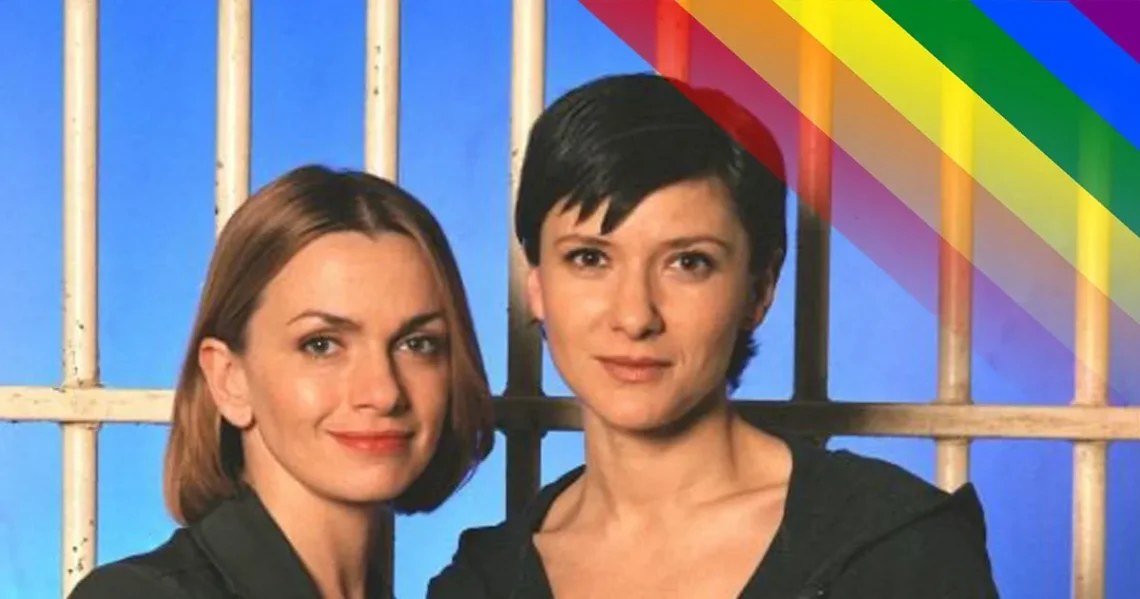
- Cast: Simone Lahbib (as Helen Stewart), Mandana Jones (as Nikki Wade)
📖 Bad Girls: A Narrative of Intellectual Longing and Solidarity Breaking Prison Rules [No Spoilers]
G-Wing of Larkhall Women’s Prison near London. Helen Stewart, a young and idealistic Wing Governor newly appointed to the wing, strives to treat prisoners as human beings with dignity rather than objects of control. The figure who captures her attention is Nikki Wade, a woman serving a life sentence for the murder of a policeman.
Nikki is a rigid and intellectual figure revered as a leader among the inmates, yet she harbors a deep distrust of the system. Initially skeptical of Helen’s sincerity, Nikki gradually aligns with her reformist will, and the two confirm their isolated inner worlds through intellectual dialogue.
Helen, whose stable fiancé and professional success are guaranteed, begins to experience cracks in her identity upon meeting the uncontrollable variable that is Nikki. Meanwhile, conflicts with corrupt officers seeking to seize power within the prison push the two into a community of fate beyond mere cooperation. Before the massive barriers of class and regulation, their relationship begins a precarious tightrope walk between destruction and salvation.
🔒 Bad Girls Analysis: The Collapse of Power Dynamics Between Uniforms and Prison Blues
The core engine of Bad Girls lies in the subversion of status demonstrated by Helen and Nikki, the couple known as ‘Hikki.’ Helen, the officer, possesses physical freedom but is an emotional prisoner suppressed by social norms and her engagement. Conversely, Nikki is physically confined but remains a mentally free person, honest about her desires and identity.
Analyzing their relational structure, the initial stage where Helen attempts to “save” Nikki gradually shifts toward Nikki liberating Helen’s repressed self. The highlight of this narrative is the realization that the uniform Helen wears is not a symbol of authority, but a mask used to hide her truth. Ultimately, love becomes the most powerful political act, replacing vertical power structures with horizontal human relationships.
🌊 Gain Through Loss: Helen Stewart’s Social Suicide and the Rebirth of Identity
A key point in this in-depth analysis is Helen’s choice. By Season 3, Helen resigns from her position as an officer—her professional honor and livelihood—to aid Nikki’s appeal. This is not mere sacrifice; it is a decisive act of discarding the “normal society” persona that imprisoned her.
The work shows that by losing everything, Helen finally stands on equal footing with Nikki. The corrupt power structure within the prison, represented by Jim Fenner, attempts to leverage their relationship as a weakness, but the moment Helen voluntarily relinquishes her power, that blackmail loses its force. This female narrative of abandoning social status for desire presented an aesthetic of autonomous decision-making rarely seen in mainstream media at the time.
🔎 Reinterpreting the Ending: The Weight of True ‘Freedom’ Beginning Outside Prison Gates
The finale of Bad Girls Season 3—Nikki’s release and their reunion on the streets of London—is not a simple romantic comedy happy ending. This conclusion declares that the social stigma of “officer and inmate” previously existing between them has been completely erased, allowing them to finally face each other as raw human beings.
Helen lost her career and stable future but gained her true self in Nikki; Nikki gained physical freedom alongside the restoration of trust in others, which had been stained by betrayal. Their union is not a compromise within the establishment, but a victory snatched by departing from it. Their reunion kiss is a rite of complete unification, breaking down all past wounds and class barriers. The work specifies that while the reality they face after the ending will still be cold, hardships chosen by oneself are more noble than a tranquility imposed by others.
💬 Bad Girls: Why Do We Still Remember the Women of Larkhall?
Q. Is there no risk of a romance between an officer and an inmate glamorizing crime or appearing as an abuse of power?
From a modern perspective, the relationship between an officer and an inmate certainly involves serious ethical flaws and an imbalance of power. Indeed, Helen constantly agonizes over this point within the drama, focusing more on restoring Nikki’s legal rights than using her position to control her. By revealing the precariousness of this relationship without hiding it, the work uses it as an aesthetic device to maximize the desperation of a love that breaks such taboos.
Q. Why is a work from the 90s still called a ‘classic of female narrative’ today?
Unlike much of the media at the time, which used lesbian relationships as disposable devices for the male gaze, Bad Girls confronted the psychological depth and social struggles of two women head-on. In particular, Helen’s coming-out process and Nikki’s legal battle transcend simple romance to touch upon universal themes of women’s human rights and self-actualization, resonating effectively with contemporary audiences.
✨ Bad Girls, A Testament to Love Faced with an Open Heart Before Closed Doors
This work is ultimately a long answer to the question, “What is true freedom?” Helen and Nikki personally proved that what is more terrifying than the confinement of physical space is the internal prison of deceiving one’s own feelings. The essence of a relationship is not possessing one another, but the solidarity itself that clears away all obstacles blocking the path toward each other.
🕊️ Between Silence and Outcry, What Choice Will You Make?
Are you ready to willingly give up all the social achievements you have built to save the person you love? Or are you perhaps still turning away from the truth within the safe fence the world has set for you? I encourage you to ask yourself.
📽️ Violet Screen Recommendation: Female Narratives to Sustain the Lingering Depth of ‘Hikki’
- Vigil (2021): Covers a mystery occurring within the confined space of a submarine and the complex, subtle relationship between two female detectives hidden within. Intense thriller elements and delicate emotional lines coexist.
- Ana by Day (Ana de día, 2018): The story of a woman who discovers a doppelgänger identical to herself and sets off to find freedom, leaving her life in the double’s hands. A dreamy Spanish film exploring the discovery of self and the essence of relationships.
To provide a more stable publishing environment, multilingual content, and better communication with our readers, we have moved our official publication to Substack.
All new film reviews and critical essays will be published on our new platform. This website will be closing down soon, so we would greatly appreciate it if you subscribed to our new space.
TODAY'S QUESTION
Which character has comforted you lately?
Your answer isn't saved. Feel free to share it in the comments below.


You May Also Like
Tipping the Velvet: A Journey of Losing and Finding Oneself on the Stage of Desire

Pretty Little Liars: Original Sin — Summer School: Dangerous Solidarity Born of Trauma