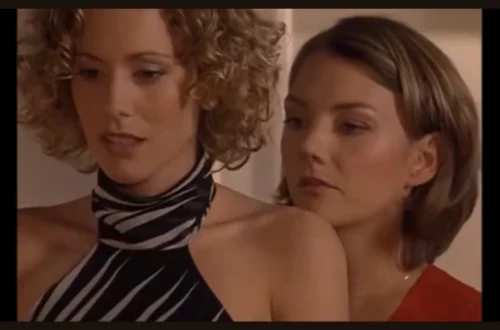
Wentworth Ending Explained and the Redemption of Franky & Bridget: A Narrative of Liberation for Isolated Souls
Humans often verify their own form through the mirror of another’s gaze. However, if that mirror is a prison filled with cold iron bars and distrust, the reflected image can only ever be that of a distorted monster.
True change begins not from an enemy seeking to destroy you, but from the presence of a single person who truly ‘gazes’ into your ugliest depths. The relationship between Franky and Bridget in Wentworth is a record of the miracle created by that very gaze.
🌿 Moments When This Drama Deeply Resonates
- Nights when you wish to escape the labels defined by the world and find your true self.
- When you want to believe in the power of a love so desperate and sublime it collapses the walls of power and class.
- When you are curious about the process of a wounded healer and a prisoner with a destructive interior completing one another.
- The reason to read until the end: Beyond simple romance, this article provides a complete analysis of the psychological mechanisms of how a human being reconstructs themselves (Redemption) using another’s trust as an engine.
🎞 Note Before Viewing
While this work depicts the violence and tension within the prison without filter, the saga of Franky and Bridget unfolds around intense ‘psychological fluctuations’ and ’emotional communion’ rather than physical action.
🎬 Drama Information
- Title: Wentworth (2013–2021)
- Director: Kevin Carlin, Catherine Millar, et al.
- Screenplay: Lara Radulovich, David Hannam, et al.
- Original Work: Drama Prisoner (Created by Reg Watson)
- Country: Australia
- Genre: Crime, Drama, Thriller
- Running Time: Seasons 1–9 (100 episodes total)
- Platform: Netflix
- Cast: Danielle Cormack, Nicole da Silva, Libby Tanner, Pamela Rabe
📖 Wentworth: Forbidden Resonance Behind Bars and the Longing for Freedom [No Spoilers]
Francesca “Franky” Doyle, a charismatic inmate and powerhouse within Australia’s notorious women’s prison ‘Wentworth,’ is a character who hides profound deficiency and intellect beneath a rough exterior. The stagnant air begins to fluctuate when Bridget Westfall, a new prison psychologist, appears before her.
Bridget approaches Franky not as an object of control, but as a soul in need of healing. Franky, feeling a sense of bewilderment at the respect and understanding she has never experienced in her life, gradually opens her heart. However, the ethical line between prisoner and counselor—which must never be crossed—and the power struggles within the prison constantly push their relationship to the brink. In a heartless space where love becomes a weakness, the two women begin a precarious gamble to protect each other against the destructive nature of the system.
🔗 Subverting Power Dynamics: Equal Subjectivity Born in the Sanctuary of the Consulting Room
The relationship between Franky and Bridget in Wentworth is exceptional because it neutralizes the rigid power structure of the guard (the system) and the prisoner (the subjugated). Bridget relinquishes the professional superiority inherent in being a counselor and acknowledges Franky’s intellect, elevating her to the status of an equal partner in dialogue.
In this process, the boundaries of Transference and Counter-transference become blurred. Bridget deconstructs her own ethical defense mechanisms as she witnesses Franky’s vulnerability, while Franky recovers her ego as a ‘human’ rather than a ‘criminal’ through Bridget. This is the product of a craving for the interpretation and recognition of the soul, far transcending simple physical attraction.
🕊 ‘Hot Girl in a Hot Car’: Visualization of Desire and the Intersection of Social Redemption
The phrase “Hot girl in a hot car” that Franky habitually uttered was not a simple sexual fantasy. It was a metaphor for ‘freedom’—a mundane daily life outside the walls where one can go anywhere without interference. Bridget becomes the concrete medium that pulls that metaphor into reality.
Through her relationship with Bridget, Franky learns to commute her destructive impulses into intellectual energy and responsibility. This marks the completion of a crucial character arc within the narrative structure; Franky’s development into a legal professional proves that Bridget was not merely a lover, but a facilitator who reconstructed her social self. The tranquility they achieve by the ending is a result of voluntary evolution driven by love, rather than a reformation forced by the system.
🔎 Reinterpreting the Ending — A Noble Union Reached Through Trials
When Franky is framed and re-incarcerated, their relationship faces the threat of annihilation. However, this crisis serves as a decisive device that tests Bridget’s devotion and Franky’s growth. Bridget throws away her professional career and social reputation to fight for the proof of Franky’s innocence. This is a sublime decision to choose ‘faith’ between humans over the ‘rationality’ of a professional.
The scene where Franky, finally cleared of all charges and a free woman after a pursuit and escape, reunites with Bridget is the most brilliant moment of light, cutting through the darkness that permeates all of Wentworth. This ending goes beyond the mere fact of their reunion; it declares that social stigma and systemic oppression can never destroy a genuine bond.
Franky finally learned to forgive herself through Bridget, and Bridget discovered the vitality of life existing beyond the rules through Franky. Their union is an event where two deficient universes meet to create one whole world. The love between these two is the period that severs the chronicle of punishment designed by the system and proclaims the victory of human dignity.
💬 Ethical Issues and Interpretation of the ‘Fridgit’ Couple in Wentworth
Q. Isn’t the romance between a counselor and an inmate a violation of professional ethics?
From a realistic perspective, Bridget’s actions are a clear violation of professional ethics and a transgression of professional boundaries. Within the drama, Joan Ferguson relentlessly attacks this point to destroy Bridget. However, this work places more weight on ‘human redemption’ than ‘legal justice.’ Bridget’s violation is depicted as an inevitable choice to save a soul abandoned by the system, prompting viewers to ask the heavy question: “Is it love, not the law, that ultimately saves the human being whom the institution could not?”
Q. How should we interpret Franky’s actions in excluding Bridget during her escape?
The fact that Franky lied to Bridget and acted unilaterally to prove her innocence was not an expression of distrust, but an manifestation of an extreme protective instinct. It was Franky’s characteristically clumsy way of preventing the person she loved from becoming embroiled in a crime because of her. The sense of alienation Bridget felt and her subsequent struggle with alcohol dependency show that their relationship is not a perfect fantasy, but a realistic one involving conflict and hurt. This imperfection actually makes their final reunion all the more valuable.
✨ Wentworth, A Record of Burning Solidarity That Melted Cold Iron Bars
Wentworth asks us: when you have fallen to the very bottom, do you have a single person who will not give up on you and will believe in you until the end? The saga of Franky and Bridget shows how that trust changes a person’s fate and blossoms as a flower of hope within a rotting system. Their love is not a simple play of emotions, but the result of a fierce struggle fought by staking each other’s very existence.
True freedom is completed not when the prison gates open, but when you offer your heart to someone who understands you completely.
🗨️ A ‘Moment of Salvation’ That Knocked on Your Heart
Have you ever had an experience where someone’s unconditional trust completely transformed your life? Or are you still waiting for someone to take you away in a ‘hot car’?
Do you believe true redemption comes from one’s own will, or from the love of another?
📢 Violet Screen’s Recommendations: Other Narratives of ‘Salvation and Solidarity’
- Orange Is the New Black – The raw reality of prison life and the complex chronicle of women’s solidarity seen through the love-hate relationship of Alex and Piper.
- Killing Eve – A destructive and beautiful relay between two women who expand their sense of self while obsessing over each other in the dangerous relationship of hunter and target.
To provide a more stable publishing environment, multilingual content, and better communication with our readers, we have moved our official publication to Substack.
All new film reviews and critical essays will be published on our new platform. This website will be closing down soon, so we would greatly appreciate it if you subscribed to our new space.
TODAY'S QUESTION
Is there a film whose ending you wish had gone differently?
Your answer isn't saved. Feel free to share it in the comments below.


You May Also Like

Love Bully: Finding the Most Realistic Solace Between Social Prejudice and the Proof of Love

Blank The Series: An Interpretation of the Thai GL Drama—A Brilliant Fissure Bloomed from Suppressed “Desire”