
Bilitis (1977) — A Cruel Fairy Tale of Loss and Growth Hidden Beneath an Aesthetic Gaze
The summer of adolescence always generates asymmetrical desires. The first “other” that an immature ego encounters becomes both a mirror reflecting oneself and an unattainable utopia.
Bilitis is a film that captures, through an aesthetic camera lens, the sexual awakening and relational collapse a young girl experiences in the midst of that brilliant yet cruel season. Moving beyond mere visual indulgence, this film traces the melancholy trajectory of how the illusion of love shatters under the weight of reality.
🌿 Moments When This Film Resonates Deeply
- When you want to reject androcentric modes of desire amid an identity crisis and discover your own senses
- When you want to peer into the psychological fractures where admiration for a mature being mutates into love and obsession
- When you want to confront the loneliness of relationships hidden behind gorgeous visuals and the sorrowful flip side of coming-of-age
Ultimately, the reason to read this piece to the end is that it sharply deconstructs the power structures and emotional limitations of solidarity between two women, elements long obscured within images dismissed as mere eroticism.
🎞 Pre-Viewing Notes
This film sensually depicts the female body by utilizing the painterly, soft-focus technique characteristic of 1970s cinema. While the surface-level explicitness is high, it is an aesthetic romance drama that focuses on the emotional undercurrents and nuanced relationships between characters rather than provocative sexual depictions.
🎬 Film Information
- Title: Bilitis (1977)
- Director: David Hamilton
- Screenplay: Catherine Breillat, Robert Mancione, Jacques Nahum
- Original Work: Pierre Louÿs’s poetry collection Les Chansons de Bilitis
- Country: France
- Genre: Romance, Drama, Erotic
- Running Time: 95 minutes
- Platform: Wavve, Watcha (Individual verification required)
- Cast: Patti D’Arbanville, Mona Kristensen, Bernard Giraudeau, Gilles Kohler
📖 Bilitis, the Clumsy First Love of a Blue Summer and the Trajectory of Divergent Desires [No Spoilers]
Escaping the suffocating routine of her boarding school, a young girl named Bilitis stays at the luxurious villa of a beautiful woman, Melissa, for summer vacation. There, Bilitis witnesses Melissa suffering due to her harsh and violent husband, Pierre, prompting deep compassion alongside an intense homoerotic attraction.
Simultaneously, Bilitis forms a romantic relationship with Lucas, a gentle photographer she meets on the beach, yet Melissa remains firmly at the center of her heart. While the husband is away, the two women share profound emotional and physical intimacy, forging a secret bond.
Caught between an immature altruism—a desire to rescue the unhappy Melissa—and her complex feelings toward Lucas, Bilitis makes a dangerous choice that disrupts the relationships among the trio, stepping directly into the zenith of summer.
🔮 The Power Structure of the Gaze Hidden Behind Dreamy Pastel Tones
Director David Hamilton’s signature soft focus blurs the boundaries of the characters, investing the film with a dreamlike quality. However, the perspective of Catherine Breillat, who participated in the screenplay, embeds a sharp power dynamic of the gaze within this aesthetic landscape.
In the early stages, Bilitis remains strictly an observer and an object onto which the desires of others are projected. The moment she rejects the playful antics of her boarding school peers and declares, “I don’t want to kiss a man,” she diverges from the heteronormative order of established society.
Melissa’s life, which Bilitis witnesses at the villa, represents the misery of a woman crushed by patriarchal power. By observing Melissa, Bilitis learns an autonomous desire that transcends mere admiration.
✨ Bilitis and Melissa: Illusion and Reality Formed by Mirror Neurons
The intimacy between the two women is based not merely on physical attraction, but on a psychological mirror effect through which they seek to fill each other’s deficiencies. Melissa discovers in Bilitis the gentleness and purity she failed to find in her violent husband, Pierre, while Bilitis sees in Melissa the concrete manifestation of the mature femininity she wishes to attain.
The communion that takes place between the two in the space vacated by Pierre serves as a temporary sanctuary and a zone of solidarity away from the oppressive patriarchal system. However, this solidarity is nothing more than a fragile illusion established by shutting out the threats of the external world.
Bilitis makes a misguided move by bringing in Lucas—an external male figure—as a proxy to resolve Melissa’s pain, failing to realize that this immature savior complex will eventually become an instrument of self-destruction.
🔎 Reinterpretation of the Ending: The Eternal Fracture Left by Cruel Altruism and the Birth of the Subject
In the latter half of the film, Bilitis’s choice to connect Lucas and Melissa appears on the surface to be an altruistic concession for Melissa’s happiness. In reality, however, it is an act of evasion and catastrophe committed by an immature ego unable to bear the weight of its own desire.
Bilitis’s gaze as she witnesses the two making love constitutes the most brutal moment of awakening in the film. By becoming a thoroughly marginalized outsider in the narrative of salvation she created herself, she swallows the grim bitterness of growth instead of the sweetness of first love.
This ending leaves an irreversible, eternal fracture between the two women, causing Bilitis to lose the childhood sense of omnipotence that drove her to recklessly intervene in another’s suffering. She returns alone to her boarding school room, staring into the mirror as she reminisces about the summer.
The loss Bilitis experiences is both the collapse of a fantastical paradise and a rite of passage that frees her from the desires of others, finally forcing her to confront her ego as an independent individual.
💬 Interpretations: Aesthetic Indulgence vs. Re-enactment of the Patriarchal Gaze
Q. How do you view the criticism that the narrative is weak and focuses solely on visual stimulation?
A. The criticism that this work relies on emotional undercurrents and aesthetic imagery rather than narrative causality is valid. For audiences expecting a linear plot or dramatic conflict, it may appear tedious or like a sequence of empty visual effects. However, this should be interpreted as an directorial intention to poetically visualize the ambiguous, formless desires of adolescence rather than to build a narrative framework. Instead of concrete dialogue, the film uses Francis Lai’s music and dreamy lighting to sensually weave the unverbalized interiority of a young girl. It can be evaluated as an aesthetic attempt to do so, and appreciation will depend on one’s capacity to resonate with this atmosphere.
Q. What significance does the screenplay participation of female director Catherine Breillat hold?
A. Some critics point out that the visuals, directed through the lens of a male photographer, objectify women. However, the narrative structure shaped by Catherine Breillat serves as an axis that protects Bilitis’s autonomous desire and sexual confusion from being consumed as mere voyeuristic objects. Bilitis attempts to assert dominance or expresses aversion in her relationships with men; conversely, she undergoes active emotional shifts in her relationship with Melissa. The psychology of a young girl conflicted between patriarchal oppression (Pierre), a gentle alternative (Lucas), and an alluring ideal (Melissa) is precisely what provides a multi-dimensional female narrative that transcends simple male fantasy, presenting the audience with an open question about the subjectivity of the gaze.
✨ Bilitis, the Sorrowful Aesthetics of Growth Blooming Where Illusions Shatter
The bitter ending of Bilitis reflects the inherent human limitation that one can never entirely save or possess another person. Bilitis’s blind love and solidarity toward Melissa are thwarted when they collide with the wall of patriarchal reality, but through this frustration, the girl finally awakens from her illusion and looks at her world as it is. In modern society, we easily observe instances where admiration for another mutates into obsession, or where the arrogance of trying to control a relationship invites catastrophe.
The essence of love lies not in rescuing another person according to one’s own will, but in the process of fully accepting the shattering of one’s own world caused by that other person.
💬 On Acquiring the Self Through Loss
Sometimes, it is only by completely losing a person or a world we deeply loved that we acutely realize who we are.
Is there a memory in your life of a “cruel summer” where a relationship met a catastrophic end due to immature admiration or a misplaced salvation project, yet allowed you to finally stand alone as a complete subject because of that loss?
- Choice 1: I will continue the illusion of solidarity, even if it means being perpetually wounded through imperfect entanglements with others.
- Choice 2: I will shatter the illusion and stand alone as my authentic self, even if it means confronting a painful loss.
🎬 Violet Screen Curation: Sensual Currents and Subtle Solidarity Between Women
- The Duke of Burgundy (2014)
- Reason for Recommendation: This film explores the intricate and sensual power dynamics between Cynthia, a lepidopterist, and her assistant, Evelyn. While modernizing the aesthetic mise-en-scène and the dreamlike, soft-focus atmosphere demonstrated in Bilitis, it is a masterpiece that densely deconstructs the deep, obsessive psychological bond and control shared between two women.
- The Handmaiden (아가씨, 2016)
- Reason for Recommendation: This film depicts the intense solidarity and love that blossom between Lady Hideko and her maid, Sook-hee, as they deceive one another. The narrative of two women viewing each other as mirrors to achieve salvation within an oppressive patriarchal space perfectly realizes, through visual aesthetics, the true meaning of rescue and liberation that Bilitis had desired for Melissa.
To provide a more stable publishing environment, multilingual content, and better communication with our readers, we have moved our official publication to Substack.
All new film reviews and critical essays will be published on our new platform. This website will be closing down soon, so we would greatly appreciate it if you subscribed to our new space.
TODAY'S QUESTION
What genre or mood do you always reach for when you're alone?
Your answer isn't saved. Feel free to share it in the comments below.


You May Also Like

Take Me Home Ending Interpretation: The Imagination of Alternative Families and Sad Solidarity Born of Institutional Limits
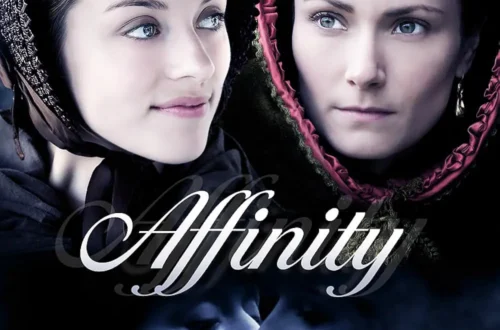
Affinity (2008) – The Interaction of Deception and Longing Within a Closed Circuit of Prison