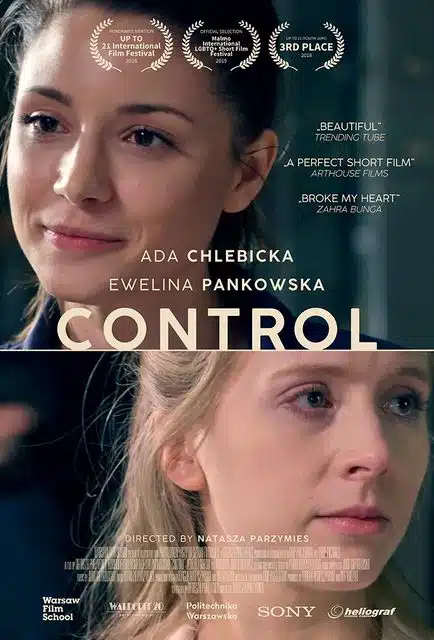
Control Ending Analysis & Review: Desire Caught Between Reunion and Parting
Love is a constant tug-of-war between the will to possess another and the instinct to protect oneself. It is only when we love someone deeply that we realize the person we wish to control most perfectly is, in fact, the most uncontrollable being of all.
This brief yet intense provocation posed by Poland’s rising director, Natasza Parzymies, delves into the “essence of relationships” beyond the mere boundaries of gender. At the moment where the warmth of familiar skin meets an unfamiliar silence, we discover fragments of our lost selves within the eyes of Majka and Natalia.
🌿 Moments When This Web Series Truly Resonates
- If you have ever unexpectedly encountered a former lover you once desperately loved in a public space.
- If you enjoy the palpable tension and subtle emotional currents that drift through the air without a word.
- If you have ever crumbled before the wall of “realities that love alone can never resolve.”
- If you prefer visual mise-en-scène condensed into a short breath and the nuanced facial expressions of actors.
- The reason you should read to the end: This review goes beyond simple romance analysis to prove the structural value of the “mature parting” left by the final season.
🎞 Note Before Watching the Web Series
This work focuses on emotional intimacy and relational tension rather than physical exposure. While it depicts love between women, it is an emotional drama that captures the psychological changes and growth of two individuals rather than using provocative depictions.
🎬 Web Series Information
- Title: Control (Kontrola, 2018–2022)
- Director: Natasza Parzymies
- Screenplay: Natasza Parzymies
- Country: 🇵🇱 Poland
- Genre: Romance, Drama
- Running Time: Approx. 2–15 minutes per episode (4 Seasons total)
- Platform: Amazon Prime Video, YouTube
- Cast: Ewelina Pankowska (as Majka), Adrianna Chlebicka (as Natalia)
📖 Control Plot: A Vortex of Fateful Reunion Starting at an Airport Security Check [No Spoilers]
While inspecting passengers as usual, Natalia, an airport security officer, freezes when she finds Majka standing before her. It is an unexpected confrontation with a former lover who loved passionately but left behind deep wounds. The sharp beep of the metal detector seems to signal the lingering embers of dangerous emotions still remaining between the two.
The drama then unfolds by interlacing their current chance encounter with fragmented memories of the past. Natalia already has a stable partner, and Majka is living her own life, yet the dam of emotions, once burst, does not easily hold. Caught within their respective realistic constraints and past traumas, they find themselves drawn to each other again, only to repeatedly push one another away.
The desperate attempt to mend the cracks that emerge as they intervene in each other’s lives—rather than a simple reconciliation—forces the viewer to question who truly holds the power in the relationship. Can they escape the ghosts of the past and define love anew?
👁️🗨️ The Power of the Gaze and Physical Control: The Asymmetry of Relationships in Control
The title of this work, Control, carries a dual meaning. Physically, it refers to the controlled zone of an airport security checkpoint; psychologically, it signifies the desire for dominance over another’s emotions. In the opening of Season 1, Natalia’s act of searching Majka’s body goes beyond a mere professional task, suggesting she has acquired the power to physically restrain and observe the lover who once abandoned her.
Paradoxically, however, Natalia’s hands are trembling, and it is Natalia who crumbles before Majka’s steady gaze. Through close-up shots, the director captures the minute tremors of the characters, blurring the lines of who is controlling whom. From an analytical perspective, this drama aesthetically demonstrates that love is ultimately a process of voluntary surrender, yielding agency to one another.
💔 Repeated Patterns of Mismatched Timing and Self-Destruction
The relationship between Majka and Natalia feels agonizing because they constantly crave each other at the “wrong time.” When one reaches out, the other is tied to another relationship; by the time they finally face each other, unexpected reality (such as pregnancy) hinders them. This narrative flow reflects the harshness of reality, moving entirely away from romantic fantasy.
In particular, Majka’s past infidelity instilled an indelible distrust in Natalia. Even after their reunion, Natalia loves Majka but constantly activates defense mechanisms to avoid being hurt again. This portrays an addictive relationship where the two cannot let go even as they destroy each other, forcing the viewer to witness how painful the process of restoring true trust can be.
🔎 Reinterpreting the Ending: Choosing “Dignified Distance” Over Absolute Possession
As the series reaches its final chapter, Majka and Natalia finally let go of the desire to “control” each other completely. Faced with the realities of Majka’s pregnancy and parenting, and Natalia’s new life, the two no longer cling to the bond of being “lovers.” Instead, they choose a solidarity as the most reliable “life partners” who willingly reach out when the other is in distress.
The point to note in this review is that their end did not flow toward a typical “happy ending” reconciliation. The scene where Natalia spends time with Majka’s child and helps with her daily life shows that romantic love has been sublimated into a sense of human responsibility. This suggests that true maturity is not controlling another’s life in one’s own way, but standing by them so they can live their own life fully.
In the end, by destroying the form of being “lovers,” the two finally achieved the freedom to be etched forever into each other’s souls.
❓ Questions Regarding the Control Ending and Narrative
Q1. How did the conservative background of Poland affect the female narrative of this work?
Poland is a country with a strong Catholic tradition and is conservative regarding LGBTQ+ rights even within Europe. However, Control does not place political slogans or the narrative of struggle at the forefront. Rather, it gained universal empathy by depicting the love of two women as a universal human emotional drama. Paradoxically, this approach achieved an aesthetic triumph by lowering the walls of social prejudice, delivering a powerful message that “the love of sexual minorities is just as ordinary, painful, and beautiful as any other love.”
Q2. Does the short running time per episode harm the depth of the narrative?
The short length of the initial web series format is actually the work’s greatest weapon. This is because it forces a focus on non-verbal elements such as the actors’ eyes, breath, and finger movements rather than explaining through dialogue. The audience fills in the subtext themselves, synchronizing emotionally with the characters. The short breath makes the emotional density even thicker, completing a narrative structure optimized for the mobile viewing environment of modern audiences.
✨ Control: A Narrative of True Relationship Beginning Only When Control Is Relinquished
Control is a work that asks how much we truly know others and whether we dare to control someone else’s life. The four-year journey shown by Majka and Natalia is a record of two imperfect individuals facing their own deficiencies and growing while using each other as a mirror. This drama shows that love does not necessarily have to result in “living together,” and that sometimes remaining as a “presence that sustains each other’s lives” can be more noble.
True love does not stem from the power to control another, but from the courage to control one’s own desires for the sake of the other.
💬 Is your ‘Control’ doing alright?
Sometimes letting go requires more strength than holding on tight. If you were to happen upon a past lover, what uncontrollable emotions would you discover within her eyes?
What was the greatest power you gave up in order not to lose the other person?
📽️ Violet Screen Recommendations: Other Female Narratives with a Similar Tone
- 《Blue Is the Warmest Color》: A masterpiece that relentlessly depicts intense chemistry, the growing pains of love, and the cracks in a relationship stemming from class differences.
- 《First Girl I Loved》: An independent film that delicately handles the confusion over identity and the power dynamics of a relationship hidden beneath the freshness of adolescence.
To provide a more stable publishing environment, multilingual content, and better communication with our readers, we have moved our official publication to Substack.
All new film reviews and critical essays will be published on our new platform. This website will be closing down soon, so we would greatly appreciate it if you subscribed to our new space.
TODAY'S QUESTION
What's your favorite line from a WLW movie or show?
Your answer isn't saved. Feel free to share it in the comments below.


You May Also Like

Battle of the Sexes: A Silent Revolution and the Search for Identity Beyond the Court
Love Bites: Stand-In Love, Intense Obsession and Transparent Desire Bloomed Within Fake Acting
