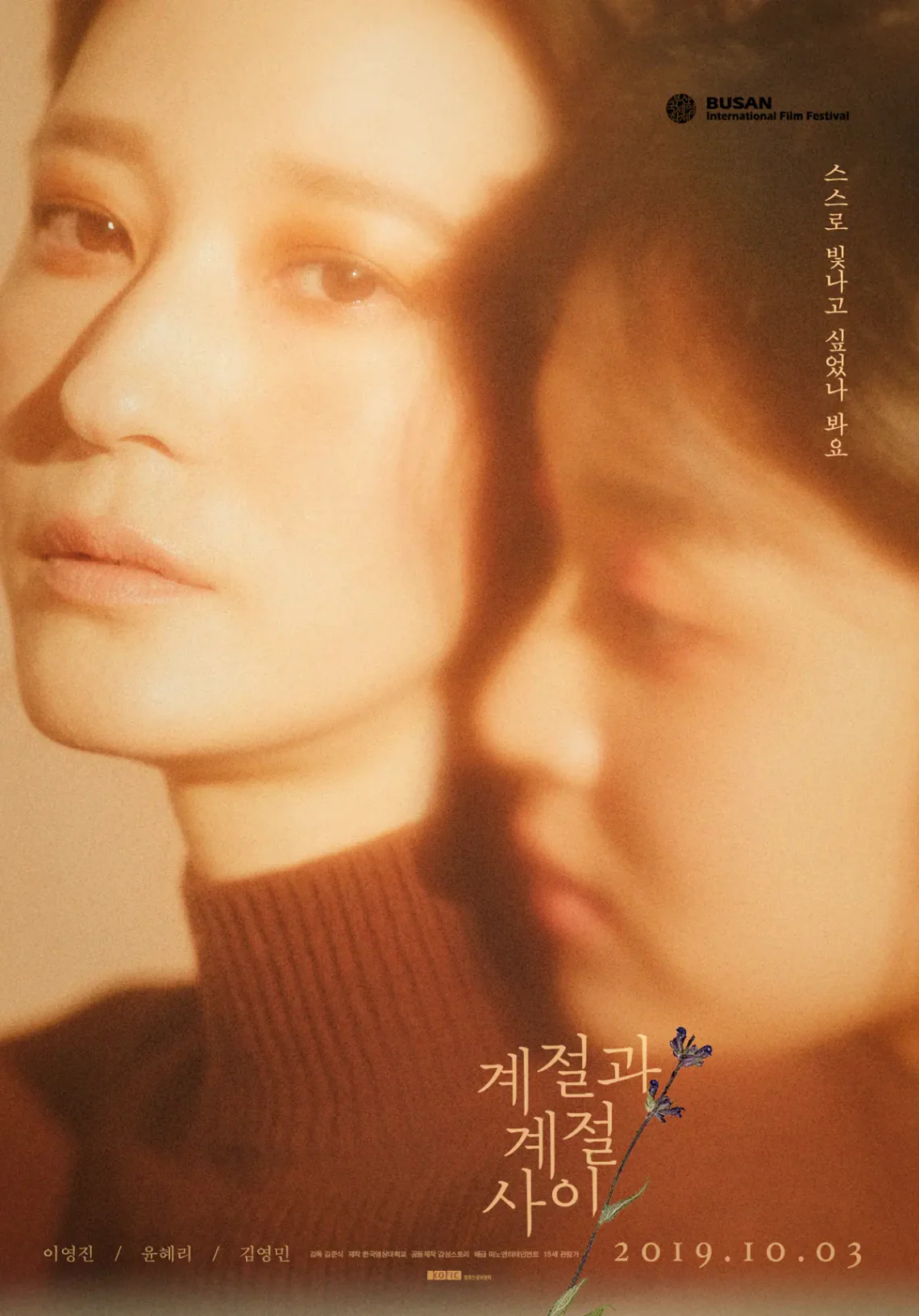
Between the Seasons (2018): The Aesthetics of Isolation Breathed by Hidden Identity and Lack of Solidarity
The attempt to find one’s own temperature while shielding oneself from the cold wind of public scrutiny is often akin to volunteering for a freezing winter. We all live harboring a vast valley between the “I” shown to others and the “I” we face in solitude.
The deeper that valley, the more we crave connection with others, yet we simultaneously recoil in fear that such a connection might unearth our truth. The film Between the Seasons is a record of the fragile warmth that blooms upon the footprints of that very hesitation.
🌿 Moments When This Film Sinks In Deeply
- An afternoon when you wish to catch your breath, hidden in your own shadow, unable to keep pace with the world.
- A night when you cannot bring yourself to speak, fearing that confessing your truth might wound another.
- When you feel lonely because another’s kindness feels not like tenderness, but like an arrow threatening your secret.
- If you have ever experienced the frustration of an aspiration called love failing to fully embrace the identity of another.
- We must witness the end of this film, where one finally faces their own growth only after witnessing the pain of another.
🎞 Note Before Viewing
This work is a static drama dealing with internal conflicts and subtle fractures in relationships. Rather than physical exposure or provocative depictions, it is a relationship-centered narrative that focuses on dialogue, silence, and the density of emotion held within the characters’ expressions.
🎬 Film Information
- Title: Between the Seasons (2018)
- Director: Jun-sik Kim
- Screenplay: Jun-sik Kim
- Country: 🇰🇷 South Korea
- Genre: Drama, Queer
- Running Time: 1 hour 38 minutes
- Platform: Watcha, YouTube
- Cast: Young-jin Lee (as Hae-su Han), Hye-ri Yoon (as Ye-jin Seo)
📖 Between the Seasons: A Settlement Harboring Secrets and the Start of a Strange Confession [No Spoilers]
Leaving her past behind, Hae-su (Young-jin Lee) moves down to a small provincial city with no personal ties and opens a small cafe, living a monochromatic daily life. Hiding a massive secret she has told no one behind the superficial wound of a broken engagement, she hides within an anonymous life, refusing to reveal herself. Breaking her silence is Ye-jin (Hye-ri Yoon), a high school student who approaches her by volunteering to work part-time at the cafe.
Ye-jin perceives Hae-su’s loneliness and shakes her sturdy defensive walls with a characteristically bright and unstoppable energy. As Ye-jin’s feelings drift beyond simple admiration toward romantic affection, Hae-su finds comfort in Ye-jin but simultaneously falls into extreme anxiety that her identity might be exposed.
Hae-su attempts a heterosexual relationship to integrate into society as a “normal woman,” while Ye-jin moves straight toward Hae-su, certain of her own identity. The emotional jet lag between the two flows precariously toward an unexpected confession of truth.
🌡️ Isolation in Transition: The Indeterminacy of Identity Symbolized by “Between the Seasons”
The title of this film does not merely signify the passage of time. Hae-su attempts to settle into the social gender of “woman” after her transition, yet she remains on a precarious boundary between her past and present selves, still taking medication daily. To her, this city is not a place of settlement, but a temporary station where she stays briefly before moving to the next season.
In contrast, Ye-jin simultaneously experiences the biological transition of adolescence and the psychological transition of awakening to her queer identity. The film aligns with the trajectory of a universal coming-of-age narrative in that both characters experience “transitional isolation”—an unstable state before being recognized as a “complete self.”
The process of these two, having recognized each other’s deficiencies, interacting becomes the only firewood that allows them to endure the freezing season.
💔 Variations in Interpretation: Selfishness in the Name of Comfort and Violence in the Name of Love
The reason the relationship between Hae-su and Ye-jin cannot be dismissed as merely a beautiful solidarity is due to the inherent asymmetry of emotions within it. To Hae-su, Ye-jin was a “safe zone” who purely affirmed her without knowing her secret. However, as Ye-jin’s love deepens, Hae-su’s comfort becomes a cruel glimmer of false hope for Ye-jin.
Hae-su’s act of accepting Ye-jin’s tenderness while hiding her identity functions as a form of defensive selfishness, and Ye-jin’s unstoppable expressions of affection approach Hae-su—who can only survive by hiding her identity—as an invisible violence.
The point that must be addressed when analyzing this film is the tragic structure in which, despite their mutual care, they were inevitably bound to hurt one another due to the specificity of their respective identities.
🔎 Ending: The Form of Dignity Remaining Where the Truth Has Swept Through
At the film’s conclusion, the moment Hae-su confesses her transgender identity to Ye-jin, the romantic tension that sustained the drama collapses, replaced by the weight of a chilling truth. Ye-jin believed she loved a woman, but when faced with Hae-su’s biological past and the depth of that pain, she ultimately recoils.
This suggests not that Ye-jin’s love was insufficient, but that her world was still too small to bear the immense truth of another’s life.
However, this juncture becomes a moment of complete liberation for Hae-su. By speaking her own truth regardless of another’s acceptance, Hae-su ends her life as a “stand-in” and attains the dignity of affirming her own suffering.
Through this frustration, Ye-jin also crosses the threshold of maturity, realizing that loving someone goes beyond merely sharing emotions and requires facing that person’s existential pain. Hae-su’s confession brought about the catastrophe of the relationship, but it was simultaneously the only key to breaking the prison of the season that had confined her.
🗳️ Limitations as a Queer Narrative and Debates on the Interpretation of the Ending
Q. Was Hae-su revealing her secret to Ye-jin an act of consideration for Ye-jin, or an escape for herself?
From a critical perspective, Hae-su’s confession is ambivalent. It is an act of consideration in that it served as a brake to prevent Ye-jin’s feelings from growing uncontrollably, but a selfish element also exists in that she sought the liberation of self—which she could not obtain through her heterosexual relationship (Hyeon-woo)—from Ye-jin, the weakest and purest link. This ambiguity proves that the work treats its characters as multi-dimensional humans rather than archetypal “victims” or “saints.”
Q. Why was a romantic atmosphere emphasized while dealing with a transgender woman’s narrative?
The lyrical mise-en-scène of the film’s first half is a device to contrast with the shocking confession of the second half. By allowing the audience to first perceive Hae-su as an “ordinary and elegant cafe owner,” the directorial intent is to break down social prejudices regarding identity and reach the essence of the character first. While criticisms exist regarding beautification stemming from a lack of “first-person” representation, this can instead be evaluated as an aesthetic achievement that brought queer identity into the “everyday landscape” rather than treating it as a “special problem.”
✨ Between the Seasons, A Tribute to Those Who Had to Lose Others to Love Themselves
The film Between the Seasons rejects the optimism that love will solve everything. Instead, it calmly illuminates the price one must pay to live as one’s true self and the inevitable loss experienced in that process. Although Hae-su and Ye-jin did not become lovers, they passed through each other and came to face a season different from before.
We all edit ourselves to be understood by someone. But the film says: True solidarity begins when I reveal my darkest parts, and only a life that does not deceive itself leads us to the next season, even if the result is a farewell.
The truth required to affirm oneself precedes the acceptance of others.
💬 Between silence and confession, where is your place?
Hae-su lost Ye-jin by telling her truth, but she gained herself. If you were Hae-su, would you choose to keep a lifelong secret to keep a loved one by your side, or would you choose to stand as your whole self even at the risk of a breakup?
🎬 Violet Screen Curation: Other Stories of ‘Us’
- The Dream Songs (2023) Reason for recommendation: Through the relationship between high schoolers So-hee and Semi, this film dreamily and tenaciously traces the trajectories of death, life, and unspoken hearts. It is a work where the confusion and aspiration Ye-jin might have felt in Between the Seasons are magnified.
- A French Woman (2019) Reason for recommendation: It unfolds the psychology of a woman floating, unable to escape past wounds and her life as a marginal person, through sensuous direction. It explores the stranger’s solitude felt by Hae-su on a deeper philosophical level.
To provide a more stable publishing environment, multilingual content, and better communication with our readers, we have moved our official publication to Substack.
All new film reviews and critical essays will be published on our new platform. This website will be closing down soon, so we would greatly appreciate it if you subscribed to our new space.
TODAY'S QUESTION
Is there a hidden gem you always recommend to friends?
Your answer isn't saved. Feel free to share it in the comments below.


You May Also Like

Ma Belle, My Beauty: Within the Outer Shell of Polyamory, the Eternal Fractures and Residual Desires Faced by Two Women

Besties (Les Meilleures, 2021) Review: Identity and First Love Blossoming in a Tent Within a Forbidden Zone