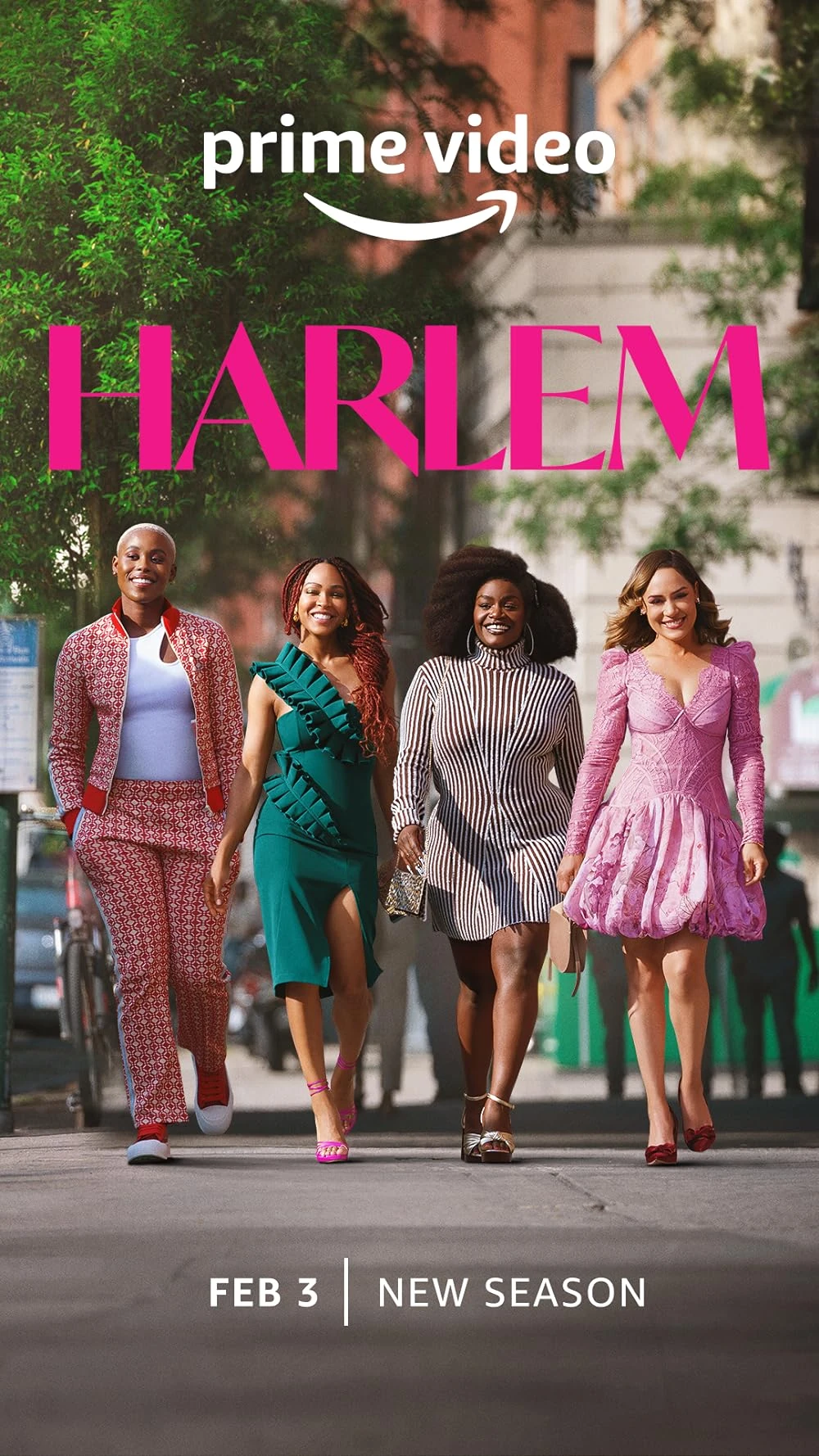
Harlem: A Journey of Self-Discovery Born from the Chaos of Sexual Fluidity
There are those who have defined themselves strictly according to social conditions and the gaze of others. However, love often arrives unannounced, shaking the walls of an identity we once believed to be unyielding.
The confusion faced when encountering a new attraction is not merely a matter of a partner’s gender changing. It is an existential question—”Who am I truly?”—and a rite of passage toward growth that forces an confrontation with one’s deepest, most vulnerable deficiencies.
🌿 Moments When This Series Resonates Deeply
- For those who have veered off the familiar track of heterosexuality, feeling a profound emotional tremor toward the same sex for the first time and experiencing the resulting confusion.
- For those who have experienced the constant anxiety of an emotional mismatch in pacing with a partner, slowly eroding their own self-worth.
- For those who wish to learn how to fully embrace their wounded selves, rather than seeking validation from others or chasing the conditions of a perfect couple.
Why you should read to the end: This review goes beyond a simple analysis of queer romance to clearly trace the dignified trajectory of a woman’s growth, illustrating how she reaches the true conclusion of “self-love” through the failure of a relationship.
🎞 Notes Before Viewing
This series deals with the daily lives and romances of adult women, containing scenes of explicit dialogue and sexual intimacy. However, rather than focusing on sensationalism, these elements function as emotionally centered devices to authentically capture the characters’ sexual fluidity and their processes of identity exploration.
🎬 Series Information
- Title: Harlem (2021–2025)
- Director: Malcolm D. Lee, et al.
- Screenplay: Tracy Oliver
- Country: USA
- Genre: Comedy, Drama, Romance
- Running Time: Approx. 30 minutes per episode (3 seasons total)
- Platform: Amazon Prime Video
- Cast: Grace Byers, Juani Feliz, Jerrie Johnson
📖 Harlem: The Expansion of Identity and Mismatched Expectations Encountered by Quinn and Isabela [No Spoilers]
Quinn, a fashion designer from a privileged background striving for independence, is a fierce romantic who always dreams of a perfect romance. After enduring multiple failures, she encounters Isabela, an ambitious queer politician, and plunges into an unforeseen emotional vortex.
For Quinn, who has primarily dated men, her intense chemistry with Isabela becomes her first same-sex romance, transcending gender and serving as a major turning point in her exploration of sexual fluidity. Quinn actively steps into Isabela’s world, even participating in Pride events, as she comes to accept her identity.
However, while Quinn accelerates emotionally, desiring deeper commitment and a future, Isabela prioritizes her political career and freedom, preferring a casual relationship. Their clashing paces inevitably breed conflict, and alongside a career crisis, Quinn finds herself facing the greatest identity crisis of her life.
🔗 Cracks in the Heteronormative Framework and a Realistic Interpretation of Sexual Fluidity in Harlem
The Awakening of a Seemingly Perfect Romantic
Quinn is a character who has always attempted to prove her worth within the framework of a “successful life” and “stable heterosexual romance” as defined by society. However, her encounter with a charismatic woman like Isabela causes an irreversible fracture in the heterosexual worldview she relied upon, guiding her into the new territory of sexual fluidity.
Free Love That Rejects Labeling
A key point of focus in this review is the fact that Quinn’s expansion does not simply converge into fixed identity labels such as “lesbian” or “bisexual.” Rather than prematurely defining her identity, her journey is depicted as an autonomous process of exploration, accepting a sincere connection wherever her heart leads.
💔 An Analysis of the Trauma and Collapse Caused by Emotional Mismatches
When the Desire for Commitment Clashes with the Longing for Freedom
The breakup between the two stems not from a moral defect on either side, but from a fundamental difference in expectations regarding the relationship. Quinn rushed forward, attempting to fill her unstable self through the relationship, whereas for Isabela, romance was a domain valid only to the extent that it did not compromise her independence and political ambition.
Collapse Triggered by an Unequal Balance
A relationship where one person is ready to throw in their entire life while the other keeps one foot out the door is bound to collapse. Isabela’s rejection becomes more than a mere heartbreak for Quinn; it leads to a deep internal crisis that forces her to question her very value as a human being.
🌅 Reinterpreting the Ending: Moving Past Loss toward Independent Self-Reliance
Fragments Left by a Breakup and the Reconstruction of the Self
The breakup with Isabela, followed by a reunion with her past partner Keith, serves as a mirror that allows Quinn to see through to the essence of relationships. She lets go of her long-standing obsession with completing a perfect image by winning another’s love, and finally begins to view herself holistically.
Dignity Maintained by Relinquishing External Salvation
The conclusion Quinn reaches over the course of the series marks the birth of a magnificent, autonomous agent who redirects the energy of love—once dependent on others—inward. She overcomes the social pressures and mental health crises she faces as a Black woman through solidarity with her friends, establishing true self-love. What Quinn realizes after wandering in the wake of losing Isabela is that internal deficiencies can only be filled by restoring one’s own dignity.
💬 On the Representation of Queer Narrative and Multilayered Characterization in Harlem
Q. What is the structural significance within the work of contrasting Quinn’s exploration of sexual fluidity with Tye’s firmly established lesbian identity?
The series has received aesthetic praise for broadening the diversity of the Black queer female spectrum by contrasting Quinn, an “exploratory” character, with Tye, an “experienced” character. Tye is portrayed as a successful tech CEO with a firm lesbian identity, who nevertheless struggles with a fear of commitment in her actual relationships. This direction serves as an excellent device to demonstrate that regardless of whether one’s identity is defined or not, all human beings can be clumsy and unstable within relationships. While some critics argue that Tye’s dating patterns are somewhat consumed for comedic effect through complex entanglements, this can be interpreted as an intention to depict human flaws three-dimensionally, without placing the burden of “perfection” on queer characters. The judgment remains with the viewer.
Q. How should we view the criticism that Quinn’s return to romances with men (Keith, Seth) after her breakup with Isabela constitutes a regression in the queer narrative?
Some viewers expressed disappointment with the plot where Quinn returns to relationships with men after her intense same-sex romance with Isabela ended as a one-time crisis. This can appear to be a limitation of narrative repetition frequently encountered when media handles bisexuality or sexual fluidity. However, the essential purpose of the work is not to confine Quinn to a specific label, but to show her process of finding a genuine connection that transcends the conditions of gender. Through an ending where she ultimately clarifies her relationships with men as well and chooses “herself,” it becomes evident that the ultimate goal of this work was not a return to heterosexuality, but the attainment of complete self-independence. This open conclusion focuses on the character’s growth rather than defining her identity.
✨ Harlem: A Declaration to Complete Your Own Universe First, Not to Seek Refuge in Another’s Arms
The plot of this work and the trajectories of its characters ask us living in modern society where the true destination of love lies. We frequently wander in search of a “better half” to complete our imperfect selves, but if we cannot become whole individuals on our own, any connection is ultimately bound to head toward catastrophe.
Harlem proves through the fierce love encountered across the boundaries of gender, and the pain of the subsequent breakup, that the final destination of a relationship must ultimately be oneself, not another. True salvation does not begin by fitting oneself to another’s conditions, but from a complete independence that fully embraces the scarred self within.
💬 When Love Shakes You, What Is Your Choice?
“When you intuitively sense that the emotional pacing between you and your partner is mismatched, do you adjust yourself to preserve the relationship, or do you pause and protect your own pace, even if it means getting hurt?”
🎬 Violet Screen Curation: Alternative Perspectives Exploring the Essence of Emotions and Relationships
- No Heaven, But Love (2023): Set in the late 1990s, this independent film closely captures the precarious yet brilliant emotional solidarity and attraction between two high school girls. It is recommended for those who wish to step away from the sensational grammar of mainstream media and focus on the lyrical, delicate psychological shifts of the characters.
- The Sex Lives of College Girls (2021–): A comedy-drama following four college roommates as they navigate solidarity while exploring their respective sexual orientations and identities. You can enjoy a college-aged iteration of the witty, candid female narratives and queer identity exploration found in Harlem.
To provide a more stable publishing environment, multilingual content, and better communication with our readers, we have moved our official publication to Substack.
All new film reviews and critical essays will be published on our new platform. This website will be closing down soon, so we would greatly appreciate it if you subscribed to our new space.
TODAY'S QUESTION
Is there a film whose ending you wish had gone differently?
Your answer isn't saved. Feel free to share it in the comments below.


You May Also Like

First Kill: Desire Carved Between Instinct and Taboo

Apple, My Love… The Series: Where the Fated Gaze Rests—An Obsessive Solidarity Between Salvation and Thirst
