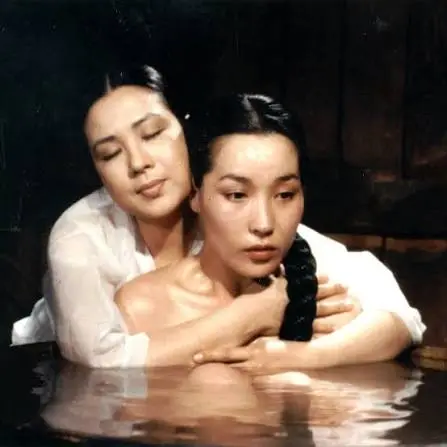
Sa Bangji (1988): The Intersex Taboo, Chaste Widowhood, and the Tragedy of a Boundary-Shattering Female Narrative
In a binary order established by human consensus, an “indefinable existence” is invariably condemned under the name of ill omen. A life that strays beyond the clear boundaries drawn by society becomes, by its mere existence, a massive fissure touching upon the taboo. Trapped in the prison of others’ gazes and social norms, the journey to seek one’s own intact dignity is always accompanied by a distant, profound solitude.
🌿 Moments When This Film Seeps In Deeply
- For those who have ever felt disqualified by the rules defined by the world or felt themselves standing on the borderline
- For those who resonate with the deep solidarity of women sacrificed under oppressive social norms like patriarchy and chaste widowhood
- For those who wish to witness 1980s Korean cinema’s exceptionally radical and daring attempt to deconstruct gender binarism
- For those who want to feel the lingering aftermath of a tragic love that dismantles rigid normative walls
- Why You Should Read to the End: Beyond the past prejudice of viewing this simply as an erotics-infused period drama, this analysis uncovers the structural essence of why this work stands as a monumental, ahead-of-its-time masterpiece in Korean women’s narrative and queer film history.
🎞 Note Before Watching
Rooted in the lyrical direction characteristic of 1980s Korean melodramas and period films, this work meticulously illuminates the essence of emotion and human relationships. Although certain physical interactions or high-intensity conflicts appear, these are not sensationalized displays, but essential narrative devices meant to express the internal conflicts and autonomous desires of characters who dare to challenge the taboos imposed by the patriarchal society of their era.
🎬 Film Information
- Title: Sa Bangji (사방지, 1988)
- Director: Song Gyeong-sik
- Screenplay: Ga Won
- Country: Republic of Korea
- Genre: Period, Romance, Drama
- Runtime: 94 minutes
- Platform: Naver Series On, Korean Movie Database (KMDb)
- Cast: Lee Hye-young, Bang Hee, Kwack Jung-hee
📖 Sa Bangji Synopsis: The Tragedy of Love and Chaste Widowhood on the Borderline Destroyed by Joseon Patriarchy [No Spoilers]
During the Joseon Dynasty, Sa Bangji is born with both male and female traits and abandoned by the world under the accusation of being an ill omen, growing up in solitude at a Buddhist temple. Lee So-sa, a young widow visiting the temple for her late husband’s memorial service, perceives Sa Bangji—with her pure and refined appearance—as a woman and brings her to the secular world to serve as her maid.
Living together in the secular world, the two develop beyond a simple mistress-servant dynamic into a deep romantic bond that fills each other’s voids and loneliness. However, when Sa Bangji’s identity is exposed and their relationship collides with rigid Joseon taboos—namely, widow chastity and the strict class system—they face intense pressure and threats from the family house. The conflict between the safety of a loved one and social reputation drives the characters into a maelstrom of flight, betrayal, and an inescapable tragic fate.
📽 Ontological Interpretation of Sa Bangji Deconstructing Gender Binarism
The figure of Sa Bangji serves as a massive fault line shaking the entirety of the binary order of male/female and status/class built by Joseon patriarchy. Unlike conventional narratives that transition toward either a heterosexual or homosexual framework, this film directly rejects the “gender conformity” imposed by contemporary society through the body of Sa Bangji.
Sa Bangji’s entry into So-sa’s household signifies an infiltration into a pristine feminine space untainted by male-dominated power. When the world defines Sa Bangji as a monster or an ill omen, it is only within the relationship with So-sa that Sa Bangji is recognized as an autonomous subject of love and a human being possessing intrinsic worth.
So-sa is likewise a victim trapped within the immense patriarchal oppression of “chaste widowhood” after losing her husband. Therefore, the meeting between Sa Bangji and So-sa is not merely an outburst of deviant desire, but an intensely intimate and autonomous form of solidarity that resists the oppression of chastity and normative codes imposed on women and minorities by patriarchy.
🎭 Myo-hwa’s Revenge Drama and the Destruction of Patriarchal Power Structures
The narrative involving the shaman Myo-hwa, met along the path of flight, expands Sa Bangji’s private tragedy into a struggle on a structural social level. Myo-hwa represents the rage of women continuously exploited and marginalized in a male-dominated society. To her, Sa Bangji’s existence is a perfect tool to awaken the suppressed desires of noblewomen and expose the false consciousness of patriarchy.
The process of infiltrating noble households and uncovering the secret hypocrisy of those in power constitutes a narrative revenge enacted by oppressed subjects against patriarchal authority. However, this revenge carries the limitation of provoking retribution from power rather than dismantling the system itself. Myo-hwa’s tragic death starkly reveals the violent nature of state and familial power directed against any ‘other’ that threatens binary norms.
🔎 Reinterpretation of the Ending: Eternal Oneness Beyond Social Death
The final choice of Sa Bangji and So-sa, reuniting at the temple after all their wanderings, is the most extreme declaration of subjectivity an individual can make when confronted with the rigid walls of status and normativity. So-sa’s choice to commit suicide amid family pressure and social condemnation, followed by Sa Bangji’s death, is by no means a simple frustration or defeat.
This ending is a solemn resolve to reject the false life imposed by the world and to define their relationship on their own terms. The deaths of the two make visible the violence inflicted upon them by a normative world, while simultaneously serving as a monumental refusal to be subsumed any longer under societal control.
Sa Bangji and So-sa’s joint suicide is a completed form of refusal that shifts their relationship into a realm beyond the control of patriarchal chastity codes and gender binarism. Through the extinction of the physical body, their tragic choice transcends societal condemnation, concluding the narrative in an unassailable state of eternal oneness.
❓ FAQ: Interpreting Sa Bangji’s Ending and the Representation of Women
Q1. How should we evaluate its value as a women’s narrative within the commercial limits of the 1980s erotic period film genre?
Because it was produced within the framework of eroticism—a box-office formula in the Korean film industry at the time—it is true that certain exaggerated or sensationalized direction exists. However, rather than remaining mere visual consumption, the film marks an aesthetic and narrative turning point by placing an intersex subject and a young widow (a quintessential victim of patriarchy) at its center, meticulously capturing the internal cries and autonomous desires of oppressed individuals.
Q2. How should we interpret the ambiguity in So-sa’s process of betraying and subsequently accepting Sa Bangji again?
So-sa’s hesitation and betrayal are not personal contradictions of her character, but the result of terror implanted within an individual’s interiority by the immense social oppression of family and norms. Because it highlights how the patriarchal ethics of the era—which prized a widow’s chastity above life itself—distorted and shook pure individual emotions, So-sa’s regret and reunion can be viewed as a process of structural growth that overcomes oppression to ultimately prove her true desire.
✨ Sa Bangji: Questions Transcending Time to Ask of the Dignity on the Border
The film Sa Bangji does not remain merely a past tragedy of the Joseon era; it directly questions how violent the standards and frameworks we project onto others today can be. In a world that forces love and identity to conform to specific social specifications, what the characters ultimately sought to protect was the minimal dignity required to exist as themselves.
Tragedy occurring when one refuses to conform the form of one’s existence to social molds is evidence of societal violence, not individual flaw.
💬 In the Space Divided by Norms, What Choice Would You Make?
We are sometimes asked to compromise our true selves when standing before borderlines named public scrutiny or social expectation.
Like Sa Bangji and So-sa in the film, would you choose your own intact emotions and identity even if it means relinquishing every safe zone, or would you opt for stability within the fence of norms allowed by the world? Please share your deep thoughts in the comments.
📸 Violet Screen Recommended Women’s Narrative Curation
- Manok (이반리 장만옥, 2025/2026)
- Reason for Recommendation: A queer dark comedy in which Manok, a middle-aged lesbian, returns to her hometown village and runs for village head against the exclusive patriarchal society and her ex-husband. Moving away from the dark, tragic weight typical of traditional female queer narratives, it illuminates the liberation and resilient solidarity of a middle-aged woman who delightfully and autonomously confronts convention and prejudice from multiple angles.
- The Handmaiden (아가씨, 2016)
- Reason for Recommendation: Set within a rigid fortress designed by men where two women are positioned to deceive each other, this film delivers an overwhelming sense of liberation as the pair completely escape patriarchal control through their mutual desire and solidarity.
TODAY'S QUESTION
What genre or mood do you always reach for when you're alone?
Your answer isn't saved. Feel free to share it in the comments below.


You May Also Like

Foxfire (1996) Review: The Destructive Fascination of Female Solidarity and Queer Subtext

Ammonite (2020): Fossils of Isolated Desire on a Silent Shore