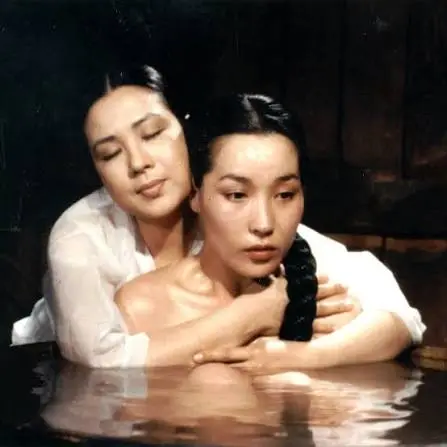
Sa Bangji (1988): Intersex Taboo, Widow Chastity, and the Tragedy of Boundary-Shattering Female Narrative
In the binary order established by humans, «unclassifiable existence» is perpetually condemned under the name of ill omen. A life that strays beyond the clear boundaries drawn by society often becomes a massive fissure touching upon taboo merely through its existence. Trapped in the prison of others’ gazes and norms, the journey to find one’s own complete dignity is always accompanied by profound loneliness.
🌿 Moments When This Film Resonates Most Deeply
- Those who have felt excluded from the rules defined by the world or felt themselves standing on the borderline
- Those who empathize with the deep solidarity of women sacrificed under oppressive social norms of patriarchy and widow chastity
- Those who wish to witness the extremely radical and daring deconstruction of gender binaries attempted by 1980s Korean cinema
- Those who wish to feel the lingering aftertaste of the deep resonance conveyed by tragic love that demolishes the solid walls of norms
Therefore, the reason to read to the end is that beyond past prejudices viewing it as a mere erotic period drama, this analysis reveals the structural essence of why this work is a landmark masterpiece ahead of its time in Korean women’s narrative and queer cinema history.
🎞 Before Watching the Film
Based on the lyrical direction characteristic of 1980s melodramas and period pieces, this work precisely illuminates the essence of emotions and relationships. Although some physical intimacy or high-intensity conflict depictions appear, these are not provocative gimmicks, but essential narrative devices used to express the inner conflicts and autonomous desires of characters challenging the taboos defined by the patriarchal society of the era.
🎬 Información de la película
- Título: Sa Bangji (Sa Bangji, 1988)
- Director: Song Gyeong-sik
- Guion: Ga Won
- País: República de Corea
- Género: Época, Romance, Drama
- Duración: 94 minutos
- Plataforma: Naver Series On, Korean Movie Database (KMDb)
- Reparto: Lee Hye-young, Bang Hee, Kwack Jung-hee
📖 Sa Bangji Synopsis: Love on the Boundary Shattered by Joseon Patriarchy and the Tragedy of Chastity [No Spoilers]
During the Joseon Dynasty, Sa Bangji, born with both male and female sexes and abandoned by the world for being an ill omen, grows up lonely in a temple. Lee So-sa, a young widow who visits the temple for her husband’s post-mourning rite, perceives Sa Bangji—with a pure and elegant appearance—as a woman and takes Sa Bangji as her servant into the secular world.
Living together in the secular world, the two develop beyond a simple master-servant relationship into deep lovers who fulfill each other’s deficiencies and loneliness. However, when Sa Bangji’s identity is revealed and encounters the rigid Joseon social taboos of widow chastity and the caste system, their relationship faces severe pressure and threats from the family. The conflict unfolding between the safety of the loved one and social reputation drives the characters into a whirlpool of flight, betrayal, and an inescapable tragic fate.
📽 Existential Interpretation of Sa Bangji Deconstructing the Gender Binary
The character of Sa Bangji is a massive point of fissure that shakes the entire binary order of male/female and status/class constructed by Joseon patriarchy. Unlike conventional narratives that transition into heterosexual or homosexual frameworks, this work directly rejects the «gender coherence» forced by the society of that era through Sa Bangji’s body.
The process of Sa Bangji entering So-sa’s house signifies penetration into a pristine, feminine space uncontaminated by male-centered power. When the world defines Sa Bangji as a monster or an ill-omened existence, it is only within the relationship with So-sa that Sa Bangji is approved as an autonomous object of love and a human being possessing inherent worth.
So-sa is also a victim trapped in the massive patriarchal oppression of «chastity» after losing her husband. Therefore, the meeting of Sa Bangji and So-sa is not merely an outburst of deviant desire, but takes the form of an extremely intimate and autonomous solidarity against the oppression of chastity and norms imposed by patriarchy upon women and minorities.
🎭 Analysis of Myo-hwa’s Revenge Drama and the Shattering of Patriarchal Power Structures
The narrative with the shaman Myo-hwa, met on the path of flight, expands Sa Bangji’s personal tragedy into a struggle on a socio-structural level. Myo-hwa represents the anger of women continuously exploited and othered in a male-centered society. To her, Sa Bangji’s existence was a perfect tool to awaken the suppressed desires of noblewomen and expose the false consciousness of patriarchy.
The process of penetrating the interior of noble households to unearth the secret hypocrisy of those in power is a narrative revenge inflicted upon patriarchal power by oppressed subjects. However, this revenge carries a limitation in that it invites retaliation from power rather than deconstructing the system itself. Myo-hwa’s tragic death starkly reveals the violence of state and family power inflicted upon the Other who threatens binary norms.
🔎 Reinterpretation of the Ending: An Ending of Eternal Union Beyond Social Death
The final choice of Sa Bangji and So-sa, who reunite at the temple after all wanderings, is the most extreme form of declaration of agency an individual can make before the solid walls of status and norms. So-sa’s suicide under family pressure and social condemnation, along with Sa Bangji’s death following her, is by no means a simple frustration or defeat.
This ending is a solemn resolution to reject the false life forced by the world and to define their relationship on their own terms. The deaths of the two make visible the violence inflicted upon them by the world of norms, while serving as a massive sign of refusal to be subjugated to social control any longer.
The suicides of Sa Bangji and So-sa represent a completed form of refusal that relocates their relationship to a realm uncontrollable by patriarchal chastity norms and the gender binary. Their tragic choice transcends social condemnation through the extinction of the body, concluding the narrative in a state of eternal symbiosis that cannot be invaded by others.
❓ Questions on Sa Bangji Ending Interpretation and Female Representation
Q1. How can its value as a female narrative be evaluated within the limitations of the 1980s commercial erotic period drama genre?
Because it was produced borrowing the framework of eroticism—the box-office formula of Korean cinema at the time—it is true that some exaggerated or provocative scenes exist. However, rather than remaining consumed as mere spectacle, it places an intersex protagonist and a young widow, a representative victim of patriarchy, at the center. In doing so, it precisely captures the inner cries and autonomous desires of oppressed characters, presenting an aesthetic and narrative turning point.
Q2. How should the ambiguity in So-sa’s process of betraying and accepting Sa Bangji back be interpreted?
So-sa’s hesitation and betrayal are not so much individual contradictions as they are the results of fear implanted within an individual’s interiority by the massive social pressure of family and norms. Since it highlights how the patriarchal ethics of the era, which valued a widow’s chastity above life, disrupted and shook an individual’s pure emotions, So-sa’s regret and reunion can be viewed as a process of structural growth overcoming oppression to finally prove her true desire.
✨ Sa Bangji, A Question Transcending Time to Ask About the Dignity of Boundaries
The film Sa Bangji does not remain merely a tragedy of the past Joseon era, but directly questions how violent the standards and frameworks we bring to view others today can be. In a world that forces love and identity to fit specific social measurements, what the characters sought to protect was ultimately the minimum dignity required to exist as themselves.
The tragedy that occurs when one refuses to fit the form of existence into society’s framework is evidence of social violence, not individual flaw.
💬 Where Norms Have Divided Us, What Choice Would You Make?
We are sometimes asked to compromise our true selves before boundary lines bearing the names of others’ eyes or social expectations. Like Sa Bangji and So-sa in the film, would you choose your own complete emotions and identity even if it means abandoning all safe zones, or would you choose stability within the fence of norms permitted by the world? Please share your deep thoughts in the comments.
📸 Violet Screen Recommended Female Narrative Curation
- Manok (이반리 장만옥, 2025/2026)
- Reason for Recommendation: A queer black comedy in which Man-ok, a middle-aged lesbian, returns to her hometown village and runs for village head (Lee Jang) against the exclusive patriarchal society and her ex-husband, who is the current village head. Departing from the dark and tragic weight typical of existing female queer narratives, it illuminates from multiple angles the liberation and resilient solidarity of middle-aged women who delightfully and autonomously confront custom and prejudice.
- The Handmaiden (아가씨, 2016)
- Reason for Recommendation: Set within a rigid castle designed by men where two women are positioned to deceive each other, the film delivers an overwhelming sense of liberation as they completely escape patriarchal control through mutual desire and solidarity.
PREGUNTA DEL DÍA
¿Hay una película cuyo final te hubiera gustado que fuera distinto?
Tu respuesta no se guarda. Compártela en los comentarios si quieres.


También te puede interesar

Tru Love (2013): Un santuario de aislamiento hallado al borde de la pérdida y el vagabundeo

Girls in Uniform: El amor prohibido que atraviesa la opresión y la verdad oculta de la narrativa femenina