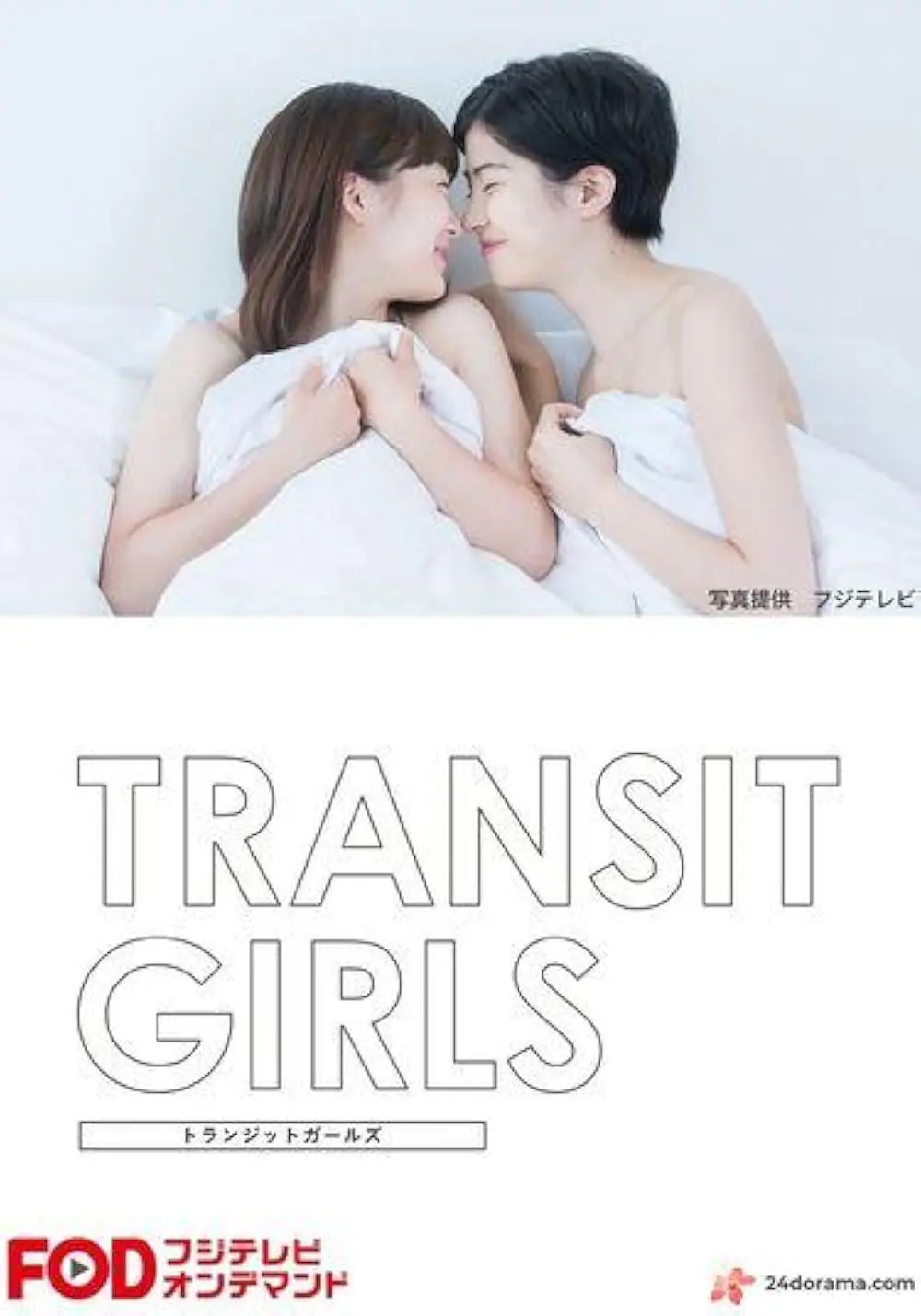
《Transit Girls》 Review: An In-Depth Interpretation of Two Worlds Settling Into Each Other Beyond Taboo
Sometimes, we encounter an unexpected gravity at the most vulnerable points of our lives. In the profound sense of isolation that follows the loss of a loved one, or amidst the vague conflict regarding paths untaken, the soul often recognizes another deficiency that might offer salvation.
Connecting fully with another person carries the fear of having to dismantle one’s familiar world, but at the end of that fear, we finally confront our true self.
🌿 Moments When This Drama Deeply Permeates
- When longing for the gaze of the one person who will fully understand you within an imperfect reality
- When wandering, lost between the framework of social relations and the genuine internal attraction
- When courage is needed to overcome the pain of loss and accept a new form of solidarity and love
- The reason you must read to the end: This work, the first in Japanese television history to directly confront a lesbian narrative, proves the structural essence of how two women become each other’s salvation and final destination, transcending a simple taboo.
🎞 Note Before Watching the Drama
Set within the narrative framework of stepsisters brought together by their parents’ remarriage, this work focuses on the intimate emotional shifts and relational evolution between two women. Instead of provocative or sensational depictions, it is an authentic romance drama that lyrically captures the delicate communion and emotional ripples arising from the characters’ glances, the atmosphere, and daily domestic life together.
🎬 Drama Information
- Title: Transit Girls (トランジットガールズ, 2015)
- Director: Masato Maeda
- Screenplay: Ayako Kato
- Country: Japan
- Genre: Romance, Drama, Queer
- Running Time: 8 episodes total (approx. 25 minutes per episode)
- Platform: Fuji TV
- Cast: Sairi Ito , Yui Sakuma
📖 《Transit Girls》 A New World Built on Maternal Absence and an Unfamiliar Attraction [No Spoilers]
For high school student Sayuri Hayama, who had maintained a quiet daily life alone with her father Keigo after losing her mother, a monumental shift arrives one day when her father suddenly announces his remarriage. Entering Sayuri’s home alongside her stepmother Madoka is twenty-one-year-old aspiring photographer Yui Shida. Sayuri, unable to easily accept this new family invading her peaceful space and memories, erects a cold defense mechanism.
However, at the moment of their first encounter, Yui—who had captured Sayuri praying at a shrine on camera—unhesitatingly approaches the guarded Sayuri and delivers an unpredictable first kiss. This sudden event causes a massive fracture in Sayuri’s world, and within the peculiar relational dynamic of stepsisters, the two begin to share the daily routine of a single household. Amidst the collision between the intellect trying to push away and the emotions pulling them together, alongside the suspicious gazes from those around them, the conflict between the two girls gradually begins to spiral beyond control.
📸 The Lens of the Camera and the Subject’s Defense Mechanism: The Power Structure Implied by Space
《Transit Girls》 meticulously visualizes the psychological changes of the two protagonists through the confined space of the “home” they inhabit and the mise-en-scène of Yui’s “camera lens.” The lens of Yui, an aspiring photographer, serves as both a tool for capturing Sayuri’s most defenseless and pure moments and a medium through which she honestly projects her own desire. Conversely, for Sayuri, the home is a defensive space steeped in memories of her mother, and Yui’s appearance signifies the collapse of this safe zone.
In the early stages, the spatial arrangement of the two is strictly separated, but as Yui steps into Sayuri’s domain, the defensive walls crumble. While the act of Yui looking at Sayuri through the lens appears to place the power of the gaze with Yui, it is ultimately Sayuri’s internal state—responding to and experiencing confusion from that gaze—that becomes the true engine driving the drama. This sharing of space and gaze constructs a covert, high-density emotional symmetry between the two within the social constraints of being stepsisters.
🕊 Social Stigma and the Collapse of the Family Unit: The Multi-Layered Structure of Conflict
The aesthetic achievement of this work lies in the fact that it does not confine the romance of the two women to the realm of purely personal emotion, but addresses it through its collision with the institutional framework of the family. Episode 6, in which the stepmother Madoka witnesses the intimacy between the two, marks the turning point of the series and the apex of its conflict. The parental generation’s aspiration to finally achieve the form of a “normal family” through remarriage faces a crisis due to the unexpected emotional union of their two daughters.
The conflict arising here does not merely stop at social prejudice toward homosexuality; it connects to a fundamental terror that the newly formed family community might dissolve. Yui’s assertive declaration of her “sincerity” and her subsequent disappearance represent the inevitable friction experienced between the role demanded by the establishment (sisters) and internal identity (lovers). Rather than consuming this conflict sensationally, the drama utilizes it as a catalyst for growth, forcing the characters to confront their respective wounds and redefine the boundaries of family.
🔎 Reinterpretation of the End — The Value of an Eternal Unity and Happy Ending Achieved by the Symmetry of the Shrine
The conclusion of 《Transit Girls》 demonstrates salvation through the surface loss of the family’s dissolution, out of which the two choose each other as fully independent subjects. The landscape of the shrine where Yui first discovered Sayuri in Episode 1 is replicated in the final episode with perfect symmetry. This symmetrical direction is an aesthetic device declaring that the two do not remain in a relationship bound to a mere temporary stopover, a “Transit,” but have finally settled into their ultimate destination in one another.
What remains in the place of the broken institutional family framework is the pure emotional solidarity and mutual certainty between the two. Sayuri and Yui have simultaneously lost both the social safety net and the constraints of being “stepsisters,” yet they have gained a dignified growth in taking full responsibility for each other’s lives. The ending of this drama proves that love transcending taboo does not need to culminate in tragedy, establishing certainty that their lives, which will continue beyond the conclusion, will be radiant. The reunion of the two is not a simple emotional resolution, but the completion and declaration of a subjective identity acquired at the cost of the old world’s collapse.
❓ Concerning the Narrative Structure and Modes of Representation in 《Transit Girls》
Q1. How should we interpret the criticism that the emotional progression develops too abruptly within the brief duration of just 8 episodes, at 25 minutes each?
The structural limitations of this work are sometimes pointed out regarding the fact that Yui’s sudden first kiss and confession in the first half can feel somewhat rapid. However, this must be understood as the collision of Yui’s unhesitating personality and the anxiety and conflict she feels about her path after dropping out of college, exploding upon encountering a pure subject like Sayuri. Instead of protracted explanations within a brief running time, the drama increases narrative compression by closely arranging the characters’ gazes, breathing, and minor daily changes. The brief duration functions rather as an aesthetic device that maximizes emotional density.
Q2. As the first lesbian drama on Japanese terrestrial television at the time of its broadcast in 2015, what are the limitations or significance of its mode of female representation?
There are perspectives suggesting that the gaze of the male-oriented “Yuri” genre conventions or sensational fantasy elements of the time were not entirely excluded. However, 《Transit Girls》 holds distinct significance in that it did not treat the identity struggles of sexual minorities merely as a dark tragedy, but portrayed them warmly and positively within the frameworks of youthful romance and family drama. In particular, the process through which the female characters define their own desires and love without remaining subordinate to the gaze of others serves as an excellent precedent for the representation of subjective women. The judgment on the questions posed by this work will ultimately be made by readers within their own historical contexts.
✨ 《Transit Girls》 A Milestone of the Most Harmless and Courageous Love, Blossoming at the Boundaries of Taboo
This drama questions what constitutes the purest attraction one human can extend toward another, positioned atop the multi-layered boundaries of parental remarriage and homosexuality. The emotion of love is sometimes powerful enough to shake the norms and institutions prescribed by society, but it is simultaneously the sole key to beginning a new life amidst the debris of a shattered world. The journey shown by 《Transit Girls》 extends beyond a simple queer romance; it is a story about human dignity—about listening to the voice within oneself and knowing how to take responsibility for it. True love begins with the courage to destroy the world that confines oneself, and concludes in a solidarity that fully validates the existence of the other.
💬 Where is Your Transit Station?
Have you ever erected a cold wall intentionally, out of fear of exposing your most vulnerable inner self to another? Please share your thoughts on whether you have experienced a gaze like Sayuri’s, which dug deeper the more you tried to push it away, or your own sincerity that you wished to protect even at the risk of violating a taboo, like Yui.
🎬 Recommended Works From the Perspective of Violet Screen
For those who wish to encounter deeper and more diverse narratives regarding the emotions and relational dynamics between women, we recommend two well-made works broadcast within the last three years that offer acute sensitivity and depth.
- 《She Loves to Cook, and She Loves to Eat》 (作りたい女と食べたい女, 2022~2024): A story of two women who heal heavy, realistic deficiencies—such as patriarchy, eating disorders, and the confusion of queer identity—through the most everyday act of “cooking and sharing.” Without relying on sensational narratives, the work fills the screen with high-density tension through the characters’ dialogues and glances alone, capturing with extreme delicacy the process by which they become each other’s sole sanctuary and a springboard for subjective growth.
- 《The Scent That You Bequeath》 (君の継ぐ香りは, 2024): A unique, narrative-driven drama that begins when a person’s memories and emotions are transmitted to another woman through the sensory medium of “perfumery (scent).” It excellently depicts the psychological distance between two women searching for past wounds and lost identity, and the direction stands out for translating invisible scent into emotional communion across the screen. The process of realizing one’s true self and the hidden essence of love within the traces of another leaves a profound humanistic resonance.
To provide a more stable publishing environment, multilingual content, and better communication with our readers, we have moved our official publication to Substack.
All new film reviews and critical essays will be published on our new platform. This website will be closing down soon, so we would greatly appreciate it if you subscribed to our new space.
TODAY'S QUESTION
When did you first feel fully accepted for who you are?
Your answer isn't saved. Feel free to share it in the comments below.


You May Also Like

Frozen Valentine: First Love, and the Totality of Relations Proven by a GL Drama

Denied Love: The Only Defeat in the Name of Love—An Interpretation of Its Fatal Ending