4 Estrellas: Luznhoa’s Journey of Identity and the Ultimate Destination of Love
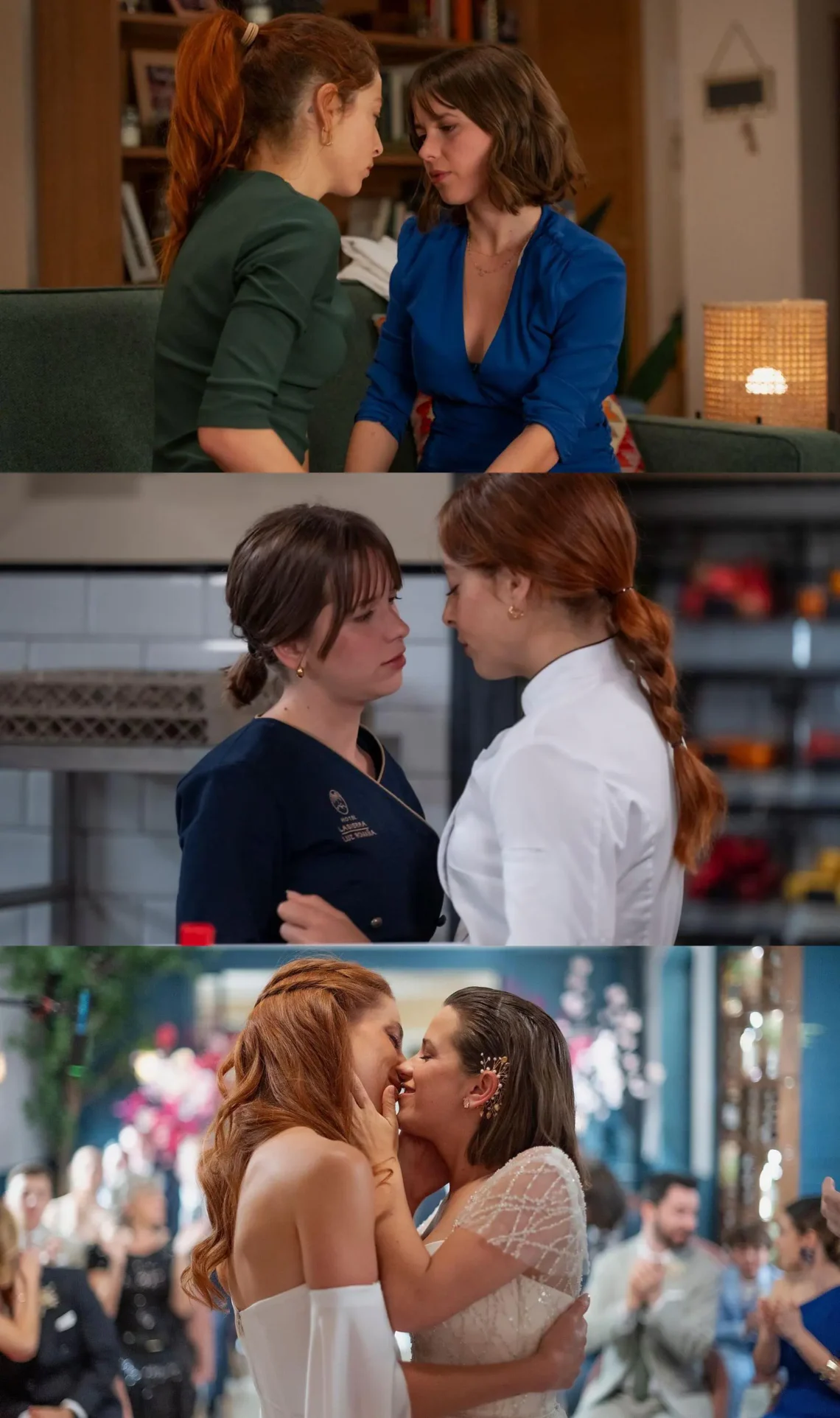
The presence of another person who completes us sometimes thoroughly shakes the very world we have spent a lifetime building. The narrative of Luz and Ainhoa in the Spanish RTVE daily drama 4 Estrellas does not merely stop at being a queer romance that deviates from a heteronormative trajectory.
This is an exploration of identity by one woman discovering uncharted territory hidden deep within her inner self, and a journey of salvation for another woman who, having locked the doors to her heart due to past wounds, learns to trust someone again. Blooming within the fierce living space of a kitchen, the emotions of these two individuals intimately display a process of moving beyond isolation and deficiency toward complete solidarity.
🌿 Moments When This Drama Deeply Resonates
- Those who have deviated from a familiar, heteronormative trajectory and are experiencing confusion as they face their true feelings for the first time
- Those who find themselves repeatedly stepping back in the face of a new love due to past traumas filled with wounds
- Those who wish to witness a mature life partnership that is completed through conflicts and ups and downs, moving beyond a simple romance
Why you should read to the end: This review goes beyond a simple romance summary of the Luznhoa couple to provide an in-depth analysis from a critic’s perspective on the structure of solidarity and growth in a female-centric narrative completed through the rupture and reunion of a relationship.
🎞 Notes Before Watching
As this work unfolds as a subplot of a Spanish daily family drama, it focuses on the density of emotions and the shifts in the relationship felt by the two characters rather than provocative or sensational depictions. It is an emotionally driven work centered on the dialogues, psychological confrontations, and the healing process of wounds between the characters.
🎬 Show Information
- Title: 4 Estrellas (2023–2024)
- Director: Manu Gómez, Laura Campos, Jacobo Martos
- Screenplay: Daniel Écija, Ángel Turlan, Borja González Santaolalla
- Country: Spain
- Genre: Comedy, Drama, Romance
- Running Time: Approx. 45 minutes per episode (Daily Drama)
- Platform: RTVE
- Cast: Ana Jara Martínez (as Luz Romaña Lasierra), Belén Écija (as Ainhoa Arminza)
📖 4 Estrellas, an Awakening of Identity and the Inflection Point of a Relationship Blooming in the Confined Space of a Kitchen [No Spoilers]
Luz, the heiress to Hotel Lasierra and an ambitious new chef, constantly clashes and engages in power struggles with Ainhoa, who has arrived as the new head of the kitchen. Luz had a long-term lover, Paolo, and Ainhoa was also in a state of not being fully free from her painful past with her ex-husband, Hugo.
However, as time spent cooking and bumping heads together in the hot kitchen accumulates, a subtle emotional current beyond simple camaraderie begins to flow between them. Luz, who had not realized she could love a woman, experiences identity confusion as she feels fluttered and jealous toward Ainhoa, while Ainhoa attempts to hide behind the realistic barriers of age difference and a hierarchical relationship.
The moment Luz settles her existing relationship and becomes certain of her own feelings, Ainhoa’s dark past—her ex-husband Hugo—reappears before them, sweeping their relationship into a massive psychological conflict and unpredictable events.
🍳 The Emotional Mise-en-scène and Discovery of Identity Created by the Confinement of the Kitchen
The hotel kitchen, the primary space where the relationship between Luz and Ainhoa begins and expands, functions not merely as a workplace but as a confined room that maximizes the psychological trajectory of the two characters. The kitchen, where intense heat and sharp blades cross, is a space demanding control and order, but at the same time, it is a liberating space where their emotions collide most fiercely and hidden desires are revealed.
In this space, Luz experiences a process where her surface-level emotions of respect and reliance toward her senior, Ainhoa, transform at some point into jealousy and fluttering excitement. This process becomes an opportunity for Luz to dismantle the heteronormative worldview she previously believed to be safe, along with the sanctuary of Paolo, and to newly recognize her true sexual orientation.
The growth of Luz, who witnesses herself becoming truthful only in front of Ainhoa—not because she dislikes her boyfriend—is expressed with greater density within the boundaries of this private yet public space of the kitchen.
🌪 The Weight of Secrets and Fissures of Trust: The Structural Collapse of a Relationship
The crisis that visits them after their love becomes official stems not from external prejudice, but from internal lies and silence. The appearance of the ex-husband Hugo and the staircase fall incident bring Ainhoa’s residual past trauma entirely to the forefront. Under the pretext of protecting Luz, Ainhoa conceals the truth and acts arbitrarily, but this defense mechanism leaves Luz with a deep sense of betrayal and isolation.
This point of collision between Ainhoa’s “fear of a new love” and Luz’s “desire for dignity and growth” painfully demonstrates that the completion of love requires not just emotion, but a readiness to equally shoulder the weight of the partner’s life. The temporary separation they choose functions not as a complete ruin of the relationship, but as an inevitable period of deferment to heal their respective deficiencies on their own.
🔎 Reinterpretation of the Ending: Decisions Beyond Conflicting Values and the Aesthetics of Autonomous Companionship
In the latter part of the work, the two characters face another mature farewell due to practical differences in values regarding “family and children” that cannot be bridged by the sentiment of love alone. The choice to part ways with tears while respecting the direction of each other’s intact lives is a segment proving that their relationship has reached a mature stage of protecting each other’s dignity beyond temporary passion.
However, the lingering resonance left by this separation eventually leads to a dramatic reunion and marriage as Luz makes the courageous decision, stating, “I want to become a mother together.”
The vows the two exchange in the ending go beyond the romantic achievement of a simple happy ending; they are the result of an autonomous choice to embrace both each other’s wounds and the uncertainty of the future. The marriage of Luz and Ainhoa is a declaration of mutual salvation where two agents, having passed through past traumas and future fears, finally endorse each other as life partners.
This ending leaves a profound aesthetic resonance by creating the next chapter of the life they will walk together (a complete family with a child).
💬 In-Depth Analysis: Reading the Narrative Depth of 4 Estrellas
Q. How do you evaluate the criticism that the crime thriller elements (the Hugo incident) in the latter half of the work dilute the essence of the queer melodrama?
The criticism that the drama’s genre abruptly veered into a mystery with the introduction of the Hugo incident, making it difficult to focus on the emotional lines of the two characters, is structurally valid. However, this incident is not a mere device for provocation, but an aesthetic device visualizing how the ghost of Ainhoa’s past threatens the present relationship. The conflict caused by secrets and lies becomes an inevitable opportunity to test how the two must build harsh, realistic trust away from romantic illusions, prompting the audience to contemplate the value of a partnership that goes beyond a simple romance.
Q. What is your view on the mixed reactions regarding the ending’s development, where a separation due to differing values is followed by an abrupt marriage?
There is sufficient room for the process of their separation over differences regarding children and the future, followed by a rapid reunion, to appear lacking in probability due to the characteristic fast pacing of a daily drama. However, this abrupt development rather reflects the dynamics of the moment when a human being makes a monumental decision of love that transcends rational calculation. When interpreted as a courageous decision made by characters who poignantly realized the weight of each other’s absence through the time of separation, this ending poses a question to each viewer about what the true form and conditions of a family are.
✨ 4 Estrellas, A Perfect Orbit Achieved by the Meeting of Flawed Lives
This work fiercely proves within everyday spaces how a wounded past and an immature present can find salvation through one another. The journey of Luz and Ainhoa goes beyond simple same-sex love, demonstrating the possibility of a new form of solidarity and an alternative family that institutions and customs fail to define.
This complete household, achieved by the meeting of one haunted by the ghosts of the past and another contemplating the identity of the future, reminds us that love is not a mere emotion but the most sublime moral decision to take responsibility for a life. Love is not erasing each other’s deficiencies, but a history of solidarity, walking through the valley of those deficiencies together to build a new world.
💌 The Weight of an Intact Choice Arriving After the Collapse of a Relationship
To fully trust another person, how far must we share our secrets, and how long must we wait for the other?
Between the courage to restart a relationship where trust has collapsed and the decision to draw a future together despite harboring completely different values, which side feels closer to impossible in your own life? Please share your deep thoughts in the comments.
🎬 Violet Screen’s Radiant Female Narrative Curation
- Stupid Wife (2022–2024)
- Reason for Recommendation: A Brazilian drama dealing with the conflict and reunion between a woman who has lost her memories of the past and her wife who still loves her deeply. Like 4 Estrellas, it depicts the process of overcoming broken trust and a period of void through high-density emotional lines, presenting a profound lingering resonance as they become each other’s sole emotional salvation.
- Girls Like Girls (2026)
- Reason for Recommendation: An emotional youth romance drama based on the novel of the same name by singer-songwriter Hayley Kiyoko. The emotional lines of the protagonist, who moves to an unfamiliar town, realizes her sexual orientation within the new environment, and clumsily moves straight forward, resemble the first steps of identity exploration shown by Luz in 4 Estrellas.
To provide a more stable publishing environment, multilingual content, and better communication with our readers, we have moved our official publication to Substack.
All new film reviews and critical essays will be published on our new platform. This website will be closing down soon, so we would greatly appreciate it if you subscribed to our new space.
TODAY'S QUESTION
Which character has comforted you lately?
Your answer isn't saved. Feel free to share it in the comments below.


You May Also Like

Thai GL Series (CLAIREBELL) Ending Interpretation: The Aesthetics of Salvation and Solidarity Within a Brutal Prison Narrative

I Wanna Be Sup’tar: An Interpretation of Salvation and Liberation for Two Women Blossoming Amid the Illusion of Stardom