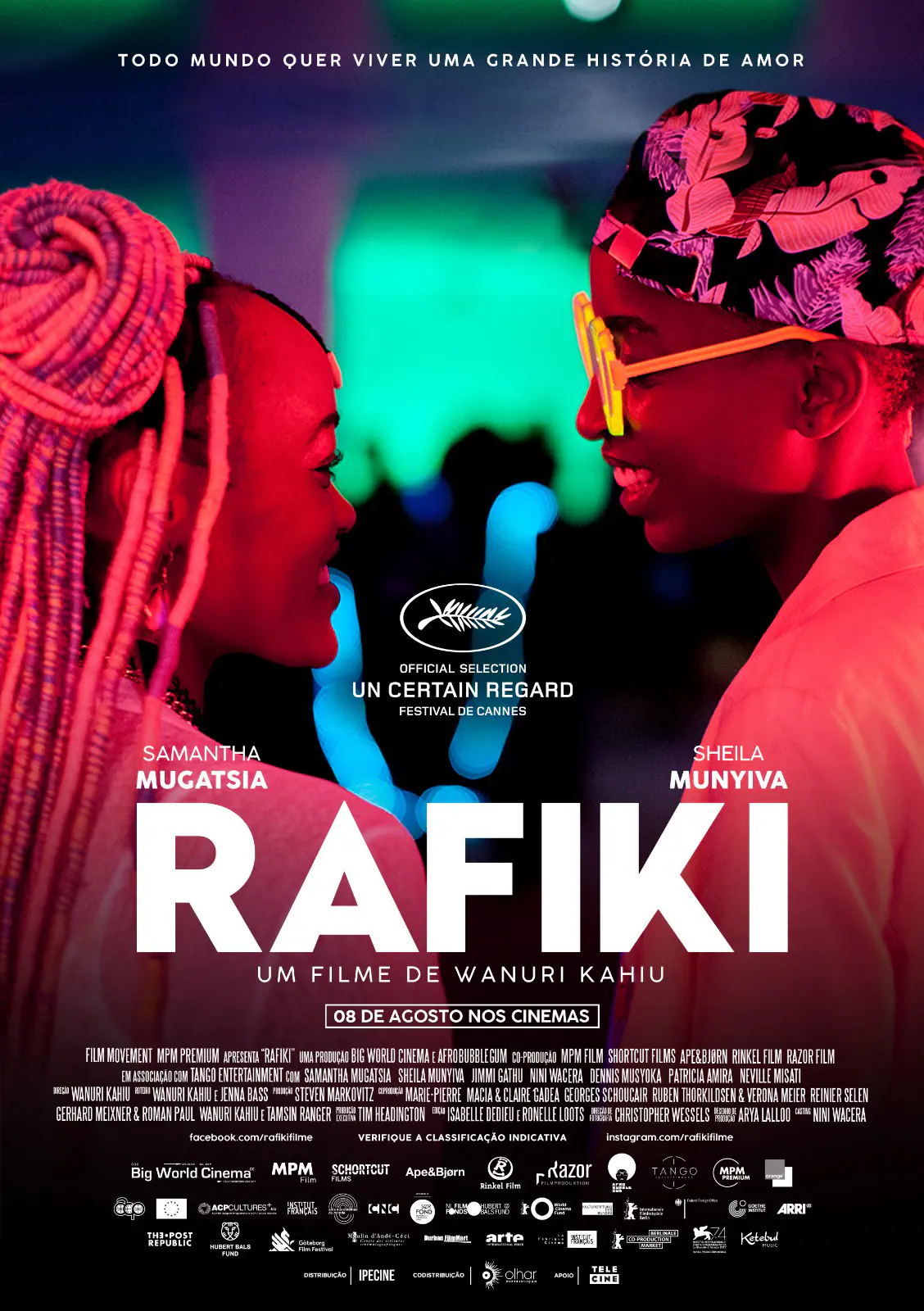
Rafiki: Fractures of Oppression and the Solidarity of Love Hidden Behind Radiant Colors
When the gaze of others becomes the standard of life, we live with our truest selves concealed. The film Rafiki captures the radiant yet precarious journey of two women who set out to find their own unique colors within a completely gray world.
Moving beyond a simple queer romance, this work offers a profound meditation on how an individual preserves their dignity within the order of an oppressive community. The flickering of these two souls, who resolutely discover one another despite the unyielding walls of reality, deeply stirs our hearts, which have grown accustomed to isolation.
🌿 Moments When This Film Deeply Permeates
- Moments when you wish to choose your own beauty instead of the answers prescribed by society
- When you want to witness the solidarity of those fighting lonely battles before a massive wall of prejudice
- When you desire to escape the prison of public scrutiny and face the colors of true liberation
- The reason you must follow through to the end to find the answer to why hope, blooming even amidst harsh realities, sustains life
🎞 Note Before Viewing
This film contains scenes of physical violence by mobs during its realistic depiction of the legal and social oppression of homosexuality within Kenyan society. However, rather than focusing on sensational portrayals, it is an immersive drama centered on the emotional connection and shifting relationship between the two characters.
🎬 Film Information
- Title: Rafiki (2018)
- Director: Wanuri Kahiu
- Screenplay: Wanuri Kahiu, Jenna Cato Bass
- Original Work: Monica Arac de Nyeko (Short story ‘Jambula Tree’)
- Country: Kenya
- Genre: Drama, Romance, Queer
- Running Time: 83 minutes
- Platform: Amazon Prime Video, Vimeo on Demand
- Cast: Samantha Mugatsia (as Kena Mwaura), Sheila Munyiva (as Ziki Okemi)
📖 Rafiki, a Secret Milestone for Two Girls Blooming Amidst Political Confrontation and Social Taboo [No Spoilers]
On the vibrant streets of Nairobi, Kena (Samantha Mugatsia), a calm and responsible young woman who helps with her father’s election campaign while dreaming of becoming a nurse, is instantly captivated by Ziki (Sheila Munyiva), the daughter of her father’s political rival who radiates a free-spirited energy. Under the scrutiny of a harsh Kenyan society that enforces conservative religious views and criminalizes homosexuality, the two carefully nurture their feelings for each other behind the veiled title of “friends” (Rafiki).
Transcending family boundaries drawn by political rivalry, their relationship continues through secret dates, but soon faces a sharp turning point due to the rumors and envious gazes of those around them. The price of disrupting the oppressive community order leads to severe violence and forced separation, bringing their conflict and struggle for survival irreversibly to the surface.
🎨 Visualization of Oppression Concealed by Afrobubblegum Mise-en-scène
The Sensory Clash of Neon Colors and Gray Reality
Director Wanuri Kahiu actively utilizes the Afrobubblegum aesthetic, positioning vibrant hues of pink, purple, and yellow throughout the film. Rather than merely providing visual pleasure, these radiant elements function as a cinematic device that paradoxically accentuates the puritanism and institutional oppression enveloping the two protagonists within Kenyan society.
The Symbol of Autonomy in Hair Color
Ziki’s bright neon hairstyle serves as a declaration of autonomy and a refusal of the standardized femininity enforced by the community. Conversely, Kena’s neat and practical style symbolizes conformity for the sake of survival within the social safety net; the process of these two disparate visual signs clashing and merging forms the core relational structure of the film.
⚖️ Inversion of Power Structures and the Violence of Religious Communities
Patriarchal Political Power and Individual Desire
The fathers of the two characters appear as opposing axes of power in the local election, yet they align perfectly before the grand order of patriarchy and heteronormativity. Kena and Ziki’s relationship is treated as a political Achilles’ heel that tarnishes family honor, and their pure individual emotions are thoroughly instrumentalized for the purpose of maintaining power.
Religion Transforming from a Space of Salvation to a Space of Condemnation
The village church and town square seem like spaces that strengthen community bonds, but the moment a secret is exposed, they transform into the cruelest stages for judgment. The collective violence of the villagers, weaponizing religious doctrine, explicitly exposes the structural violence of how exclusive solidarity enacted in the name of the majority eradicates the existence of a minority.
🔎 Reinterpretation of the Ending of Rafiki: A Declaration of Autonomy Beyond Forced Fractures
Following the community’s brutal lynching, Ziki is forced to relocate to the UK, while Kena is left behind in Nairobi, bearing a permanent stigma. This ending appears to leave an eternal fracture in their relationship by separating them physically, but in truth, the psychological growth they have achieved moves toward a complete solidarity. Kena carves out a life as an autonomous doctor instead of accepting the compromise of becoming a nurse as dictated by others, and she reunites with Ziki upon her return to the village.
This ending is not merely a retelling of a romantic happy ending; it is a record of victory accessible only to those who survive without losing their individual dignity within a massive system of oppression. Even through the lost time, the memory of the love they shared remains undamaged, taking root within each other’s hearts to serve as nourishment for growth. The ending of Rafiki stands as a declaration proving that even the barriers of harsh real-world politics and institutions cannot ultimately break the structured existential freedom of human beings and their desire for solidarity.
💬 Rafiki Deep Dive FAQ: Interpretations on the Limitations and Aesthetic Breakthroughs of African Queer Narrative
Q. There is criticism that the film concludes the violent situation too abruptly in the latter half and pivots quickly to a romantic reunion, thereby diluting the heavy weight of reality. How should this be interpreted?
The film sets up severe legal and social barriers regarding the punishment of homosexuality within Kenyan society, yet its choice of a somewhat fairytale-like reunion at the end can be seen as diminishing narrative realism. Critics argue that this development wraps up the existential threats faced by minorities in an overly optimistic manner.
However, this must be understood as a structural choice of the “Afrobubblegum” aesthetic pursued by Director Wanuri Kahiu. The director sought to resist the Western-centric gaze that consistently consumes Africa solely through frames of pain, poverty, and despair. An ending that opens up possibilities of hope and survival rather than tragic destruction can be interpreted as an aesthetic rebellion against the system, and a directorial statement that even amidst hardship, there is a right to joy—leaving the final judgment to the audience.
✨ Rafiki, the Optimism of Solidarity Shattering the Cartel of Silence
At the time of its production in 2018, the narrative of Rafiki intersected with the actual reality of being banned from screening in Kenya, extending the structure of oppression outside the text itself. The title, meaning “friend” in Swahili, was the only outer shell permitted by the system, yet the two women break through that shell with their entire being to claim the true name of love. In a contemporary society that still draws countless invisible lines of taboo and exclusion, this film clearly demonstrates that solidarity—holding each other’s hands—is the only way to erase those lines.
Within a massive cartel of silence that seeks to erase the existence of minorities, only an individual love that refuses to stop shining becomes the most powerful political struggle traversing time.
🔮 What Choice Will You Make?
Would you willingly choose the path of vulnerability to prove your inner truth even before the massive walls of reality, or will you live on by erasing your most authentic colors to maintain peace within the safety net of the community?
🎬 Violet Screen Curation: Other Women’s Solidarity Against Oppression
- Tomboy (2011)
- Reason for Recommendation: A masterpiece that captures, with a delicate gaze, the intimate psychological shifts of a young soul exploring their own identity rather than conforming to gender roles and external standards dictated by society.
- Amantes (2025)
- Reason for Recommendation: A clever romantic drama by French director Caroline Fournier. Through three distinct colors of love stories, it poses doubts, desires, and the eternal question: “to flee or to commit?” Unlike the external oppression shown in Rafiki, it develops emotional variations intelligently, focusing on the characters’ inner psychology and choices within their relationships.
To provide a more stable publishing environment, multilingual content, and better communication with our readers, we have moved our official publication to Substack.
All new film reviews and critical essays will be published on our new platform. This website will be closing down soon, so we would greatly appreciate it if you subscribed to our new space.
TODAY'S QUESTION
When did you first feel fully accepted for who you are?
Your answer isn't saved. Feel free to share it in the comments below.


You May Also Like

Fine Dead Girls (Fine mrtve djevojke): An Apartment of Hatred and the Cruelty of Isolated Desire

Zomer (Summer, 2014): The Fever of Identity, Interpreting Desire Awakening in an Isolated Paradise