Interpreting the Spanish Series Dorien: Aesthetic Isolation Wrought by the Greed for Eternal Youth
In contemporary society, the gaze of others has become a matter of survival. We come to believe that the refined images beyond the lens are our true selves, often paying with a piece of our invisible souls to preserve that momentary beauty. The Spanish series 《Dorien (2017)》 summons Oscar Wilde’s classic into the modern digital jungle, depicting the most elegant yet cruel horrors faced by an era of self-display.
🌿 Moments When This Series Deeply Resonates
- When you are suddenly struck by fear of your own shabby, unadorned face hidden behind glamorous filters.
- When you feel the hollow cycle where others’ ‘likes’ determine your self-esteem.
- When you wish to witness the end of complex, subtle power structures and possessiveness between women.
- Because you must observe the chilling anatomy of a human being willing to become a monster for the sake of success and youth.
🎞 Note Before Viewing
This work is a thriller that stimulates modern vanity through psychological pressure and grotesque imagery. It is an aesthetic horror drama that focuses on the ruin of relationships and emotional isolation rather than physical mutilation.
🎬 Series Information
- Title: Dorien (2017)
- Director: Kiko Prada, Javi Prada
- Screenplay: Helena Morales, Alberto López
- Original Work: Oscar Wilde, 《The Picture of Dorian Gray》
- Country: Spain
- Genre: Psychological Thriller, Horror, Drama
- Running Time: Approx. 20 minutes per episode (8 episodes total)
- Platform: RTVE Playz
- Cast: Carolina Bang (Dorien), Dafne Fernández (Miriam), Daniel Muriel (Marcos), Macarena Gómez (Marta)
📖 Dorien: A Chronicle of Eternal Youth and Exploitation Trapped Within a Lens [No Spoilers]
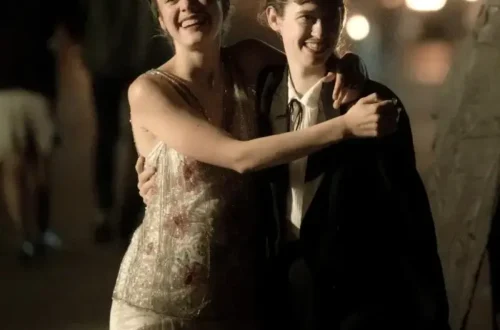
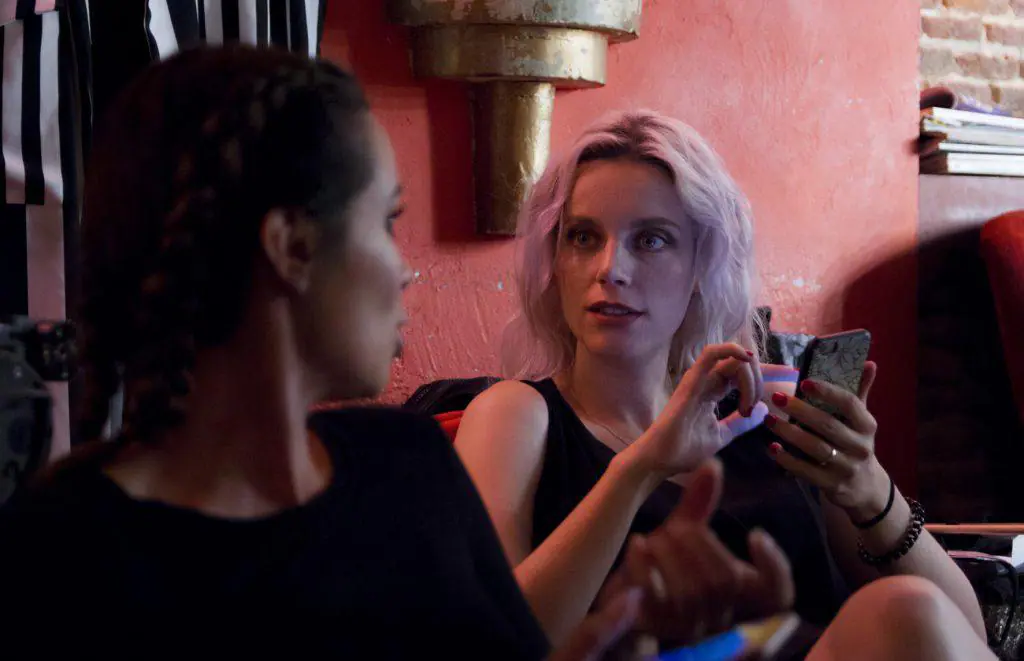
Set against the backdrop of Malasaña, Madrid’s hip cultural hub, this work revolves around Dorien, a young, talented, and uniquely charming photographer. She builds her reputation by capturing the most brilliant moments of numerous influencers, yet she herself maintains an eerily perfect youth, as if having bypassed the flow of time.
Conversely, Marcos, a cynical journalist, grows suspicious and begins an investigation into mysterious disappearances around Dorien and the phenomenon where subjects in her photographs age rapidly or lose their vitality. Dorien’s lover, Miriam, is the person closest to her secrets, but she finds her sense of self gradually eroded within the ramparts of the perfect image Dorien has constructed.
Each time the camera shutter clicks, someone’s life force is transmuted into Dorien’s beauty. The conflict between Marcos’s obsession with the truth and Dorien’s desire to protect her secret accelerates toward a catastrophic end.
👁🗨 Narcissism Projected onto the Shutter: The Significance of Dorien’s Rebirth as a Female Narrative
While the original The Picture of Dorian Gray focused on the profligacy of a male aristocrat, the 2017 Dorien replaces this with the social compulsion of “eternal youth” imposed upon women as a thriller device. In the series, Dorien is not merely a beautiful woman; she occupies a position of power as a photographer who ‘produces’ and ‘exhibits’ that beauty. This symbolizes a structure in contemporary society where images equal power. Dorien solidifies her social status by physically absorbing the energy of her influencer subjects.
The relationship between Dorien and Miriam is a pivotal point of psychological analysis in this work. Their bond is more than that of simple lovers; for Dorien, Miriam is both a mirror reflecting her secrets and a sanctuary that fills her deficiencies. However, Dorien’s narcissism does not acknowledge others as equals, reducing even Miriam to a mere prop within her perfect world.
This power imbalance vividly demonstrates how solidarity between women can be distorted by desire.
📸 Digital Alienation and Mise-en-scène: A Chilling Interpretation Behind Malasaña’s Splendor
The series captures the Malasaña district of Madrid with a sensual visual style, yet those vibrant colors feel all the more grotesque when contrasted with Dorien’s dark interiority. The camera follows Dorien’s gaze, penetrating the subjects obsessively, which critically reproduces the voyeuristic attitude of the social media era.
The camera Dorien uses serves as the cursed medium replacing the ‘portrait’ of the original work, maximizing modern horror where digital data replaces reality.
What warrants attention here are the targets Dorien sacrifices. They are mostly influencers who expose themselves to consume their own images. Through the contractual relationship between the ‘one being photographed’ and the ‘photographer,’ the drama presents a metaphorical interpretation: that a single selfie uploaded to digital space may ultimately be an act of gradually consuming one’s own soul.
🔎 Reinterpreting the Ending — Eternal Isolation in Frozen Time
The finale of the drama clarifies that the price of the youth Dorien so desperately craved is, ultimately, severance from others. Even as the truth is revealed and Marcos’s pursuit reaches its peak, Dorien chooses to defend ‘beauty’—her sole reason for existence—rather than repent. The point where her relationship with Miriam collapses inflicts a sense of emotional loss upon Dorien, yet she ultimately chooses to become a specimen of smooth skin where even tears cannot flow.
This ending leaves an ‘irreparable fracture’ in the relationship between the two. Dorien is liberated from the flow of time, but she has simultaneously lost the humanity required to change, grow, and commune with others. She must now live as a ghost within photographs that never age.
Dorien’s perfected beauty is the victory of a cold object stripped of life force and a declaration of total defeat as a human subject.
❓ Questions Regarding the Ending of 《Dorien》 and Female Representation
Q1. Can the character of Dorien be viewed as a typical ‘Femme Fatale’?
While Dorien may appear as a femme fatale who seduces and ruins men early in the work, as the plot unfolds, it becomes clear that her desire is focused not on seducing men, but on a compulsion toward herself. This differentiates the work from traditional male-centered representations of “wicked women,” as it deals with the ruin brought about by autonomous narcissism. From a critical perspective, there may be claims that it still consumes women’s obsession with appearance as a horror trope; however, this should be understood as a device that exposes the cruelty of aesthetic standards imposed on women by society.
Q2. Does Marcos’s role in the ending feel somewhat passive by design?
Yes. Marcos is merely an observer representing the audience’s gaze; he lacks the power to thwart Dorien’s desire. This also symbolizes the helplessness of critical journalism in the face of the overflow of images in modern society. Rather than offering a heroic solution, the work focuses on showing how a system like ‘Dorien’ is steadfastly maintained.
✨ 《Dorien》: Only the Chilling Truth Remains Where the Filter is Erased
This work proves that a 19th-century classic can still pose valid questions in a 21st-century digital environment. While Dorien’s camera took the youth of her subjects, today our smartphones are taking our ‘time’ and ‘presence.’
In a world where the displayed image takes precedence over the essence of a relationship, perhaps we are all refusing to age while hiding our own portraits in a digital cloud.
The most perfect image is completed only from things that are dead.
👁🗨 Who is Your Lens Pointed At?
Have you ever wished to possess someone by preserving only their most beautiful form in the name of love? Will you choose a ‘solidarity of time’ that accepts the other’s changes and aging, or will you choose the ‘possession of an image,’ carving out and keeping only the most brilliant moments forever?
🎞 Violet Screen Curation: Distorted Desire and Female Narratives
- The Girl in the Mirror (Alma) (2022): A girl who loses her memory after an accident and the supernatural horror surrounding her. A Spanish series that sensually deals with anxiety regarding identity and the body.
- Dead Ringers (2023): The grotesque and obsessive relationship between twin gynecologist sisters. A masterpiece of modern Gothic horror born from medical arrogance and women’s bodily rights.
To provide a more stable publishing environment, multilingual content, and better communication with our readers, we have moved our official publication to Substack.
All new film reviews and critical essays will be published on our new platform. This website will be closing down soon, so we would greatly appreciate it if you subscribed to our new space.
TODAY'S QUESTION
What's the most memorable new release you watched this year?
Your answer isn't saved. Feel free to share it in the comments below.


You May Also Like

A League of Their Own (2022) Analysis: Solidarity of Desire Beyond the Deficiencies of an Era
Mine (2021): Beyond Jung Seo-hyun and Choi Su-ji’s Closed Doors, a Reinterpretation of Repressed Desire