
In Hiding: An Interpretation of the Ending and the Psychology of Obsession: A Tragedy Born of Isolated Desire
Human desire is sometimes more intense than the instinct for survival, and isolation causes that desire to ferment into a deformed shape. Amidst the massive vortex of violence that is war, what these two women faced was not merely an external enemy. The instinct to fill one’s own void by possessing another, and the walls of lies built to maintain that possession, eventually become a prison that traps even the self.
Director Jan Kidawa-Błoński’s In Hiding transcends the framework of a simple queer or war film. This work chillingly, beautifully, and cruelly depicts how humans substitute the existence of another for their own conditions of survival under extreme circumstances, and the process of ruin brought about by that substitution.
🌿 The Moments This Film Sinks Particularly Deep
- When you feel the chilling instant a heart that loves someone transforms beyond ‘protection’ into ‘domination.’
- When you wish to immerse yourself in the aesthetic yet precarious indulgence that blooms under the pressure of a confined space.
- When you want to witness an individual’s obsession, more cruel than the historical tragedy of war, and the futility remaining at its end.
- You will structurally come to understand that Janina’s mad choices stem not from simple malice, but from a ‘fear of loss.’
🎞️ Notes Before Viewing
This work focuses more on the psychological oppression, physical indulgence, and criminal choices between two women than on the horrors of war. While it includes some violent and suggestive depictions, these serve as essential devices to reveal the isolated worldviews and destructive relational dynamics of the two protagonists.
🎬 Film Information
- Title: In Hiding (Original Title: W ukryciu, 2013)
- Director: Jan Kidawa-Błoński
- Screenplay: Maciej Karpiński
- Country: 🇵🇱 Poland
- Genre: Drama, Psychological, Queer, Thriller
- Running Time: 102 minutes
- Cast: Magdalena Boczarska (as Janina), Julia Pogrebinska (as Ester)
📖 In Hiding Synopsis: A Woman’s Dangerous Lies and the Development of Hiding a Jewish Woman [No Spoilers]
In Radom, Poland, during the height of World War II, the stranger Ester intrudes into the static life of Janina, a cellist living with her photographer father. Janina initially shows coldness and rejection toward her father’s decision to hide Ester, the daughter of a Jewish friend, in their basement cellar. However, after her father is arrested by the Nazis and taken away, Janina is left alone as Ester’s sole protector.
Janina’s efforts to keep the secret face a crisis due to threats from a neighbor, Mirski. To protect Ester, Janina makes the extreme choice of murder, irrevocably intertwining the fates of the two women. Amidst fear and isolation, Janina gradually begins to obsess over Ester, and their relationship evolves beyond solidarity for survival into physical indulgence and possessiveness. Even after the war ends, Janina—unwilling to lose Ester—blocks all news of the outside world and continues to keep her confined in the basement.
🥀 In Hiding Interpretation: Forms of Love More Cruel Than War and the Symbolism of Space
The most noteworthy aspect of In Hiding is the transition of space. The basement cellar that initially confined Ester was a ‘sanctuary’ protecting her from the Nazis, but after the war ends, it transforms into a ‘prison’ to maintain Janina’s desire. For Janina, Ester was not just a lover, but the only tangible evidence of existence she could touch in a lonely world where she had lost her father and was left entirely alone.
The director focuses on the setting of Janina running a photography studio. Photography is a medium of desire that seeks to taxidermy a moment to possess it forever. Janina attempts to taxidermy Ester by confining her within the frame of the basement, preventing her from leaving her life. This aesthetic of obsession reaches its peak when Ester’s husband, Dawid, appears, and Janina chooses the path of ruin by committing murder once again to maintain her virtual world.
📸 The Power Structure of Janina and Ester and the Chain of Reversed Victimization
The film blurs the boundaries between victimizer and victim. In the place where the grand victimizer—the Nazis—disappeared, a new victimizer, Janina, takes up residence. Ester accepts Janina’s affection for the sake of survival, but this is closer to gaslighting enforced by an isolated environment rather than a voluntary choice.
By killing Mirski, Janina became Ester’s savior, but simultaneously became a creditor who took Ester’s freedom as collateral. This bizarre power dynamic reaches its climax in the scene where Ester attempts suicide and Janina saves her. Because Ester’s life is Janina’s sole reason for being, she does not even grant Ester the freedom to die. This is the most cruel form of violence, packaged under the name of solidarity.
🔎 The Ending: One Who Walked Out the Door and One Who Confined Herself
The ending of In Hiding concludes with Janina’s confession and Ester’s belated liberation. When Janina, unable to endure the guilt and anxiety, places herself before the judgment of the law, Ester finally ascends to the surface and witnesses under the sunlight that the war has ended. This ending stamps a seal of ‘eternal severance’ on their relationship.
To Ester, Janina is both a life-saver and a predator who snatched away her entire life; to Janina, Ester was the sole justification for all her crimes. Paradoxically, Janina heading to prison is the only ‘restoration of dignity’ as she faces her crimes and escapes her massive obsession with Ester. Conversely, the world Ester faces is free, but it is no different from a ruin where even the husband she awaited was murdered by Janina.
Janina’s confession is not the fulfillment of love, but a tragic liberation achieved by destroying the other whom she could not possess.
❓ Limitations and Aesthetic Achievements of the Female Narrative
Q. Should Janina’s actions be seen as simple ‘evil,’ or as a product of the tragedy of the era? Janina’s obsession is an explicit crime and an act of violence, but at its root lies the extreme sense of loss and isolation caused by the war. Rather than depicting her as a simple villainess, the film structurally demonstrates how an abnormal environment turns an ordinary human into a monster. Therefore, it is appropriate to interpret her actions as a tragic result of the combination of individual moral flaws and the pressures of the era.
Q. What are the potential modern controversies regarding the queer narrative in this film? Some viewers may feel uncomfortable with the fact that the relationship between the two women is based on confinement and gaslighting rather than equal affection. However, this work does not aim for a typical romance; it is closer to a ‘psychological thriller’ that explores human psychology under an imbalance of power. The aesthetic achievement of this work lies in the fact that it does not merely paint the narrative between women as beautiful, but exposes the dark desires and destructiveness within it without filtration.
✨ In Hiding: A Distorted Mirror Encountered at the End of Solitude
The film In Hiding asks us: is that heart you believe to be love actually a hand tightening around another’s throat? The extreme situation of war pulled out both the purest instincts and the most hideous desires of humanity, and Janina lost her way at that boundary. Amidst the confusion of identity and desire, the ‘underground paradise’ she chose was ultimately a sandcastle that would crumble at a single handful of sunlight.
The moment love ceases to expand the other’s world and instead shrinks and confines it, it becomes a terrible murder rather than a sublime solidarity.
👁️ Insights into Distancing Within Relationships
Sometimes, in the name of love, we try to obscure another’s vision and invite them only into our own world. But the moment that invitation becomes coercion, the relationship begins to suffocate.
Are you prepared to willingly let a loved one go for the sake of their happiness? Or do you, like Janina, wish to bind them to a ‘hiding place’?
📽️ Violet Screen Curation: Other Female Narratives Between Obsession and Solidarity
- Duck Butter (2018)
- Reason for Recommendation: Through the attempt of two women to share everything by spending 24 hours alone together, it realistically shows how the longing for intimacy can transform into obsession and exhaustion.
- Elisa & Marcela (2019)
- Reason for Recommendation: It deals with the true story of two women who went as far as cross-dressing and marriage to escape social oppression. Like In Hiding, you can appreciate the desperate solidarity and love of those who had to maintain a secret relationship through black-and-white mise-en-scène.
To provide a more stable publishing environment, multilingual content, and better communication with our readers, we have moved our official publication to Substack.
All new film reviews and critical essays will be published on our new platform. This website will be closing down soon, so we would greatly appreciate it if you subscribed to our new space.
TODAY'S QUESTION
Which character has comforted you lately?
Your answer isn't saved. Feel free to share it in the comments below.


You May Also Like
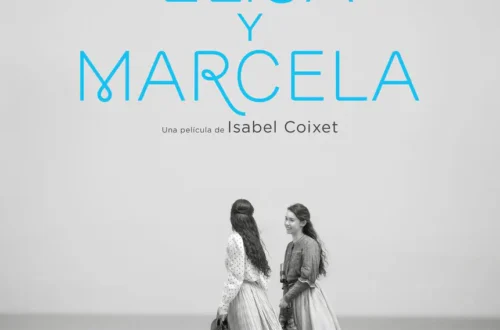
Elisa & Marcela: An Eternal Escape Beyond the Barrier of Taboo in 19th-Century Spain

Puccini for Beginners: The Fear of Commitment, Fluidity of Relationships, and Novices in the Opera of Love