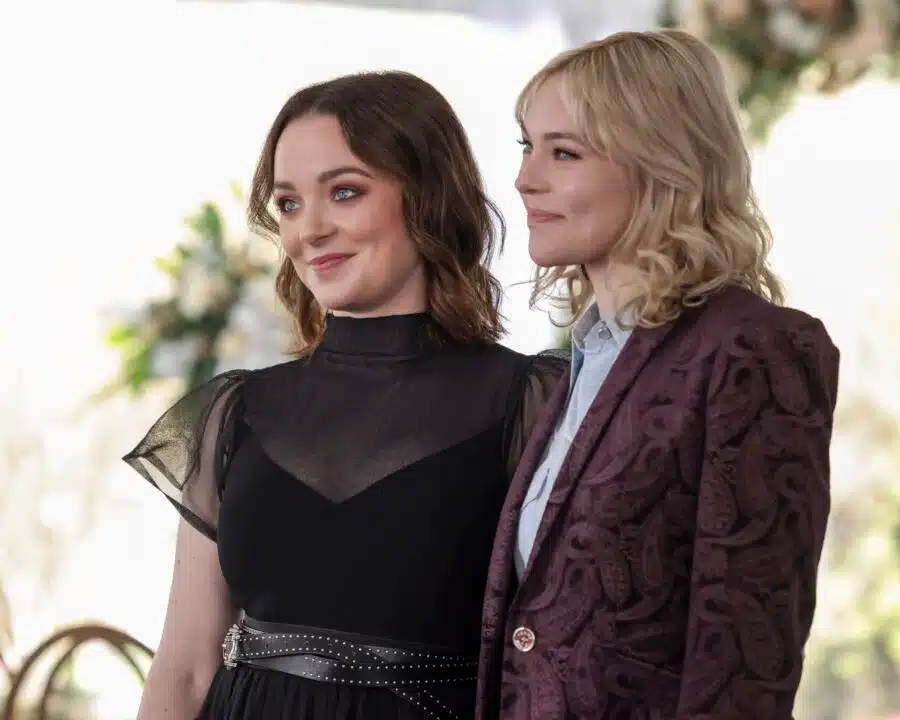
Motherland: Fort Salem Review: A Narrative of Salvation Born on the Border of Life and Death
Craving the warmth of another in an isolated world is an instinctual human desire. When two entities living with the deficiency of loss confront each other’s darkest abysses, their relationship transcends mere attraction, becoming the sole pathway to mutual salvation. Set within an alternate history where witches lead the military, Motherland: Fort Salem depicts the fierce process of how two wounded women destroy and subsequently rebuild each other’s worlds.
🌿 Moments When This Drama Deeply Permeates
- When you feel as though you stand alone before the immense violence of state and duty.
- When you wish to witness the simultaneously destructive and curative power held by the emotion of love.
- When you want to confirm the most steadfast solidarity rising above the ashes of betrayal and wounds.
- Why you must read to the end: Through the relational structure of Raelle and Scylla hidden behind the magnificent fantasy of an ensemble drama, it proves that true salvation means fully embracing even the darkness of the other.
🎞 Note Before Viewing the Drama
This work features a densely developed depiction of physical and psychological conflict during the portrayal of witches’ battles and supernatural magic. While the level of romantic expression and emotional collision between characters is depicted intuitively and intensely, it is not intended for sensational provocation. It functions as a core device of the plot to visualize the value of life, death, and solidarity experienced by the two protagonists, filling the work with a dense narrative thoroughly centered on emotion and relationship.
🎬 Drama Information
- Title: Motherland: Fort Salem (2020–2022)
- Directors: Steven A. Adelson, Haifaa Al-Mansour, et al.
- Screenplay: Eliot Laurence, Joy Kecken, et al.
- Country: United States
- Genre: Supernatural, Fantasy, Drama, Alternate History
- Running Time: 3 Seasons, 30 Episodes total (10 episodes per season)
- Platform: Hulu, Freeform
- Cast: Taylor Hickson (as Raelle Collar), Amalia Holm (as Scylla Ramshorn), Demetria McKinney (as Anacostia Quartermaine)
📖 Motherland: Fort Salem, Love Blooming Amidst the Solidarity of Conscripted Witches and a Grand Betrayal [No Spoilers]
Raelle, a Fixer possessing a strong defiance toward the world and the military following her mother’s death in battle, reluctantly enlists at the Fort Salem military base. There, she encounters Scylla, a mysterious second-year cadet specializing in Necro arts, and the two experience an intense, fateful attraction at first sight. However, Scylla’s true identity is that of a spy for the ‘Spree,’ a terrorist organization opposing the military, and Raelle is the primary target the organization is pursuing. Just as their relationship deepens while passing through massive celebrations and training within the unit, a lethal attack by the Spree targeting the base commences. At the crossroads of mission and love, Scylla makes an unexpected choice, and Raelle faces the prelude to a massive betrayal where the tenderness surrounding her might all have been a lie, leaving her standing between the conspiracies of the military and the blade of the organization.
🔮 An Interpretation of the Relationality Between Necromancy and the Fixer That Blurs the Line Between Life and Death
The core engine of Motherland: Fort Salem lies in the symmetrical relational structure of Raelle, the ‘Fixer’ who absorbs the wounds of others, and Scylla, the ‘Necro’ who deals with death. Raelle’s deficiency—her refusal to be consumed as a tool of state power known as the military—dovetails perfectly with the isolation of Scylla, who has lived solely for revenge after losing her parents to the hands of the military.
Though initially an approach with a clinical purpose, Scylla becomes assimilated into the raw purity and fierce emotional depth possessed by Raelle. This goes beyond a simple romance; it illustrates a process in which an entity that had set foot in the world of death reclaims its humanity through an entity that imparts life. Their union is symbolized within the work as the convergence of ‘Earth and Sky,’ completing a narrative of salvation where differing magical essences meet to heal one another.
⛓️ The Aesthetics of Female Narrative Resisting the Crevices and Oppression of the Power System
Although this work is set against a unique alternate history of a matriarchal society where witches lead the military, its internal power structure remains oppressive. The military treats the lives of witches as disposable goods for the state, and the Spree responds to this with violent terrorism. Raelle and Scylla fight for survival in the crevices between these two immense, violent systems.
The moment Scylla rejects the organization’s orders for Raelle and chooses betrayal serves as a political declaration, an act of breaking free from being a mere chess piece assigned by the system to emerge as an autonomous individual. Through their solidarity, the work demolishes the binary oppositional structure mapped out by dominant power, beautifully demonstrating through both mise-en-scène and narrative that women can form new alternative communities by saving one another.
🌌 Perpetual Union Beyond Crevices: Reinterpreting the Ending of Motherland: Fort Salem
Reaching the finale of Season 3, the two individuals, having endured all manners of separation and the hardships of war, finally achieve complete fruition. The scene where Raelle passes through the center of the sacred Mycelium, returns to propose to Scylla, and holds her hand in the subsequent double wedding transcends the mere emotion of a happy ending. This conclusion completely subverts the values prescribed by the violent system of the state; it is a magnificent victory for two women who have created a new world solely through their belief in one another.
The ending they achieve declares that they have overcome the perpetual crevice that is the fear of parting, reaching a complete union of souls. The song Raelle sings toward Scylla above the ruins of war is an aesthetic of lingering resonance, showing that the two have entirely healed their past traumas and the sense of loss from their missing families from the perspective of dignity and growth. The union of Raelle and Scylla is a milestone that dismantles the order of an oppressive world and opens a new era of life.
🔎 Motherland: Fort Salem: Interpretation of Narrative Structure and Modes of Representation
Q1. How should we interpret the ethical pros and cons regarding Scylla’s initial terrorist activities and deceptive approach?
The fact that Scylla deliberately approached Raelle in the beginning and participated in terrorism that sacrificed civilians as a member of the Spree is a point where viewer opinions clearly diverge. The work does not obscure this critical gaze; instead, it explains the structural cause-and-effect relationship by illuminating the past trauma of Scylla’s parents being executed by the military. Scylla’s misdeeds are the monstrous outcome yielded by a matriarchal military society, and the process of her confronting that guilt and transforming through her love for Raelle is itself the aesthetic achievement of this work. Moving beyond a simple framework of good and evil, the drama leaves the narrative open for readers to judge the process of a broken individual searching for autonomy.
Q2. Are there any limitations to the way women’s solidarity is consumed within militarism?
A contemporary critique exists noting that despite women standing at the center of power, they are ultimately represented as instruments of a military system where they must lay down their lives for the state. However, as the drama unfolds, the protagonists raise questions about blind patriotism. In particular, the peculiar cooperation between Anacostia and Scylla, alongside Raelle’s growth, develops in a manner that creates fractures from within the oppressive organization of the military. This demonstrates a mode of female representation not as a solidarity that conforms to the system, but as a movement to transform and dismantle it, offering deep points of reflection.
✨ Motherland: Fort Salem, A Grand Declaration of Love That Broke the Chains of Oppression
The question posed at the final destination of this review is precise: when an immense state system and societal duties attempt to crush individual identity and desire, with what can we preserve human dignity? Motherland: Fort Salem finds that answer not in blind obedience to the system, but in the deep salvation and love of two women holding onto each other at the firing line. Their relationship goes beyond a simple romance; it is the most revolutionary attitude an individual can adopt within an oppressive structure. True solidarity is born from the courage to take full responsibility for each other’s abysses, moving beyond the discipline of the system.
🦋 Are You Ready to Face Your Abyss?
The emotion of love sometimes becomes a comfortable sanctuary, but it also becomes a mirror that forces you to stare directly into your most hideous and dark inner self.
If the person most precious to you were hiding a secret that could destroy your world, would you cast them out according to the rules of the system, or would you take their hand even if it meant risking ruin?
🎬 Violet Screen Recommended Curation
- Warrior Nun (2020–2022)
- Reason for Recommendation: Set within a grand fantasy surrounding an ancient order and supernatural power, it deals with the dense religious and emotional solidarity and growth of the protagonist Ava, who rejects her destiny, and Sister Beatrice, who seeks to protect her. You can feel a variance from the military atmosphere of Motherland: Fort Salem through its sacred religious action.
- Wayward (2025) — Netflix
- Reason for Recommendation: A mystery thriller series set in a small town in Vermont in 2003, against the backdrop of a secretive institutional camp carried out under the pretext of reforming troubled youth. It depicts the relationship between two characters, Leila and Abbie, who become deeply addicted to one another within a controlling system while attempting to expose the massive darkness of the camp.
To provide a more stable publishing environment, multilingual content, and better communication with our readers, we have moved our official publication to Substack.
All new film reviews and critical essays will be published on our new platform. This website will be closing down soon, so we would greatly appreciate it if you subscribed to our new space.
TODAY'S QUESTION
Which film feels like your 'first love' story?
Your answer isn't saved. Feel free to share it in the comments below.


You May Also Like
Venice: The Series: Gina and Ani’s Reunion, Ending, and Trajectory Beyond Trials

Élite: An Interpretation of Rebeka and Mencía’s Relationship—A Review of the Moment Where Deficiency and Salvation Intersect