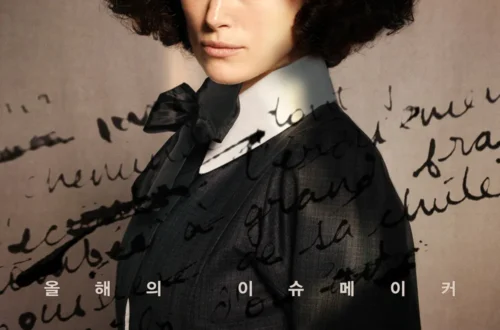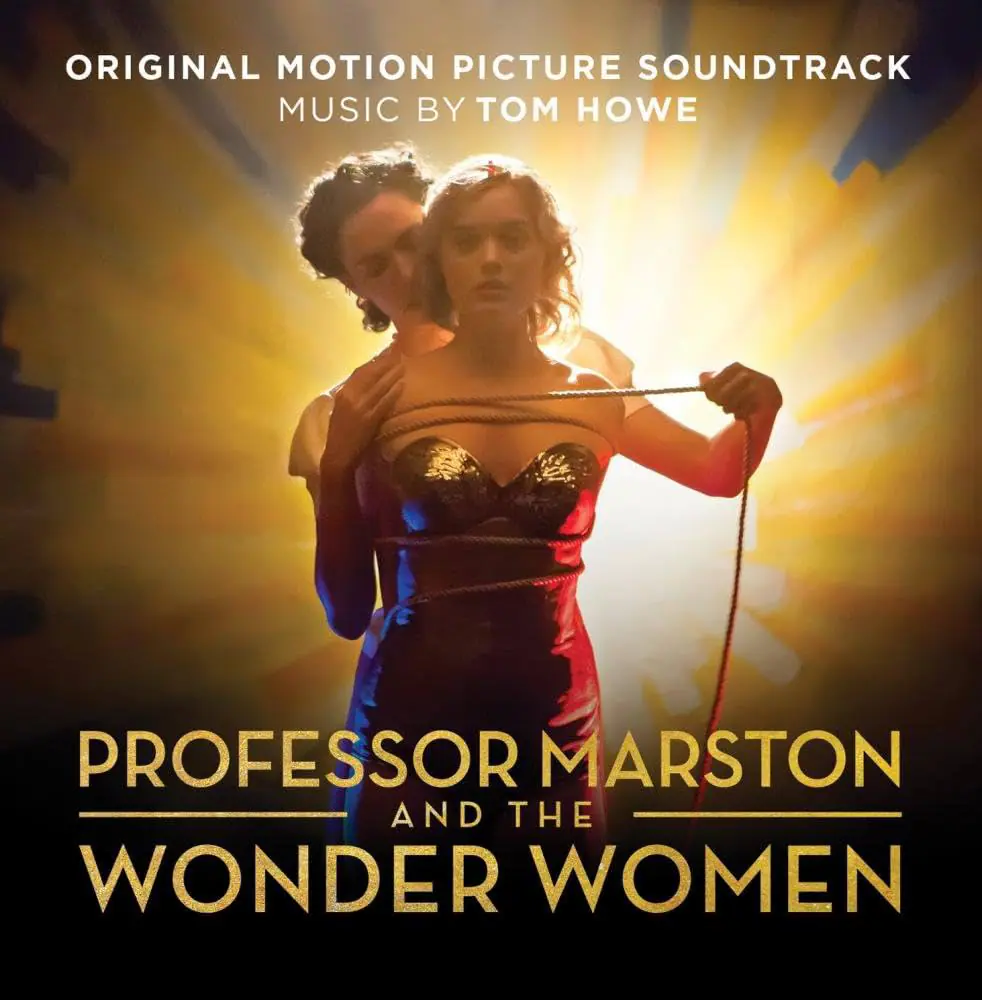
Professor Marston and the Wonder Women (2017): The Essence of the Eternal Solidarity Forged by Two Women in the True Story of Wonder Woman
At the boundaries of “normalcy” defined by the gaze of others, how true can we truly be to ourselves? Beyond merely recounting the origin story of a superhero, Professor Marston and the Wonder Women (2017) is an intimate record of individuals who discovered the most complete solidarity and love within a relationship forbidden by the world.
Breaking through social frames of oppression and submission, their narrative of filling each other’s voids and creating a new way of life resonates deeply within us today.
🌿 Moments When This Film Deeply Permeates
- When you want to break through the oppressive framework enforced by society and stand tall as an autonomous agent of desire
- When you want to discover the magnificent partnership and communion between two women, hidden behind a male-centric narrative
- When you want to escape the prison of the gaze of others and believe in the power of genuine love and solidarity
- The reason you must follow this hidden masterpiece to its very end to see why it transcends a simple polyamorous affair to remain an eternal masterpiece of female narrative
🎞 Note Before Viewing
While this work includes depictions of eroticism and bondage in the process of visualizing the characters’ psychological theories (DISC) and dominance-submission dynamics, these are not intended for provocative consumption; rather, they serve as crucial artistic devices to explain the deep emotional communion, trust, and relational structures in which women act as the central subjects.
🎬 Movie Information
- Title: Professor Marston and the Wonder Women (2017)
- Director: Angela Robinson
- Screenplay: Angela Robinson
- Country: 🇺🇸 United States
- Genre: Biography, Drama, Queer Romance
- Running Time: 108 minutes
- Platform: Netflix, Amazon Prime, Apple TV (VOD)
- Cast: Luke Evans (as William Moulton Marston), Rebecca Hall (as Elizabeth Marston), Bella Heathcote (as Olive Byrne)
📖 Professor Marston and the Wonder Women, Love Blooming Through Oppression and the Birth of Wonder Woman [No Spoilers]
While researching human behavior patterns, Harvard psychology professor William and his brilliant wife Elizabeth meet Olive, a pure and passionate research assistant. Utilizing lie detector research as a medium, the three experience a powerful attraction toward one another and form a secret commune of love, breaking social taboos.
However, as their relationship is exposed to the world, they confront massive realistic barriers, including being expelled from the university. Moving to the suburbs of New York, they build a life of thorough fabrications to conceal their secret while raising four children together, yet their neighbors’ suspicions and economic deprivation place them under constant pressure.
Inspired by their unique relational structure and the strength of these women, William creates the comic book Wonder Woman and achieves monumental success, but another crisis in the form of moral censorship begins to shake the solidarity of the three.
🔗 Elizabeth and Olive, The Complete Union and Interpretation of Two Women Beyond the Male Gaze
⛓️ The Other Side of Dominance and Submission: The Inversion of the Power Structure Between Elizabeth and Olive
Initially, the film appears to revolve around the academic achievements and perspective of William, but as the narrative progresses, the central axis shifts rapidly toward the internal solidarity of the two women, Elizabeth and Olive. Elizabeth is a character living with internalized rage, having her capabilities denied recognition within a patriarchal society, while Olive appears submissive but is truer to her own emotions than anyone else.
Passing through an initial state of tension with William positioned between them, the two forge a powerful emotional bond the moment they recognize each other’s deficiencies. The “Dominance” and “Submission” of the DISC theory proposed by William are reinterpreted between these two women not as fixed roles, but as a flexible exchange of emotions that nurtures and protects one another. The reason their world does not collapse even when the male figure is excluded within a social patriarchy is that their relationship has already been fortified by absolute trust toward each other.
🥀 The Rampart of Lies and the Birth of Truth: A Review of the Symbolism of Wonder Woman
The character of Wonder Woman is not merely the product of William Marston’s solitary genius. It is a mirror reflecting Elizabeth’s sharp intellect, Olive’s visual beauty, and the way of life the two women constructed while fighting against the oppression of the world.
The “Lasso of Truth” used by Wonder Woman originates from the lie detector they used to prove their relationship, but fundamentally, it symbolizes the longing of the two women to proudly validate their love in front of the world’s hypocritical moral standards.
In moments within the film where William is absent or rendered powerless, the value of Wonder Woman instead gains vitality through the decisiveness of the two women. Ultimately, this comic book is a magnificent text of resistance that legally expresses the identity and desires of two women—which society deemed taboo—through the most powerful medium of popular culture.
🪐 Reinterpretation of the Ending: The Eternal Territory of Two Women, Finally Completed After William’s Passing
The conclusion of this film lies not in the domestic family completed by William’s death, but in its essence within the 43 years that the two women spent left alone after William departed. The film shows the period following his death via an epilogue after chronicling William’s battle with cancer and their reconciliation, yet this is not a simple postscript but a declaration of who the ultimate masters of the relationship truly are.
The world may have dismissed them as an unstable arrangement sharing a single man, but in the universe where William has vanished, the two remain together until the end of their lives as each other’s companions and complete emotional partners. William’s death is not a fracture of the triad, but a structural liberation proving that the two women could love each other entirely without a male-centric mediator.
Elizabeth relinquishes her instinct for control and accepts the salvation that is Olive, while Olive steps away from the place of submission to become Elizabeth’s monumental pillar of support. This ending demonstrates that what the two obtained was not the validation of others but dignity toward one another, leaving an eternal resonance.
🔎 An Interpretation of Female Representation and Limitations in Professor Marston and the Wonder Women
Q1. Is the film’s depiction of the two women’s autonomy obscured by being confined to the sensational subject matter of polyamory?
Some audiences and critics express distaste for the framework where William, as a male figure, appears to orchestrate the two women from the center. However, director Angela Robinson’s staging positions William as an observer and helper, while establishing Elizabeth and Olive as the subjects who substantially navigate the emotional waves and grow. By relentlessly tracking the process through which the two women realize their mutual fascination and solidarity—rather than reducing them to objects satisfying William’s desires—the film shatters the illusion of patriarchal polyamory and secures its originality as a contemporary female queer narrative.
Q2. How realistic was their mode of female representation within the historical context of the 1940s?
The form of life they displayed was bound to be a subject of extreme controversy in the society of that era. The film gazes objectively at the social ostracization they endured and the violence their children had to face, refusing to glamorize it. However, within the aesthetic context, it avoids consuming their suffering as a conventional “history of female cruelty” and instead emphasizes the process of solidarity through which they heal each other’s wounds. Through this, the audience views their lives not as a simple history of victimhood, but as the struggle of pioneers who lived ahead of their time. We invite you, the readers, to judge with your own eyes whether this narrative is a simple romanticization or an existential resistance against oppression.
✨ Professor Marston and the Wonder Women, The Magnificent Trajectory of Two Women Who Severed the Chains of Oppression
The conclusion of this work does not merely replicate a peculiar true story from the past; it casts a sharp question regarding how fragile the boundaries of identity and the structure of the “normal family” prescribed by our society today truly are. The lives of Elizabeth and Olive prove that love and solidarity do not exist solely within the frameworks guaranteed by institutions, but bloom within the courage to face each other’s souls without subtraction. True liberation does not begin with conforming to the rules set by others, but from becoming the subject that pioneers one’s own territory of love.
💬 What is your true lasso, hidden within the silence?
We sometimes repress our own authentic desires, bound by the invisible lasso of social scrutiny. In a relationship that the world deems wrong, will you maintain an uncompromising distance to protect a life that is truly your own, or will you risk everything to forge solidarity?
🔑 Violet Screen’s Queer & Female Narrative Curation
- Drive-Away Dolls: A lesbian road movie completed by Ethan Coen of the Coen brothers alongside his wife, Tricia Cooke, a specialized queer narrative screenwriter. It kitschily and sensibly depicts a deepening romantic solidarity between Jamie, who possesses an uninhibited personality, and the introverted Marian—two contrasting women who acknowledge their differences through an unexpected journey and playfully subvert the ridiculous power structures of patriarchal society.
- Bearcave (2025): Set in a secluded mountain village in Greece, this masterwork of European cinema captures the relationship between lifelong best friends Argyro and Anneta through poetic and dreamlike mise-en-scène. Through a final journey unfolding ahead of one person’s departure, it explores the secret, slow-burning queer romance and the dignity of choice hidden behind the safe name of friendship.
To provide a more stable publishing environment, multilingual content, and better communication with our readers, we have moved our official publication to Substack.
All new film reviews and critical essays will be published on our new platform. This website will be closing down soon, so we would greatly appreciate it if you subscribed to our new space.
TODAY'S QUESTION
Is there a film whose ending you wish had gone differently?
Your answer isn't saved. Feel free to share it in the comments below.


You May Also Like

Alice (2002): A Record of Forbidden Bonds and Loss, on Its Destructive Splendor
When Time Got Louder: Choosing Yourself Between Love and Care