Jane the Virgin: Luisa & Rose Analysis—The Most Radiant Catastrophe Wrought by Isolated Desire
Love sometimes becomes a vast trap rather than a salvation. At the moment we meet someone, when our inner deficiencies perfectly overlap with that person’s silhouette, we call it “destiny” and throw ourselves into it.
However, if that destiny is a flame that destroys me, we must choose whether to burn to death in that fire or rise from the ashes. The relationship between Luisa and Rose in Jane the Virgin is an 11-year record of that grueling choice.
🌿 Moments When This Drama Deeply Permeates
- When you wish to face the paradox of the person who understands you best being the one who destroys you most profoundly.
- When you want to see the bare face of burning desire hidden behind the cold definition of a “toxic relationship.”
- When you want to immerse yourself in a narrative steeped only in the “purity of emotion,” setting aside moral right and wrong.
- Through this, by the end of this piece, you will realize that even a destructive love was ultimately part of the journey to find oneself.
🎞 Note Before Watching
This work contains deep emotional bonds within the exaggerated production style characteristic of a telenovela. It is an adult romantic comedy-drama where the focus is not on physical exposure, but rather on the psychological tension and twisted attachment between characters.
🎬 Series Information
- Title: Jane the Virgin (2014-2019)
- Director: Brad Silberling, et al.
- Writer: Jennie Snyder Urman
- Original Work: Venezuelan telenovela Juana la Virgen
- Country: USA
- Genre: Romantic Comedy, Telenovela, Drama
- Runtime: Seasons 1–5 (100 episodes total)
- Platform: Netflix
- Cast: Gina Rodriguez, Yara Martinez, Bridget Regan, Justin Baldoni
📖 Jane the Virgin: Luisa-Rose’s Ill-Fated Beginning and Inevitable Reunion [No Spoilers]
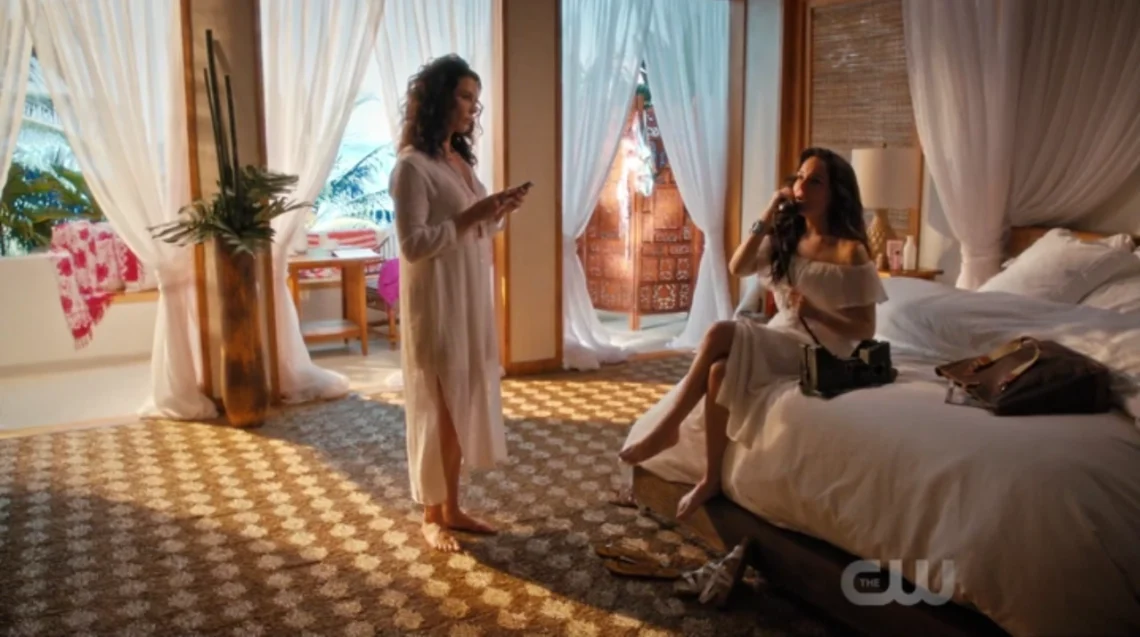
Luisa Alver, an ordinary OB-GYN feeling the emptiness of life, meets a mysterious and captivating woman named Rose at a bar one night. In the midst of an intense attraction that feels like a lightning strike, the two spend a passionate night together. However, the next morning, that destiny turns into a cruel joke.
The woman Luisa’s father introduces as his new wife is the very same Rose from the night before. Amidst the taboo relationship of stepmother and stepdaughter, their secret affair begins. Yet, Rose’s identity was not merely that of a trophy wife.
She was “Sin Rostro,” the boss of a veiled criminal organization, and Luisa finds herself lost between love, family, and moral conscience. Over eleven years, they repeat a cycle of flight and incarceration, disguise and deception, racing toward the world’s most dangerous and beautiful catastrophe.
⚡️ Where Lightning Struck: An Analysis of the “Fatal Addiction” of Luisa and Rose
In their first meeting, Rose’s line, “You never know when lightning’s gonna strike,” serves as a metaphor that permeates the entirety of this relationship. To Luisa, Rose is not just a lover; she is a massive natural disaster that shatters her stagnant daily life and suppressed ego.
Luisa was an icon of deficiency, always seeking someone to lean on while struggling with alcoholism and psychological instability. Rose pierces through that gap with precision. Even the murders and crimes committed by Rose are transposed into the justification of being “the only sincerity directed toward me.”
The resulting power dynamics are intriguing. Rose stands on a physical and strategic vantage point to manipulate (gaslight) Luisa, yet in the emotional realm, she displays a frailty, unable to prove her own existence without Luisa. Ultimately, their love forms a circular structure that simultaneously licks and tears at each other’s wounds.
🎭 The Aesthetics of the Mask: Rose’s Disguises and Luisa’s Blind Acceptance
Rose appears in the series with numerous faces. From Detective Susanna Barnett to the elderly Eileen, she lingers by Luisa’s side wearing a mask. While this symbolizes Rose’s criminal instincts, it also poses a question: Did Luisa love “Rose the human” or the “stimulation Rose provided”?
Luisa recognizes Rose even when she wears someone else’s face—or, even if she fails to recognize her, she is drawn to her essence. This maximizes the unreality of the relationship. The three-year period they lived together while Rose wore a mask is a decisive moment showing that their love was not rooted in reality, but isolated within the illusion of each other.
🍩 Powdered Donuts: A Haunting Romance Bloomed in Tragedy
The scene where Rose brings powdered donuts to Luisa, who is confined in a psychiatric hospital, is cited as one of the most tragic yet romantic moments in the drama. The sweetness of the donuts resembles the form of love Rose provides. it temporarily numbs the pain, but it is ultimately like sugar that ruins the body and causes addiction.
Rose confesses to Luisa, “You’re the only real thing in my life.” The weight of an evildoer’s sincerity throws Luisa into agony. The paradox of being a clear villain from a social perspective, yet the only one who understands in a personal narrative, serves as a device that prevents viewers from utterly hating this toxic romance.
🔎 Reinterpreting the Ending—A Murder and Farewell for Total Freedom
In the grand finale of Jane the Virgin, the scene where Luisa pushes Rose over a balcony to her death is the most dignified period at the end of their 11-year narrative. Rose attempts an emotional hostage situation until the very last moment, shouting, “You love me,” but Luisa firmly declares, “It’s over.“
This ending is not a simple case of poetic justice. Luisa’s act of killing Rose is a declaration that she will personally excise the massive source of addiction that had encroached upon her life, breaking free from a life defined by others to finally stand as an independent subject. Rose’s death is an eternal fracture left by the relationship and, for Luisa, the growing pains of maturation.
Luisa’s act of pushing Rose away was not a mere murder, but a declaration of liberation, reclaiming herself from the massive narrative that was destroying her.
❓ FAQ Regarding the Interpretation of Luisa and Rose
Q1. Was Rose’s love sincere, or did she simply use Luisa as a tool?
Many viewers question Rose’s manipulative behavior. Clearly, Rose used Luisa as a tool for prison breaks or as an emotional refuge. However, Rose’s consistent confessions throughout the series prove that the only humanity she possessed was directed solely toward Luisa. For her, love was simply another name for “possession” and “manipulation,” but in terms of its purity, it can be seen as truthful.
Q2. Regarding the opinion that the ending, where Luisa personally dispatches Rose, was too harsh?
From a critical perspective, some say the setting of having blood on Luisa’s hands would have left her with another trauma. However, considering the genre characteristics of the telenovela and Luisa’s growth curve, this was an essential process. Since Rose was “irresistible temptation” itself to Luisa, had she not broken that link with her own hands, she would have been forever haunted by Rose’s shadow.
✨ Jane the Virgin: Walking Out of the Prison Named Love
The modern implications left by the story of Luisa and Rose are clear. We often try to wrap relationships that destroy us in the fine packaging of “destiny.” However, true love should not be something that locks me in a narrow room, but something that gives me the courage to step out into the world.
Their eleven years were a massive laboratory showing how radiant yet hollow the end of desire can be. The scene where Luisa finally reconciles with Rafael’s family and returns to a peaceful daily life suggests that something more valuable than a passionate romance is “the peace of existing as oneself.”
The greatest love story is not completed by belonging to another, but by reclaiming oneself, even at the cost of losing the other.
💬 Rose and Luisa: The “Greatest Love” or Gaslighting? An In-depth Review
In relationships, we sometimes participate through silence and sometimes hide cowardice. Was the decision Luisa made after eleven years her most painful choice, or her easiest?
If it were you, would you willingly jump back into that “lightning” for the sake of a lover who knows you best but makes life the hardest?
📽 Violet Screen’s Recommended Curation
If you were captivated by the fatal chemistry of Luisa and Rose, I recommend the following two works:
- Dead Ringers (2023 / Amazon Prime)
- Reason for Recommendation: Deals with the bizarre and intimate dependency between twin sisters. It is a masterpiece that depicts the extreme end of the “toxic attachment” shown by Luisa and Rose in Jane the Virgin with a much darker and more sophisticated mise-en-scène.
- Bottoms (2023 / Wavve, etc.)
- Reason for Recommendation: Recommended if you want a change of pace. It features the solidarity and desire of eccentric and brash high school girls, showcasing the essence of queer comedy that subverts conventional tropes. It draws attention to the audacity of the characters rather than the weight of the relationship.
To provide a more stable publishing environment, multilingual content, and better communication with our readers, we have moved our official publication to Substack.
All new film reviews and critical essays will be published on our new platform. This website will be closing down soon, so we would greatly appreciate it if you subscribed to our new space.
TODAY'S QUESTION
What's the most memorable new release you watched this year?
Your answer isn't saved. Feel free to share it in the comments below.


You May Also Like
Venice: The Series: Gina and Ani’s Reunion, Ending, and Trajectory Beyond Trials

Play Park (2026) Review: The Gravity of Solidarity and Love Blooming in the Cold War of Capital