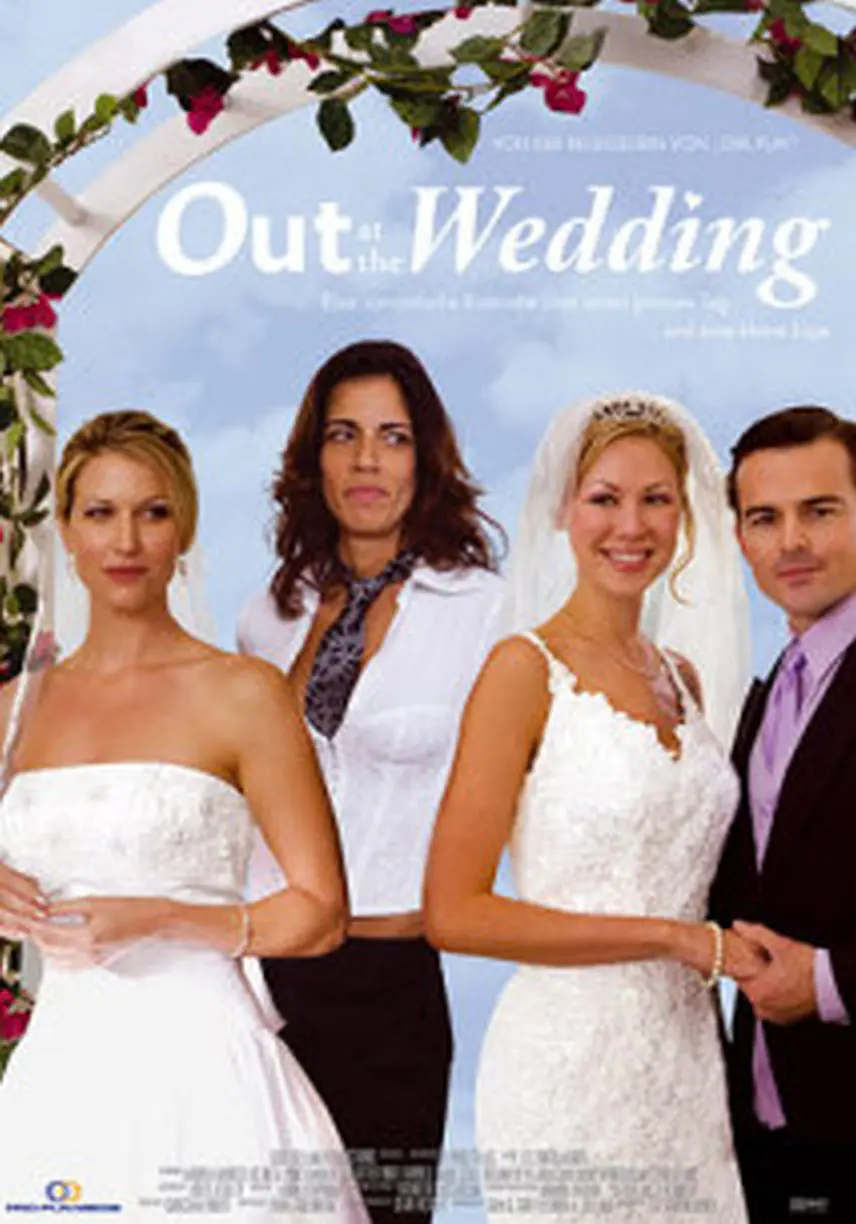
Out at the Wedding (2007): Truth Wrought from Lies, A Delightful Subversion of Relational Prejudice
There are moments when the lies we build to protect those we love become the very walls that imprison us. We often hide our “true selves” out of fear of social judgment or familial stereotypes; yet, ironically, those deceptions can create unexpected fissures through which a new truth begins to flow.
Out at the Wedding is an intellectual and spirited farce that depicts a woman’s journey of retreating before the monolithic wall of a conservative family, only to confront her own internal prejudices through a series of absurd misunderstandings and performances, ultimately discovering the true form of solidarity and love.
🌿 Moments When This Film Truly Resonates
- For those who have experienced a small lie, intended to spare a loved one’s feelings, spiraling into something unmanageable.
- For those who have lived life censoring their identity or choices under the weight of “family values” and conservatism.
- For those who enjoy a fresh, audacious narrative that subverts the traditional tropes of romantic comedy.
- Why you should read to the end: Because this film transcends simple queer comedy to offer a sharp yet warm critique of “preconception”—the most common error we commit when we believe we truly “understand” another person.
🎞 Note Before Viewing
While this work includes light sexual humor and depictions of physical contact in its exploration of LGBTQ+ identity and familial conflict, it maintains the overall tone of a playful farce. The film focuses more on the staggered emotions between characters and relational tension rather than provocative imagery.
🎬 Film Information
- Title: Out at the Wedding (2007)
- Director: Lee Friedlander
- Screenplay: Paula Goldberg
- Country: USA
- Genre: Romantic Comedy, Queer
- Running Time: 96 minutes
- Cast: Andrea Marcellus, Mystro Clark, Desi Lydic, Cathy DeBuono
📖 Out at the Wedding: The Whereabouts of Sincerity Hidden Beneath Layered Lies [No Spoilers]
Alex (Andrea Marcellus), living a successful life in New York, dreams of a happy future with her devoted fiancé Dana (Mystro Clark). However, she harbors a secret anxiety: the fear that her conservative family in South Carolina will reject Dana, who is of Black and Jewish descent, through a lens of racial prejudice. Consequently, Alex maintains a double life, telling Dana that her family is dead while hiding her engagement from her relatives.
Amidst this, news arrives of the wedding of her perfectionist younger sister, Jeannie (Desi Lydic). Alex heads home with her gay friend Jonathan as a “fake boyfriend.” However, an unforeseen misunderstanding sparks a rumor among the wedding guests that Alex is a lesbian.
After a moment of panic, Alex notices her family is surprisingly accepting of this “fake identity.” To navigate the crisis, she begins an audacious performance by hiring Risa (Cathy DeBuono), an actual lesbian, to play her girlfriend. Yet, this charade begins to spiral out of control as it touches upon Jeannie’s long-suppressed truths.
🎭 “Preconception,” More Formidable than Hate: The Artificial Barrier Created by Alex’s Prejudice
The core of Out at the Wedding lies in the protagonist Alex’s perspective on her family. She defines them as “immutable conservatives” and chooses the path of deception, which is, in fact, another form of prejudice toward her family. Through the warm reaction the family shows when they mistakenly believe Alex is a lesbian, the film suggests that the “secrets” we keep in the name of protection can sometimes be an act of arrogance that disregards their capacity for growth.
The scene where Alex visits a gay bar wearing exaggerated butch-style clothing to “look like a lesbian” satires our gaze trapped in stereotypes. Rather than focusing on the external forms of “how a lesbian should be,” the film constantly questions the essence of internal attraction and relationships through comic situational setups.
🔥 The Eruption of Suppressed Desire: Interpreting the Relational Structure of Jeannie and Risa
The most compelling aspect of this film is the way Alex’s lies fracture the rigid life of her sister, Jeannie. Jeannie is a character who has spent her life denying her own sexual identity to serve as the archetype of the “perfect woman” and “normal wife.” However, upon meeting Risa—her sister’s fake girlfriend—the defense mechanisms she painstakingly built collapse instantly.
Risa is not merely a rented girlfriend; to Jeannie, she is a mirror that forces a confrontation with her suppressed self. The taut tension and the intersection of gazes between the two are where the film secures its depth as a female-centric narrative, moving beyond mere comedy. Jeannie’s attraction to Risa can be interpreted as the manifestation of a desperate desire to escape the self she has deceived for a lifetime, transcending simple rivalry with her sister.
🔎 Reinterpreting the Ending: The Real Life That Begins Only After the Performance Ends
Amidst the chaos where all lies are exposed, the film finally illuminates the characters as they find their respective places. The most striking part of the ending is not the reconciliation between Alex and Dana, but Jeannie’s decision to end her “beard” marriage and choose to come out. Jeannie, who previously sought to fill her deficiencies by stealing her sister’s men, finally achieves true independence by affirming her own desire rather than the gaze of others.
The conclusion of this work demonstrates that falsehood served as a paradoxical catalyst for bringing forth the truth. The scene where Alex breaks the prejudice that labeled her family as racists and offers an apology proves that growth stems not just from confessing secrets, but from the courage to believe in others as they are.
The ending of this film is a declaration of tearing down a house built on lies to reconstruct a new form of family upon the solid foundation of truth. What was lost was vanity and affectation; what was gained was holistic understanding and dignity for one another.
❓ Issues in the Interpretation of Out at the Wedding
Q1. How should one view the criticism that Alex’s behavior in the film feels somewhat selfish?
That is correct. Driven by her own fear, Alex told her fiancé that her parents were dead and labeled her family as potential bigots. The film does not hide these flaws in Alex. However, this critical point aligns with the core message the film intends to deliver. It serves as a device to show how much deception—carried out under the guise of “protection”—can damage another person’s integrity. The film portrays her growth more dramatically through the process of her being criticized.
Q2. How should we interpret the opinion that the union of Jeannie and Risa feels too abrupt?
From a traditional narrative structure, Jeannie’s transformation may feel rapid. However, this must be understood in the context of Jeannie being in a “pressure cooker” state, having suppressed her identity for decades. The fact that she reacted explosively the moment a small spark like Risa touched her proves how desperate her inner self was. Rather than a matter of probability, it should be viewed as a setting that aesthetically maximizes the explosive force of liberated desire.
✨ Out at the Wedding: The Most Honest Embrace Found at the End of Prejudice
This film shows how difficult it is not to judge a loved one by our own standards, and how wide a world opens when we relinquish those judgments. The essence of a relationship lies not in perfect packaging, but in the effort to face each other’s truths, however clumsy that may be. This work, which untangles the complex threads of identity, family, and love with humor, asks us: Are you currently imprisoning someone precious within your own “prejudice”? True solidarity begins at the point of believing in the other person’s potential and honestly confessing your own fears.
🕊️ Your Voice Hidden Behind the Silence
Is there a story you haven’t told yet, out of fear of disappointing your loved ones or fear of their rejection?
Will you continue the “white lie” of erasing yourself for the sake of family peace, or will you choose to live as your true self, even if a storm ensues?
🎥 Another Perspective from Violet Screen: Recommended Female Narratives
- Imagine Me & You (2005): Follows the story of a bride who falls in love with another woman at first sight on her wedding day. It shares a similar vein with Out at the Wedding but portrays destined attraction and self-discovery with a more classic and romantic sensibility.
- Blue Jean (2022): Set during the Thatcher government in the 1980s, it depicts the process of fissures forming in the life of Jean, a teacher living a hidden identity. it chillingly and exquisitely captures the psychology of a woman struggling between her social mask and inner desires.
To provide a more stable publishing environment, multilingual content, and better communication with our readers, we have moved our official publication to Substack.
All new film reviews and critical essays will be published on our new platform. This website will be closing down soon, so we would greatly appreciate it if you subscribed to our new space.
TODAY'S QUESTION
What's the most memorable new release you watched this year?
Your answer isn't saved. Feel free to share it in the comments below.


You May Also Like

The Deep Sky: The Illusion of Non-Monogamy and the Interpretation of Emotional Isolation
Saving Face: A Record of Women’s True Desires and Solidarity Hidden Behind the Gaze of Others