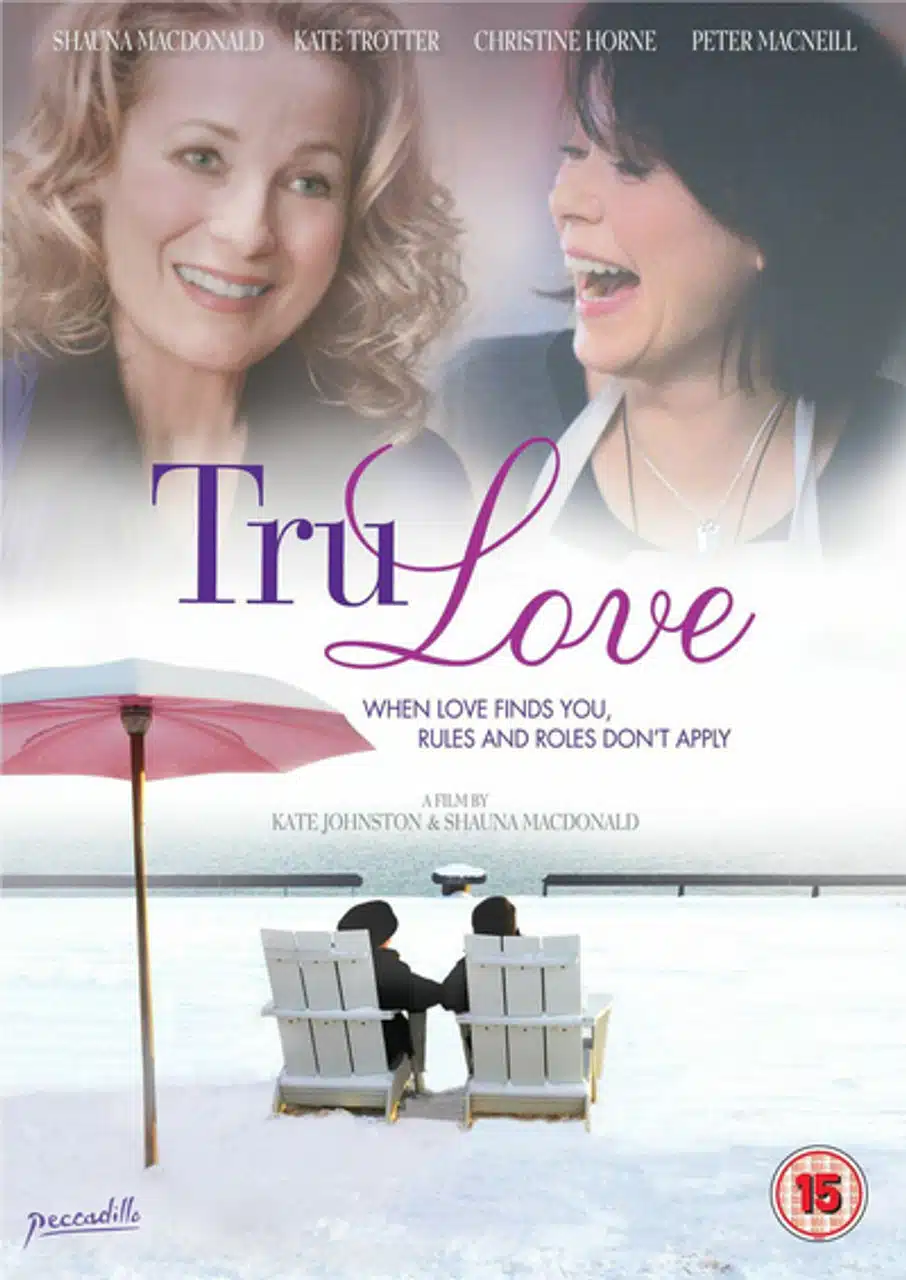
Tru Love (2013): A Sanctuary of Isolation Found at the Edge of Loss and Wandering
When we love someone, we do not merely love their present self; we embrace the entire weight of the life they have carried. Sometimes, love blooms more vividly in the silence of gazing into each other’s empty corners than in romantic passion. The Canadian film Tru Love explores this very point: how two women, casting off the ‘selves’ defined by others, nurture each other’s deficiencies by connecting through the frequency of the soul alone.
🌿 Moments When This Film Sinks Especially Deep
- When you wish to be recognized for your existence alone, free from the world’s gaze or the shackles of social age.
- When you hope someone will discover the fundamental loneliness within you that even your closest family fails to understand.
- When you want to feel the quiet vibrations produced when a wounded, free spirit clashes with a mature soul harboring a sense of loss.
- The reason to read this piece to the end is to witness how this work proves the noble human values of intergenerational solidarity and self-recovery, transcending the boundaries of a simple queer romance.
🎞️ Note Before Viewing
This work focuses on describing the emotional communion and psychological bonds between characters with delicacy rather than physical indulgence. It is a lyrical, relationship-oriented drama that follows the texture of emotion rather than provocative direction.
🎬 Film Information
- Title: Tru Love (2013)
- Director: Kate Johnston, Shauna MacDonald
- Screenplay: Kate Johnston, Shauna MacDonald
- Country: 🇨🇦 Canada
- Genre: Romance, Drama
- Running Time: 94 minutes
- Platform: Amazon Prime Video, Apple TV (Varies by region)
- Cast: Shauna MacDonald (as Tru Richmond), Kate Trotter (as Alice Richmond), Christine Horne (as Suzanne Richmond)
📖 Tru Love, a Journey from Accidental Care to Inevitable Consolation [No Spoilers]
Tru, 37, is a charming lesbian who wanders, unable to settle deeply with anyone due to scars from conflicts with her parents. Conversely, Alice, 60, arrives in an unfamiliar city to visit her daughter Suzanne, submerged in deep grief after losing her husband. Suzanne, a workaholic lawyer unable to care for her mother, asks her friend Tru to act as a guide for Alice.
The two women, who seem to have no common ground, begin to look into each other’s deep inner selves as they spend time together. Alice discovers a long-forgotten vitality for life within Tru’s unstable existence, and Tru experiences the unconditional acceptance she has craved her whole life through Alice’s warm gaze. However, their pure communion eventually faces unexpected conflict as it hits the wall of reality: Suzanne’s misunderstanding and jealousy.
🤝 Power Structures of Relationship and Asymmetry of Emotion: The Core of Interpreting Tru Love
The narrative of Tru Love projects human desire through the triangular power dynamics held by the three women. On the surface, the young and dynamic Tru appears to lead the relationship, but internally, Alice, with her stable ego, serves as the spiritual pillar filling Tru’s voids.
This emotional complementarity deconstructs the frameworks of ‘mother-daughter’ or ‘lovers’ defined by society. The film shows that the act of caring for someone is not merely charitable, but a process where the caregiver also heals their own wounds. In particular, the sense of alienation felt by the daughter, Suzanne, serves as a device proving the powerful emotional density of their bond beyond simple friendship. From an interpretive perspective, this suggests that the pull of the soul can take precedence over the institutional relationship of family.
🖼️ The Spatial Aesthetics of Isolation and Liberation Projected in Mise-en-scène
The spaces within the film represent the psychological states of the characters. The cold, unfamiliar city scenery where Alice stays reveals her isolated abyss, but the outdoor spaces and sunlit interiors shared with Tru transform into vibrant colors.
The directors deliberately use direction that narrows the physical distance between the two, depicting the process of erasing the ‘otherness’ of the stranger and merging into a single communal identity. This is a point where the delicate gaze of the two co-directors and co-writers meets, demonstrating high-level psychological direction that advances the narrative through nothing more than the fine trembling of eyes and the stillness of a touch, without the need for grandiose incidents.
🔎 Facing the Whole Self Only After Passing Through Loss
The film’s ending does not confine their relationship to the clichéd frameworks of social achievement or eternal union. After the storm of conflict passes, what the two face is not the possession of one another, but the restoration of dignity—being able to stand finally as their own whole selves.
Alice gains the courage to define the rest of her life for herself, escaping her husband’s shadow, and Tru develops the inner strength to take genuine responsibility for someone, ending her wandering for external validation. This does not mean a permanent crack has formed between the two; rather, it shows the aesthetics of an asymmetrical union completed by their respective places becoming clear. Ultimately, their love is not a shackle that binds them, but a catalyst that makes them better human beings as they return to their own lives.
Love is not about invading another’s world, but about making space so that the other may expand their own.
❓ Inquiries Regarding the Ending of Tru Love and the Representation of Women’s Narratives
Q1. Can the relationship between Alice and Tru in the film be sustainable as a realistic ‘love’?
From a critical perspective, one might question the permanence of this relationship based on the age gap and environmental backgrounds. However, the work focuses on the process of the ‘moment of change’ rather than the result of ‘sustainability.’ Even if the form of their relationship changes due to the constraints of reality, the expansion of the self gained through each other is permanent. The work broadens the horizon of romance by defining love not as a result-oriented scheme of ‘success and failure,’ but as an ‘event’ that transforms existence.
Q2. Is the character of the daughter, Suzanne, depicted as too one-dimensional or merely as an obstacle?
Suzanne’s hysterical reaction symbolizes the multi-layered pressures women face in modern society. From the perspective of a daughter feeling guilt between workaholism and the duty of support, the rapid bond between her mother and her friend can feel like a loss of her own role and a deprivation of control. This is less a limitation of the work and more a realistic examination of the emotional cost individuals must pay in the name of ‘family.’ The director portrays Suzanne not as a simple villain, but as a portrait of us all, trapped in stereotypes and unable to see a true connection.
✨ Tru Love: A Narrative of Salvation Offered by Undefinable Love
As if mocking the narrow definition of the word love, the film Tru Love allows us to witness how two of the loneliest people meet and reshape each other’s universes. This film eloquence in the language of silence that the essence of a relationship depends not on bloodlines or legal contracts, but on how deeply one understands the other’s solitude.
We all wander while wishing to be someone’s ‘Tru’ (Truth) while simultaneously losing our own ‘Love.’ This film consoles us by suggesting that even that wandering was an inevitable process to meet someone, and it offers us the courage to trust in people once more.
True love is a noble devotion that does not seek to change the other, but becomes a mirror for them, allowing them to love themselves.
💬 Whose warmth is filling your void?
Have you ever experienced a relationship that allows you to exist solely as ‘yourself,’ stepping away from the roles defined by others (daughter, mother, friend)?
1️⃣ Do you need mature consolation to nurture past wounds?
2️⃣ Or do you need a new vitality to create ripples in a stagnant daily life?
📽️ Violet Screen Recommendation: Miracles That Happen When Two Isolated Worlds Meet
- Blue Is the Warmest Color (2013): Another masterpiece dealing with intense attraction and growth. It deals with much more fierce and painful growing pains than Tru Love, but shares the thematic consciousness of ‘how a relationship recreates a human being.’
- Carol (2015): Depicts an elegant solidarity between two women that transcends status and generations. If you like the lyrical atmosphere of Tru Love, you will be deeply captivated by the classic visual beauty and delicate psychological portrayal that pierces through the ages.
To provide a more stable publishing environment, multilingual content, and better communication with our readers, we have moved our official publication to Substack.
All new film reviews and critical essays will be published on our new platform. This website will be closing down soon, so we would greatly appreciate it if you subscribed to our new space.
TODAY'S QUESTION
What's the most memorable new release you watched this year?
Your answer isn't saved. Feel free to share it in the comments below.


You May Also Like
The Vagina Monologues: A Record of Language Breaking Taboos and Liberation, a Sovereign Interpretation Reclaimed by the Female Body

Lost and Delirious Review: The Flight of Madness and Obsession in a Secluded Forest