
Thelma & Louise: A Breakneck Sprint Beyond Oppression and the Destructive Liberation Named Freedom
The desire to escape a sequestered daily life sometimes accompanies a destructive beauty. Defying the gravity of an oppressive reality and taking only each other’s existence as their sole gravitational field, the journey of these two women is more than a mere escape; it is a record of existential struggle and a sublime ritual in search of a lost self.
All relationships are maintained within safe fences, but the moment those fences become a prison, humans choose the cliff outside the walls, even at the risk of ruin. This film poses heavy questions about human dignity, which is only finally completed at the edge of that precipice.
🌿 Moments When This Film Deeply Permeates the Soul
- On an afternoon when the air of a familiar living room suddenly feels heavy enough to suffocate.
- When you wish to breathe only as yourself, breaking free from the roles defined by others.
- When you want to believe in the power of solidarity that cannot be explained by the world’s common sense—a power understood by only one other person.
- When you need to confirm that even a tragic ending can be a sole victory for someone.
- Therefore, the reason to read this piece to the end is to understand the structural necessity of why the final flight chosen by Thelma and Louise was a soaring ascent, not a fall.
🎞 Note Before Viewing
This work meticulously deals with the psychological shifts of two women facing patriarchal violence and oppression. While it includes some violent depictions and provocative situations, these are essential devices to demonstrate the process of the two protagonists progressing beyond simple friendship into a community of destiny.
🎬 Film Information
- Title: Thelma & Louise (1991)
- Director: Ridley Scott
- Screenplay: Callie Khouri
- Country: USA
- Genre: Road Movie, Drama, Crime
- Running Time: 129 min
- Platforms: Wavve, Apple TV, Google Play
- Cast: Susan Sarandon – Louise Sawyer, Geena Davis – Thelma Dickinson, Brad Pitt – J.D., Harvey Keitel – Hal Slocumb
📖 Thelma & Louise: A Narrative Context Where Deviation Becomes Escape, and Escape Becomes Revolution [No Spoilers]
Thelma, who lived a passive life under the control of her conservative husband, and Louise, who endures an exhausting daily life as a diner waitress, set out on the road planning a trip for just a few days. Shortly after basking in the sense of liberation in their old convertible, the ordinary trip instantaneously transforms into an irreversible fugitive drama when Louise shoots and kills a man attempting to sexual assault Thelma at a rest stop.
As the police pursuit tightens, the two women gradually distance themselves from the social order and male-centered power structures that have suppressed them their entire lives. On the vast roads leading through Texas toward Mexico, the once-timid Thelma awakens into a proactive figure, while the cool-headed Louise confronts the scars of her past, as they begin to deeply project onto one another. Their journey, which began as a simple criminal incident, accelerates into a sprint toward the ultimate freedom available to those pushed outside the system.
🌵 Escaping Oppressive Spaces and the Interpretative Necessity of the Road Movie Format
In the narrative of Thelma & Louise, the road is not merely a means of transportation but acts as a liberated zone where traditional gender roles are dismantled. If the indoor spaces of the early film were frames that imprisoned the two women, the vast landscapes of the American West visually testify to the internal expansion they achieve.
Director Ridley Scott captures the psychological changes of the two women through mise-en-scène. The act of Louise undoing her neatly tied hair and discarding her jewelry, and the moments when Thelma decisively cuts off her husband’s phone calls, symbolize their break from the oppressive system known as civilization. A point of particular note in this review is how the male characters encountered on the road represent different forms of power (violence, seduction, legal authority), triggering the awakening of the two protagonists.
🦅 From Horizontal Solidarity to Vertical Flight: An In-depth Analysis of Relational Structure
The relationship between the two protagonists evolves from one-sided protection to a completely horizontal solidarity. Initially, Louise, with more life experience, appears to lead Thelma; however, in moments of crisis, Thelma’s pure decisiveness heals Louise’s trauma, balancing the relationship. This takes the form of a ‘mirror pair’ that goes beyond simple friendship to complement each other’s souls.
A crucial point in the interpretation of this film is Thelma’s transformation. When she is defrauded by J.D. and placed in a desperate situation, she instead becomes the subject who destroys the rules of the system by leading a robbery. Her declaration that she will no longer remain a victim leads to a commitment to share the burden of the Texas scars that Louise has carried all her life. The two women choose to turn their backs on all the laws of the world to save each other, pushing the density of their relationship to the limit.
🔎 Reinterpreting the Ending — Existential Victory Completed at the Edge of the Grand Canyon
The ending of the film sparked numerous debates, but structurally, it is a unique and perfect happy ending. In the enclosed space of the cliff behind them and dozens of police cars pursuing them, they choose the ‘freedom of death’ through a sprint rather than the ‘shame of survival’ through surrender.
This final flight is not a physical fall, but the first moment of complete departure from the gravity prescribed by patriarchal society. Louise is liberated from the trauma of the past, and Thelma from the oppression of the future. Their clasped hands signify a solid union that the world cannot pull apart, and the image of the final car processed as a still frame suggests that they remain in that state of freedom eternally.
The death of Thelma and Louise is not a defeat by the system, but a declaration of absolute sovereignty proving that the system can no longer possess them.
🧐 Curiosities Regarding the Ending and Female Narrative of Thelma & Louise
Q. Was an alternative ending where the protagonists surrender or face legal judgment impossible?
Viewed in the aesthetic context of the work, surrender signifies submission. Louise knows how the sexual violence she suffered in Texas was ignored within the legal system. The critical perception that justice cannot be expected within the system justifies their flight. Therefore, an ending involving legal judgment would have created a contradiction, returning the independence of the self they had acquired back to the power of the state.
Q. Is the flat depiction of male characters in the film sometimes pointed out as a limitation?
Some critics argue that the film depicts men as excessively evil or incompetent. However, one must remember that this is a representation of the world as seen through the eyes of the two women. To Thelma and Louise, the world was a threatening or cynical space, and even Detective Hal Slocumb, the only one who was favorable, ultimately fails to save them, trapped within the limits of public power. This contrast functions as a device to maximize the protagonists’ sense of isolation.
✨ Thelma & Louise: The Most Intense Sense of Life Found at the Precipice
This film is not merely a classic of the past; it poses questions that remain valid for us living in the present of 2026. It asks whether the comfort we settle into might be an invisible set of bars, and to what extent true solidarity can bear the pain of another. The journey of Thelma and Louise shows that the essence of a relationship is not about imprisoning each other, but about becoming each other’s wings.
True freedom does not begin with securing a safe territory, but with the courage to erase all boundaries that oppress me.
🕊 Between Yesterday’s Silence and Today’s Scream, What is Your Choice?
Between a life endured in silence and a life ruined while screaming, which do you feel is more human? Between the peace kept while losing oneself and the plunge taken to find oneself—who is holding your steering wheel right now?
📽 Violet Screen Recommendation: Intense Solidarity of Other Women
- Love Lies Bleeding (2024): A neo-noir that inherits the madness and energy of Thelma & Louise in a modern way. The destructive love between a gym manager and a bodybuilder, and their relentless counterattack against the violent world blocking them, is impressive.
- Women Talking (2022): To leave or to stay and fight. It densely depicts the process of women in a sequestered community deciding their own fate through only ‘dialogue’ and ‘solidarity.’ You can feel the weight of freedom won through a verbal struggle instead of a physical sprint.
To provide a more stable publishing environment, multilingual content, and better communication with our readers, we have moved our official publication to Substack.
All new film reviews and critical essays will be published on our new platform. This website will be closing down soon, so we would greatly appreciate it if you subscribed to our new space.
TODAY'S QUESTION
Is there a film whose ending you wish had gone differently?
Your answer isn't saved. Feel free to share it in the comments below.


You May Also Like

I Can’t Think Straight: The Absolute Attraction and Identity Formation of Two Women Transcending Cultural Oppression
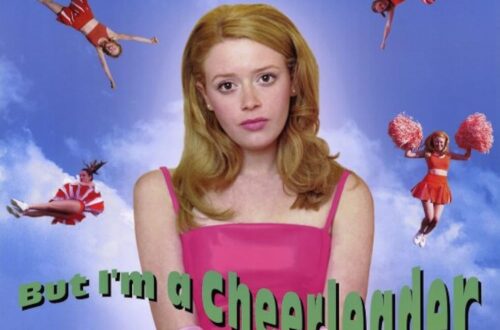
But I’m a Cheerleader: The Liberation and Love of Queer Identity Subverting a Pastel-Toned Controlled Society
