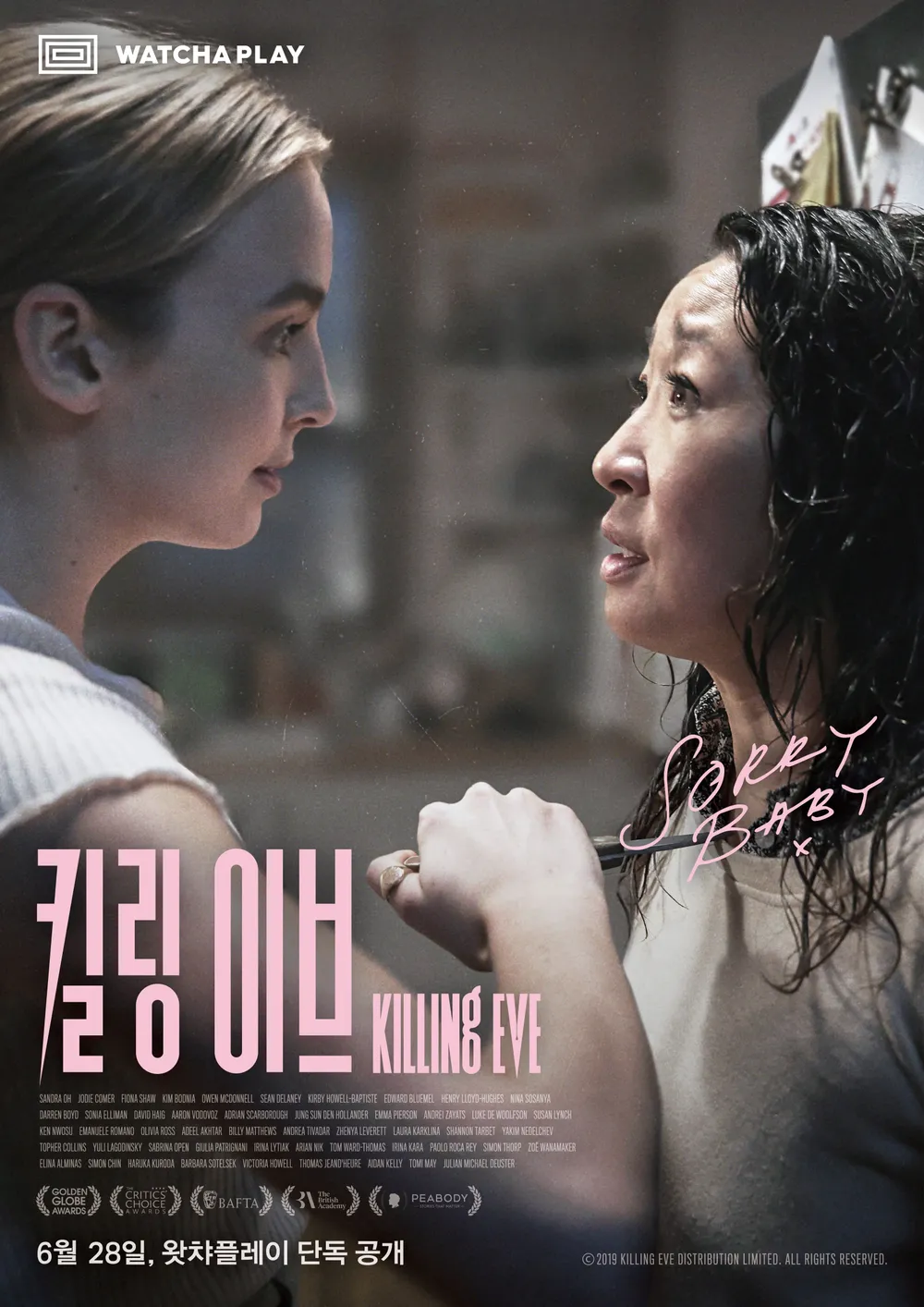
Killing Eve Ending Explained and Review: The Aesthetics of Destructive Indulgence Born of Cruel Obsession
At least once in our lives, we encounter a mirror from which we cannot avert our eyes, even while knowing it will utterly destroy us. That mirror sometimes appears in the form of another person’s face, mercilessly exposing the dark desires and deficiencies we have struggled to suppress.
On the boundary between the tranquility of tedious daily life and blood-soaked chaos, the process of two women indulging in and collapsing into one another is not a simple chase. It is closer to a cruel yet beautiful pilgrimage toward finding the self.
🌿 Moments When This Drama Deeply Permeates
- If you have ever been bewildered to discover a “madness” within yourself that you never knew existed, amidst a monochrome life repeated daily.
- If you have ever been overwhelmed by a strange envy—hating someone while simultaneously wishing to become them.
- If you feel a more intense sense of vitality in a dangerous relationship that pushes you to the edge of a precipice, rather than the comfort provided by stable connections.
- This is why you must read this piece to the end. It is because this narrative perfectly proves the reality of that “dangerous attraction” you have tried to ignore.
🎞 Note Before Watching
While this work adopts the form of an espionage thriller, it essentially deals with the psychological assimilation and mutually destructive relationship of two women. Although the level of violence—including bodily harm and murder scenes—is somewhat high, it is sublimated through sensual mise-en-scène and elements of black comedy, offering a strange, aesthetic pleasure rather than discomfort.
🎬 Information
- Title: Killing Eve (2018–2022)
- Director: Damon Thomas, Jon East, et al.
- Screenplay: Phoebe Waller-Bridge, Emerald Fennell, et al.
- Original Work: The novel Codename Villanelle by Luke Jennings
- Country: UK, USA
- Genre: Thriller, Black Comedy, Drama
- Running Time: Seasons 1–4 (8 episodes each)
- Platform: Watcha, Wavve, Netflix, etc.
- Cast: Sandra Oh, Jodie Comer, Fiona Shaw, Kim Bodnia
📖 Killing Eve: A Dangerous Game of Hide-and-Seek with an Assassin Piercing the Cracks of Daily Life [No Spoilers]
Eve, who has been leading an ordinary and stable married life while working a desk job at the British Security Service (MI5), harbors a peculiar obsession with criminal psychology, specifically female assassins. One day, sensing that a single woman is behind a series of sophisticated murders occurring across Europe, Eve begins an independent investigation.
The target she pursues is the psychopathic assassin Villanelle. Villanelle enjoys flamboyant fashion and audacious methods of killing; upon noticing Eve’s pursuit, she feels a strange exhilaration. The relationship that began as hunter and prey gradually invades their private lives and inner worlds, transforming into an eerie bond.
Eve conflicts between her sense of duty to catch Villanelle and her desire to be as free and destructive as her, while Villanelle begins to obsess over Eve—the first person to truly “see” her. In this uncatchable game of tag, the lives of these two women hurtle toward an irreversible catastrophe.
👁️ The Mise-en-scène of Desire and Gender Power Subverted by Killing Eve
If traditional spy thrillers were narratives of “pursuit” and “conquest” that remained the exclusive domain of men, Killing Eve completely subverts this. In this work, male characters are either consumed or pushed to the periphery within the massive emotional whirlpool of the women.
The work maximizes visual indulgence through Villanelle’s extravagant wardrobe and exotic landscapes across various countries. This does not merely provide spectacle; it represents Villanelle’s pure desire, unconstrained by social norms. Conversely, the process of Eve—who used to wear monochrome clothes—gradually donning a dress gifted by Villanelle and tracing her footsteps symbolically illustrates the liberation of a repressed ego.
Their relationship is closer to a psychological mirror image that cannot be explained by the word “love” alone. Eve confirms her own dark nature through Villanelle, and Villanelle experiments with the possibility of human emotion through Eve. The tension arising in this process is read as an ontological struggle that transcends mere sexual tension.
🕯️ When Deficiency and Excess Meet: An Interpretation of the Relational Structure between Eve and Villanelle
Eve is a person who has confined herself within the category of “normalcy.” A warm husband, a stable job, and an appropriate social mask protect her, but simultaneously suffocate her. Villanelle is the intruder and savior who tears through that mask.
Villanelle is a figure of “excess.” Emotions, consumption, and even murder are to her a form of play and stimulation. What she lacks is a genuine sense of connection with others. When a monster, never understood by anyone, encounters a human who professionally analyzes and obsesses over her, that obsession soon becomes the sole purpose of her life.
The strange silence that flows every time the two face each other visualizes that they are each other’s “missing piece.” Eve fears Villanelle’s blade, yet yearns for that blade to cut through her tedious daily life. This relationship is ultimately a zero-sum game that can only end when one side disappears, and simultaneously a tragic narrative that is only completed when the two are joined.
🔎 Reinterpreting the Ending — The Aesthetics of Obsession and Liberation Sinking Underwater
The series finale of Killing Eve sparked immense controversy and opposing views immediately after airing. However, from a narrative structure perspective, that ending was an inevitable “fissure” and “completion” that their relationship had to reach.
At the very moment the two women clear out their enemies together and burst into laughter while facing each other, death arrives at the most radiant moment. The contrast between the body sinking into cold water and the survival instinct desperately surging above the surface suggests that their relationship could never result in the tranquility of reality.
Villanelle’s death is a painful farewell for Eve, as her destructive shadow is withdrawn, but paradoxically, it is the final gift that returns her to the life of an ordinary human. By dying, Villanelle becomes eternally preserved within Eve’s interiority; by surviving, Eve takes on the “ordinary pain” that Villanelle so desperately craved.
By rejecting a romantic union, this ending instead places their relationship in the ranks of legendary tragedies. The souls of the two became one in the deepest abyss, achieving a total unification through destruction.
Ultimately, Villanelle’s absence is the final mise-en-scène required to complete Eve as a human being.
❓ Curiosities Regarding the Interpretation of Killing Eve
Q. Did Eve Polastri eventually become a psychopath like Villanelle?
Rather than a psychopath, Eve is closer to a liberator of repressed instincts. The reason she was drawn to Villanelle was not because Villanelle was “bad,” but because of her freedom to break social taboos with nonchalance. Though Eve’s life after the finale can never return to what it was, she has grown into a person with her own moral compass, rather than a binary of good and evil. The tragic aesthetics of this drama lie in the fact that the soil for that growth was steeped in blood and betrayal.
Q. What differentiates this drama from existing male-centered spy fiction?
While traditional spy stories focus on the success of a mission and national interests, Killing Eve focuses thoroughly on personal obsession and emotional motives. The narrative of female protagonists seeking to destroy each other while simultaneously craving each other madly provides complex layers rarely seen in male narratives. In particular, Phoebe Waller-Bridge’s signature black comedy and feminine perspective are evaluated as having evolved the genre to the next level.
✨ Killing Eve: On the Courage to Face the Monster Within Us
Killing Eve asks us: Are you ready to face your darkness? It makes us reflect on how long we have lived ignoring the destructive desires writhing beneath the surface of a peaceful daily life.
This work proved how complex, immoral, and simultaneously fascinating female characters can be, rather than being merely good or evil. Even if the end of the relationship is a tragedy, if one fully discovered themselves through that process, can it truly be called a failed life?
The true self reveals its form not in stability, but within the violent collision with the ‘other’ that un-makes me.
💬 Distancing Within Relationships: What is Your Choice?
If someone appeared holding the key that could completely destroy your daily life, would you open that door, or would you ignore that key until the end?
“The most dangerous person is not the one trying to kill me, but the one who knows me better than I know myself.”
Between the courage to accept a dangerous companion who breaks the taboos within me, and the patience to protect a safe but tedious daily life, which side do you wish to stand on?
📽️ Violet Screen Curation: Other Faces of Female Narrative
A curation for those fascinated by the toxic relationality of Killing Eve.
- Dead to Me (2019–2022): A strange friendship between two women entangled by the death of a husband and a hit-and-run accident. The combination of black comedy and thriller will offer Killing Eve fans a sense of familiarity alongside fresh enjoyment.
- TÁR (2022): Relentlessly traces the fall and obsession of a female conductor at the height of her power. Much like the artistic murders committed by Villanelle, observe the power structures embedded in the baton Lydia Tár wields and the subtle tensions occurring between the women within that world.
To provide a more stable publishing environment, multilingual content, and better communication with our readers, we have moved our official publication to Substack.
All new film reviews and critical essays will be published on our new platform. This website will be closing down soon, so we would greatly appreciate it if you subscribed to our new space.
TODAY'S QUESTION
What changed the most for you after coming out?
Your answer isn't saved. Feel free to share it in the comments below.


You May Also Like

An In-Depth Analysis of Kick (2007): The Fencing Match of Gender & Sexual Identity, and the Courage to Shed Social Masks
Sky Rojo: Wendy and Greta, a Sanctuary of Redemption Found at the End of a Blood-Soaked Revenge