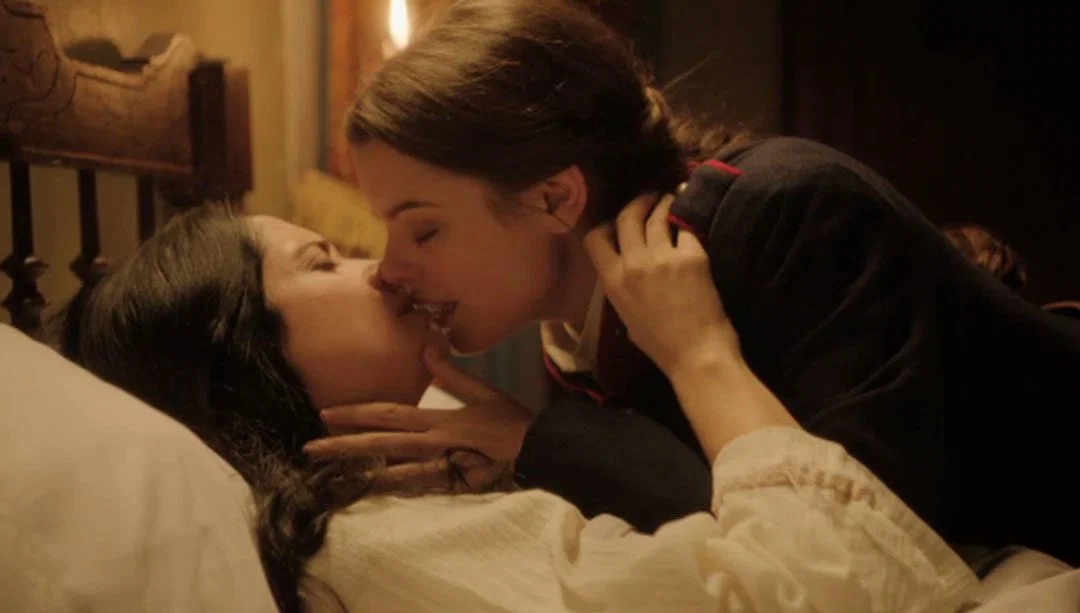
Tierra de Lobos: A Taboo Narrative Emerging from 19th-Century Spanish Oppression and the Tragic Love of Crisabel
On isolated land, desire is often branded as a sin. Yet, more powerful than the rigid walls society builds is the innate human longing to be free from the gaze of others.
In the conservative order of 19th-century Spain, the love between two women who became mirrors for one another grew more vivid by absorbing the madness of the era. This work does not merely depict a romance of a bygone age; it explores the narrative of a desperate solidarity, examining how two beings, defined by their deficiencies, sought to become complete through each other.
🌿 The Moments Where This Drama Seeps Deeply
- The moment Isabel, who felt alienated from her own identity, finally encounters her desires within the gaze of Cristina.
- A record of secret nights that transcended class and status, where only each other’s warmth served as a sole refuge.
- A record of solidarity that should not have existed in that era, born from the effort to save one another from patriarchal violence.
- For those who wish to verify why, despite the tragic ending, this love still poses valid questions to us today, I recommend this piece.
🎞 Notes Before Watching
Given the 19th-century setting, the core of this narrative lies in the oppressive social structures the characters endure and the emotional pain that follows. Rather than direct physical violence or sensationalized staging, the focus is on describing the psychological tension and the density of the relationship between the two protagonists.
🎬 Drama Information
- Title: Tierra de Lobos
- Director: Iñaki Peñafiel et al.
- Country: Spain Genre: Period Drama, Romance, Drama
- Runtime: Approx. 70–90 minutes per episode (3 seasons total)
- Cast: Adriana Torrebejano (as Isabel Lobo), Berta Hernández (as Cristina)
📖 Tierra de Lobos Synopsis: A Fatal Solidarity Forged by Suppressed Desire [No Spoilers]
In 19th-century Spain, Isabel Lobo, the second daughter of the powerful, patriarchal Antonio Lobo family, is a rebellious figure far removed from traditional female roles. One day, Isabel encounters Cristina, who works at a brothel owned by her father, and experiences a powerful attraction.
Their encounter began as a forbidden emotion, but gradually became a sole salvation that filled each other’s voids. However, their love collides with the massive walls of the Lobo family’s power and the patriarchal social order, leading to cruel trials such as Isabel’s forced marriage and confinement in a convent. Between the will to protect their love and the destructive pressures of reality, the two women are forced to make precarious choices at every turn.
👩❤️👩 Awakening Identity, Moments of Interpretation Where Two Figures Encounter Each Other
To Isabel, Cristina was not merely a seductive partner. To Isabel, who lived wearing the armor of a family name and gender roles, Cristina was a mirror reflecting the desires hidden deep within her.
In particular, the identity struggles Isabel experiences after the bathing scene serve as an important point of interpretation, marking the moment an individual who could not define herself begins to prioritize her inner instincts over external scrutiny. This is read as a process of self-discovery, seeking to reclaim one’s life as an agent, transcending simple love.
⚔️ The Essence of Solidarity Blooming Amidst Patriarchal Power Structures
This work constantly pressures the protagonists’ love through the figure of Antonio Lobo, who sits at the apex of the power structure. While Cristina uses her social status as a prostitute to cleverly manipulate situations, her sincerity eventually leads to sacrifices aimed at protecting Isabel.
Their relationship is not mere romance; it takes the form of a resistant solidarity aimed at shattering the shackles of “normality” imposed by society. Their bond, which grew more solid after the ordeals in the convent, demonstrates how a love rejected by its era acquires a more desperate and beautiful vitality.
💔 Reinterpreting the Finale: The Eternal Fracture Left by Lost Love
The escape the two dreamed of eventually meets the walls of reality, culminating in a tragic end. The progression leading to Luis’s suspicion, pregnancy, and Cristina’s death is not simple ruin. Cristina’s choice to protect Isabel even at the cost of her own body was, to her, both the fulfillment of love and the most cruel of sacrifices.
While this finale left an irreparable deep wound on Isabel, it paradoxically became the catalyst that propelled her toward a life of her own, continuing the will of Cristina.
The absence of a beloved did not tear them apart; rather, it sealed their relationship as the most complete form of tragic narrative in this world.
🔎 Tierra de Lobos: The Tragedy of the Crisabel Narrative and Points of Contention in Interpretation
❓ Does Cristina’s death have narrative validity?
Many viewers express regret over Cristina’s tragic death, criticizing it as typical of the “Bury Your Gays” trope. It is certainly a common cliché to impose harsh fates on same-sex couples in period dramas. However, within this work, her death acts as an extreme device demonstrating how thoroughly social oppression can destroy an individual’s life, and provides the momentum for Isabel to overcome her sorrow and change from a passive daughter into a subject of her own life.
❓ How did this relationship break through the 19th-century limitations of its era?
The work visualizes “subjective desire,” which was not permitted to women at the time, through the Crisabel couple. Their bold approaches and secret trysts toward one another were acts that cracked the conservative Spanish society. Although the ending was tragic, the dedication and solidarity shown in their efforts to protect one another continue to evoke powerful emotional resonance in modern audiences.
✨ Tierra de Lobos, How Relationships Complete Identity
Ultimately, the question this drama poses is not “Who can we love?” but “To what extent can we collapse in order to protect what we love?” The relationship between Isabel and Cristina is the most primitive yet noble record of a human seeking to be fully connected to another amidst the oppression of an era.
Love sometimes ends in tragedy, but the trajectory left behind by that love becomes an immutable signpost of identity.
🕊 Beyond the Gaze of Others, Is Your Solidarity Safe?
We all live wearing labels defined by society. Have you escaped the prison of others’ expectations and have a person by your side who looks only at your essence? If so, tell us how you are protecting that precious time of distancing and silence.
💌 Other Narratives Recommended by Violet Screen
- Gentleman Jack (2019): A drama based on the true story of Anne Lister, who boldly revealed her identity and sought out her lover in 19th-century England. Unlike Tierra de Lobos, it depicts the life of an agentic woman in a cheerful and resolute manner, showing another variation of the period drama.
- Vida (2018): A sophisticated work capturing the complex and realistic romance between women, along with the conflicts and identities of sisters within a Latino community in East LA. It moves beyond the classic period drama to deal deeply with contemporary identity discourse.
To provide a more stable publishing environment, multilingual content, and better communication with our readers, we have moved our official publication to Substack.
All new film reviews and critical essays will be published on our new platform. This website will be closing down soon, so we would greatly appreciate it if you subscribed to our new space.
TODAY'S QUESTION
Which character has comforted you lately?
Your answer isn't saved. Feel free to share it in the comments below.


You May Also Like

Bad Girls: A Deep Analysis of Desire and Power Dynamics Beyond the Forbidden

Legacies: The Aesthetics of Self-Loving Identity Through Josie and Finch’s Salvation Narrative