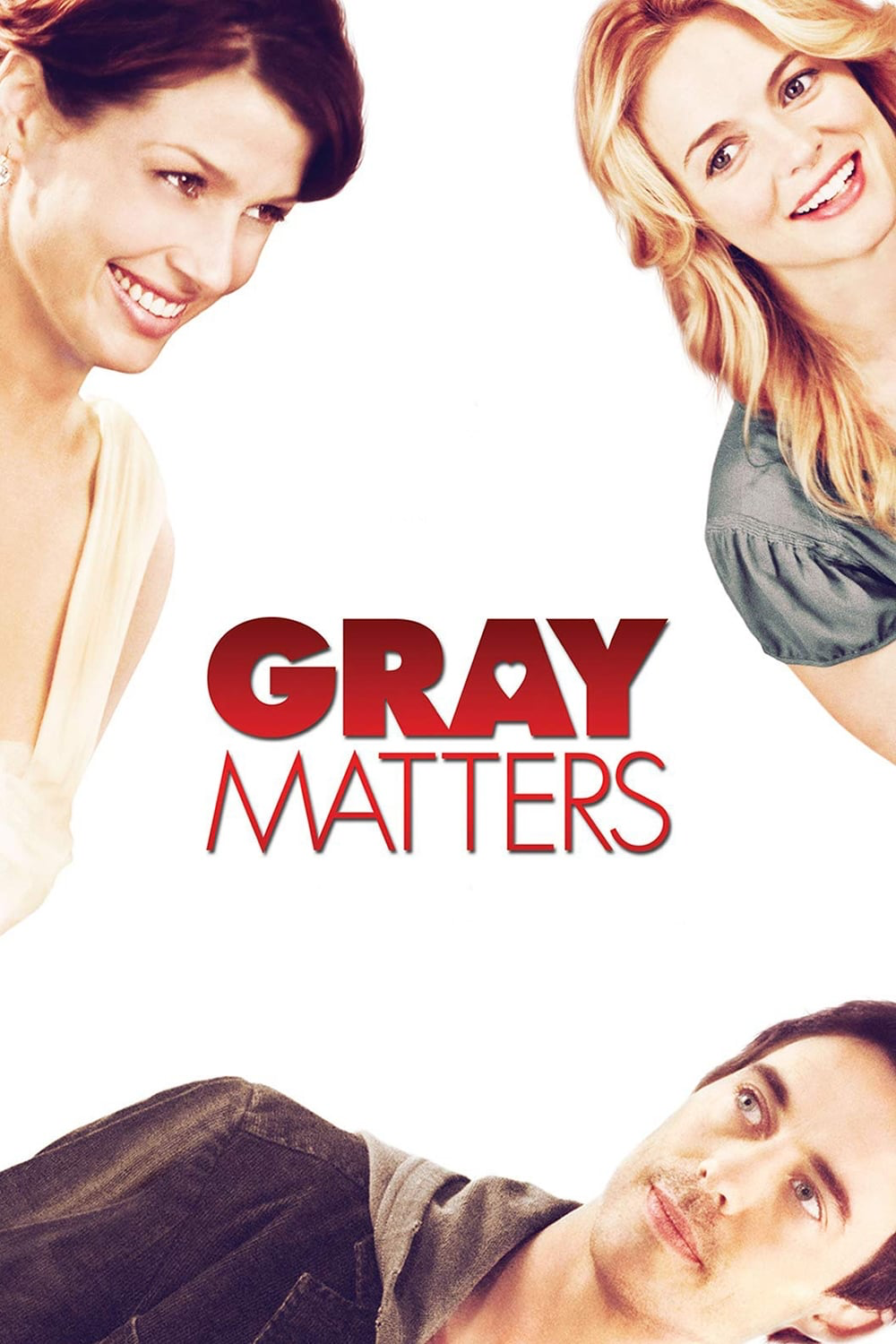
Gray Matters (2006) Review: Finding Self Beyond the Gaze
We often fall into the illusion that we know ourselves best. However, living in alignment with the trajectory of normalcy prescribed by others can prevent us from discovering the most vivid colors within ourselves.
The film Gray Matters serves as a tender song of encouragement for anyone seeking to cast off the familiar cloak of intimacy and comfort to finally confront the true voice within.
🌿 The Moments This Film Deeply Permeates
- When a relationship once believed to be the safest space in the world begins to feel like a wall obstructing your growth.
- When you realize that emotions you mistook for envy or jealousy toward another were actually hidden desires within yourself that you had not yet recognized.
- When you need the courage to confront your true self at a slightly later age than most and completely realign your life’s trajectory.
- Therefore, the reason to read this article to the end is that it clearly delineates the structural aesthetics of a queer woman’s autonomous awakening of identity and relational independence hidden beneath the veneer of a delightful romantic comedy.
🎞 Note Before Viewing
This work is rated for ages 15 and up, a romantic comedy that lightheartedly and cheerfully portrays the journey of self-discovery. Instead of provocative or sensational depictions, it is a harmless, warm, emotion-driven piece that focuses on highlighting subtle emotional shifts between characters and the essence of relational dynamics.
🎬 Movie Information
- Title: Gray Matters (2006)
- Director: Sue Kramer
- Screenplay: Sue Kramer
- Country: USA
- Genre: Romantic Comedy, Drama
- Running Time: 96 minutes
- Platform: Naver Series On, Wavve
- Cast: Heather Graham, Bridget Moynahan, Tom Cavanagh, Rachel Shelley
📖 Gray Matters: A Fracture in Siamese-Twin Siblings and an Unexpected Kiss [No Spoilers]
Gray, a promising advertising copywriter in New York, shares a flawless daily life with her brother Sam, a surgical intern. Their codependent relationship, in which they share tastes and routines like a religion, is so solid that those around them mistake them for a couple; yet, it also functions as an invisible prison confining one another. Shocked by this external misunderstanding, the siblings resolve to find partners independently, and Gray introduces Charlie, a zoologist she accidentally meets in a park, to Sam.
Charlie and Sam fall in love at first sight and decide to get married in Las Vegas just a day after meeting, prompting Gray to accompany them on their journey while experiencing a strange sense of alienation. On the night before the wedding, during a bachelorette party spent alone with Charlie, Gray shares a passionate, alcohol-fueled kiss with her.
The next morning, Charlie remembers nothing of the incident, but this unexpected kiss serves as a monumental turning point that awakens Gray’s latent attraction and sexual orientation toward women. Facing feelings for her brother’s fiancée and a nascent realization of her identity, Gray begins to confront the greatest emotional turmoil of her life, unlike anything she has experienced before.
🍇 The External Wall of a Codependent Relationship Shattered by an Encounter with a Perfect Stranger
The first half of Gray Matters focuses on demonstrating the overly enmeshed bond between Gray and Sam. The 1940s classic films and dance classes they share operate as defense mechanisms barring the intrusion of the outside world, as well as spaces of avoidance designed to keep them from looking into their own true desires.
Gray’s act of discovering Charlie and introducing her to Sam is ostensibly for her brother’s happiness, but structurally, it represents an unconscious attempt to shatter this claustrophobic relationship. The moment an exogenous entity like Charlie fractures the siblings’ world, what Gray confronts is not the sense of loss from having her brother taken away, but rather a strange alterity—the self that had been obscured by her brother’s shadow.
🌈 Delayed Awakening and the Liberation of Queer Identity Triggered by Charlie’s Kiss
The impulsive kiss with Charlie stands as the most critical directorial turning point in the film. Unlike Charlie, who loses her memory to alcohol, Gray’s subsequent sleeplessness and distress reveal that this kiss is not a mere mishap, but the awakening of an intimate desire.
The film addresses the process of a “delayed coming out”—discovering one’s sexual orientation only after reaching adulthood in one’s late twenties or early thirties—in a manner that is not ponderous, yet possesses a weight that is by no means trivial. Charlie functions as an embodiment of the femininity Gray yearned to attain and a key to liberating her repressed queer identity, ultimately pushing Gray out into the real world.
🍸 Solidarity and Expansion Presented by a New Milestone Named Julia
The late-stage sequence where Gray meets Julia, after her sexual orientation is unexpectedly exposed through workplace rumors, is the hidden gem of this film. Julia, the head of an advertising agency, is more than just a romantic interest for Gray; she is a mature mentor and a milestone demonstrating how a queer woman can lead an autonomous and dignified life.
In particular, the fact that Rachel Shelley, who played Julia, was an iconic figure in the famous queer drama The L Word at the time offers audiences a thrilling sense of liberation and visual reassurance regarding entry into the queer community through extra-textual intertextuality. The brief but intense connection with Julia proves that Gray’s journey is progressing toward solidarity rather than isolation.
🔎 Reinterpreting the Ending: The Dignity of Growth Left by Complete Independence
The film’s resolution eschews a convenient closure, such as pairing Gray with Charlie or restoring her relationship with her brother to its previous state. The emotions toward Charlie honorably recede after prompting her awakening, and the relationship with her brother Sam is redefined from that of a ‘guardian’ to a healthy distance between ‘independent individuals.’
The ending, which depicts Gray walking the streets of New York alone and communicating with new women, embodies the lingering aesthetics of a narrative showing that she has finally begun to control her own life as an intact agent rather than a mere appendage to someone else.
The ending of this film declares that the final chapter completing an individual’s narrative is not the consummation of a romance, but the absolute independence of the self and the establishment of identity.
💬 On the Interpretation and Modern Representation of Gray Matters
Q. Could the setup where the protagonist develops feelings for her brother’s fiancée, Charlie, come across as somewhat deceptive or uncomfortable?
From a critical perspective, it must be acknowledged that a setup involving a kiss and the realization of one’s feelings with a future family member can provoke ethical polarization or conflict. Within the narrative structure, this provocative device stems primarily from the conventional grammar of romantic comedies designed to generate dramatic tension.
However, the film does not squander this setup as a sensationalist soap-opera triangle. The emotions toward Charlie serve merely as a ‘trigger’ to awaken the identity Gray had ignored her entire life; subsequently, the narrative focuses on Gray’s own independence and the process of family acceptance rather than a battle to claim Charlie. Aesthetically, this can be interpreted as a directorial intent emphasizing personal awakening over the rupture of relationships.
Q. Is the ‘outing’ process in the latter half, where Gray’s sexual orientation is forcibly exposed at her workplace, handled too lightheartedly?
Viewed through a contemporary lens, an outing without personal consent and the spread of workplace rumors constitute serious human rights violations and present ample room for controversy. Resolving this crisis somewhat lightheartedly and swiftly within the mainstream commercial film grammar of the mid-2000s can be seen as a limitation of its era.
Letting go of the urge to depict this as an abyss of despair, the work transforms it into a blessing in disguise—a catalyst for Gray to step out of the closet where she had been hiding and express herself more confidently. This should be understood within the optimistic aesthetic context of queer cinema of that era, which sought to breakthrough heavy realities with cheerfulness, leaving the evaluation of this choice to the contemporary sensibilities of the reader.
✨ Gray Matters: A Great Step of Awakening That Redraws the Internal Map
The question posed by this work is not confined solely to the matter of sexual orientation. It is a universal exploration of identity—asking whether one possesses the courage to break out of a secure world they have trusted, and whether one can shed the role-play imposed by society to breathe as their authentic self.
Projecting the essence of her own being through the mirror of love and relationships, Gray’s journey reminds us living today that we too hold the right to be liberated from the gaze of others. True salvation begins not with being loved by another, but with accepting oneself entirely.
🔮 Solidarity at the Moment That Shifts Life’s Trajectory
We sometimes disappoint ourselves first simply to avoid disappointing those we cherish. Between a tranquil life that satisfies others and a turbulent life that saves oneself, which path are you standing on right now?
🎬 Curation of Linked Female Narratives Chosen Through the Lens of Violet Screen
- No Heaven, But Love (우리는 천국에 갈 순 없지만 사랑은 할 수 있겠지, 2024)
- Recommendation Reason: Set at the end of the century in 1999 amid apocalyptic rumors, this film explores the violence encountered by girls on a Taekwondo team and a narrative where they become each other’s sole sanctuary. The subtle yet resilient emotional solidarity that blossoms amidst the physical dynamism of intense sport is exceptional. Unlike Gray Matters, which centers on a sophisticated adult’s search for self, this film densely portrays the wistfulness and pain of raw youth, offering an entirely contrasting emotional rhythm.
- Drive-Away Dolls (2024)
- Recommendation Reason: A queer road movie directed by Ethan Coen, this work captures the uncontrollable journey and joyous sense of liberation experienced by two female protagonists. Deviating from the standardized major grammar centered on OTT platforms, it showcases a fusion of B-movie sensibilities and uninhibited female narrative. Released within the past three years, this exceptional piece stands out for its energy, transforming the anxieties of identity into a sweepingly exhilarating adventure.
TODAY'S QUESTION
What changed the most for you after coming out?
Your answer isn't saved. Feel free to share it in the comments below.


You May Also Like

Professor Marston and the Wonder Women (2017): The Essence of the Eternal Solidarity Forged by Two Women in the True Story of Wonder Woman

La Luciérnaga Film Analysis: Salvation in the Name of Desire Found at the Edge of Loss