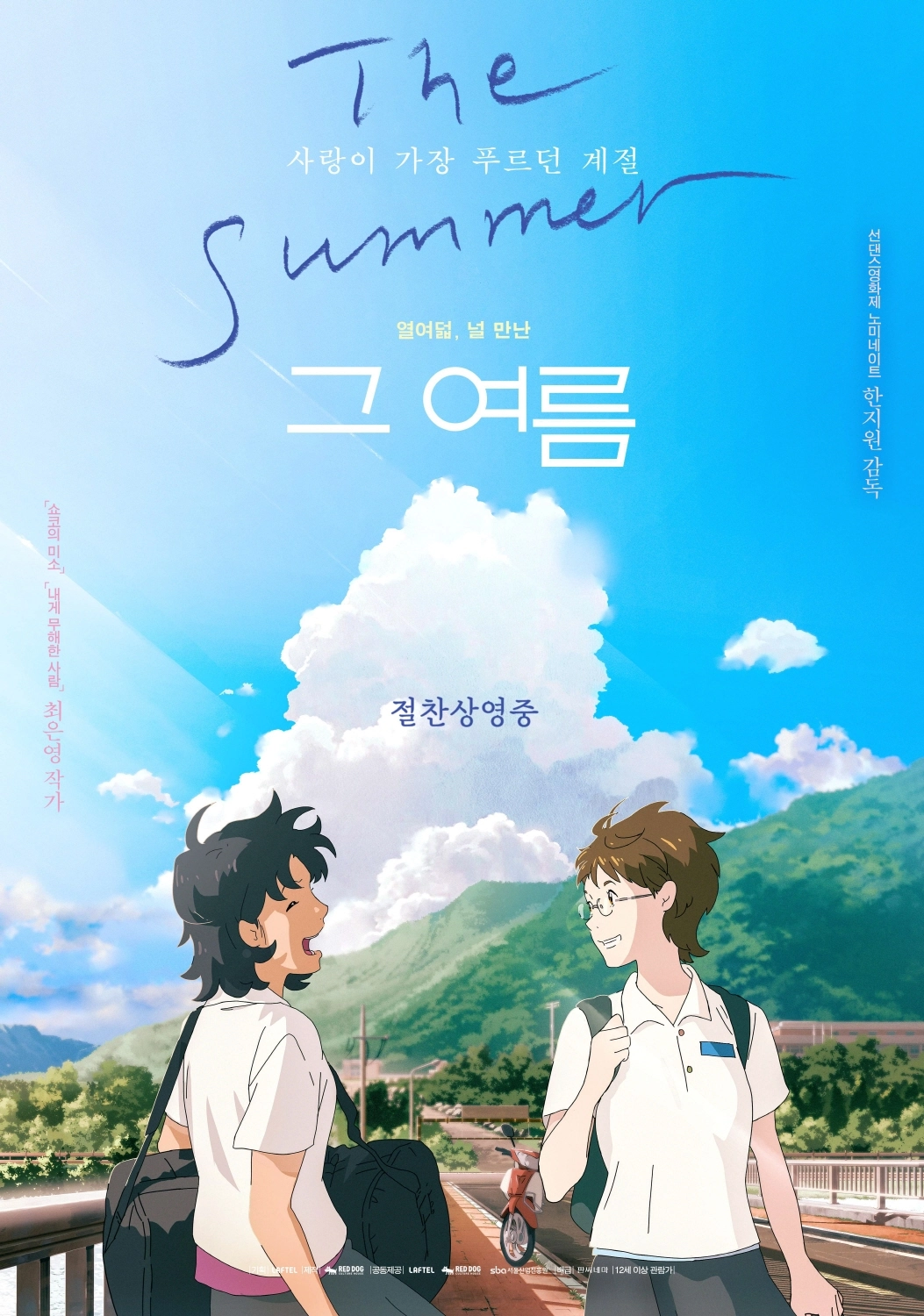
The Summer (2023) — The Thermal Gap of Seasons and the Radiant Cracks of First Love
Desire ignited in an isolated space often faces the unyielding chill of reality, leaving behind the most heartbreaking traces of solidarity. Somewhere in our youth, we all pass through another person—discovering our own deficiencies and learning how to fully endure a season of our lives.
The Summer moves beyond a simple story of meeting and parting. It is a poignant portrait of the painful growth that unfolds when two organisms stretch along diverging trajectories.
🌿 Moments When This Film Sinks in Deeply
- If you know the bitter emptiness when a promise that seemed eternal collapses under the weight of everyday reality.
- If you understand the power of emotional debt and lingering recollection that follows a breakup, far exceeding the initial passion of love.
- If you hold memories of having to endure the subtle cracks that formed as your worlds drifted apart.
- If you are navigating a phase of youth that leaves heated days behind to look at the world with a deeper, more refined gaze.
The reason to read this piece through to the end is to prove that the season that slipped away was by no means meaningless.
🎞 Before You Watch
Rather than relying on provocative scenes or explicit content, this animated romantic drama focuses closely on the intricate emotional arcs and shifting dynamics between its two leads. The emotional anxieties and practical conflicts of transitioning from late teens to early twenties are rendered in delicate watercolor tones.
🎬 Film Info
- Title: The Summer (그 여름, 2023)
- Director: Han Ji-won
- Screenplay: Han Ji-won
- Original Work: Choi Eun-young’s short story “The Summer” (from the collection Persons Innocent to Me)
- Country: South Korea
- Genre: Animation, Drama, Romance
- Runtime: 61 minutes
- Platforms: Wavve, Watcha, Naver Series On
- Cast: Yun A-young, Song Ha-rim
📖 That Summer: Two Youths Drifting at Different Speeds [No Spoilers]
On a scorching summer day at age eighteen, Yi-gyeong feels an intense attraction toward Su-i, who is playing soccer on a rural school ground bathed in sunlight. Despite the gazes of others and the unfamiliarity of their feelings, the two fall deeply into each other, forging an enduring first love. Promising a shared future at twenty, they head together toward the unfamiliar environment of Seoul.
However, life in Seoul sharply divides their trajectories. Yi-gyeong enters university, broadening her world as she builds new networks and relationships. Meanwhile, Su-i gives up soccer due to an injury and is thrown into the harsh labor of an auto repair shop. As their daily orbits and living environments become entirely distinct, minor misunderstandings and a silence born of miscommunication begin to accumulate between them.
The presence of Eun-ji, whom Yi-gyeong meets while working a part-time job, accelerates the fissure in her suffocating relationship with Su-i. Yi-gyeong’s wavering heart toward Eun-ji and the wound Su-i experiences upon realizing it drive the two toward an irreversible parting. Bound by pure emotions alone, they fail to bridge the class gap and the differing velocities of their lives. Thus, their once-blazing summer rushes toward its terminal station, leaving behind a brilliant ache.
☀️ Interpreting the Thermal Gap in Yi-gyeong and Su-i’s Emotions Hidden in the Seasonality of The Summer
Summer is a season that is radiant and intense, yet incapable of lasting forever. For Yi-gyeong and Su-i, their teenage summer was a time of pure immersion, protecting a private universe from the outside world. In contrast, Seoul at age twenty was a season of cold reality. The university life Yi-gyeong experiences is an expanded realm filled with new stimuli and possibilities, whereas the labor Su-i faces at the repair shop is a site of exhausting attrition for survival.
The thinning of their conversations and the lengthening of their silences stem less from a depletion of affection than from the divergence of the daily languages they must each endure. The film delicately observes that the changing of seasons does not signify the corruption of love, but rather a natural distance produced by shifting social positions.
🌉 The Spatial Divide and the Structural Fissure Brought by Eun-ji
When Su-i retreats into silence under the fatigue of labor, Eun-ji—whom Yi-gyeong meets while working at a bakery—becomes an outlet for the emotional connection Yi-gyeong craves. Eun-ji is not merely a third party; she functions as a point of contrast that makes Yi-gyeong explicitly aware of the loneliness and frustration she feels in her relationship with Su-i.
While Su-i’s world remains trapped in harsh survival, Yi-gyeong engages with Eun-ji in conversations about realms she can no longer share with Su-i. This relational fracture is less a unilateral betrayal than a structural limitation that arises when two people in diverging life circumstances can no longer serve as each other’s sole sanctuary.
🔎 Reinterpreting the Ending: Dignity and Growth Standing Alone on the Bridge
The scene where Yi-gyeong crosses the bridge she once walked with Su-i—now alone after their breakup—is neither a plea for a lost first love nor a gesture of regret. It is a process of accepting the end of a relationship that was once her entire world, calmly reflecting on how that love shaped the person she has become. Though the intense bond they shared failed to reach a flawless resolution and ultimately left a crack, that very crack serves as the trace of growth through which a human being constructs their own world.
The ending of The Summer represents a structural transition of youth: discovering oneself as an autonomous subject precisely through the demise of an immature first love.
❓ Deep-Dive FAQ: Narrative Debates and the Aesthetics of Representation
💬 Q1. Can the breakdown of their relationship be attributed solely to one person’s change of heart?
Yi-gyeong’s heart wavering toward Eun-ji is merely a surface trigger; the fundamental cause lies in the differing environments and velocities of life the two characters inhabit. Rather than condemning Yi-gyeong’s new connection, the film illustrates how diverging realities—such as manual labor versus higher education—gradually erase their shared language. Therefore, it is more accurate to view this rupture not as an individual moral failing, but as the result of a structural barrier that youth inevitably confronts.
💬 Q2. What characterizes the representation of female-female relationships in this work?
The Summer refrains from idealizing relationships between women in a purely fantastical or romantic light, depicting them instead through a grounded, bitter sense of lived reality. While clearly acknowledging the tragic boundary of being unable to save one another, the narrative concludes by respecting the very trajectories left upon each other’s lives. This approach represents the subjects’ lives and growth with immense objectivity and dignity.
✨ The Summer — A Record of Dignified Maturity Left in the Wake of the Season
The conclusion of The Summer presents a truth to modern society: that the end of love does not render the time spent invalid. Through deep connection with another, we confront our own selfishness and limitations, using that pain as momentum to step forward into a broader world. The end of a relationship is not a failure, but an unavoidable phase of growth through which human beings expand themselves.
The completion of love does not lie in eternal companionship, but in fully embracing the trajectory of life gained by passing through one another.
🌊 What Has the Departed Season Left Behind for You?
At the final destination of a relationship, we often oscillate between resentment toward the other and self-blame. Fully enduring a heart that has passed may be the only true orientation for welcoming the next season.
How do you remember the season of your first love, which you had to let go due to your own limitations in days gone by?
💜 Violet Screen Recommended Curation
- Heavy Snow (폭설, 2023)Reason for Recommendation: A narrative that captures the fresh feelings of school days, the emotional isolation hidden behind them, and the delicate shifts in relationships in a calm tone. It shares a similar atmosphere in how closely it traces the subtle grains of emotion.
- About Daughter (딸에 대하여, 2024)Reason for Recommendation: Density-driven storytelling dealing with the lives of two women confronting the gaze of the world, practical livelihoods, and the social barriers encountered within relationships. It offers a deep interpretation of the weight of reality and the dignity that sprouts within it.
TODAY'S QUESTION
What's your favorite line from a WLW movie or show?
Your answer isn't saved. Feel free to share it in the comments below.


You May Also Like

Secret Things: When Women’s Desire Collides with the Destructive Structures of Power

In My End Is My Beginning (2013): Psychology of Salvation Sprouting over the Ruins of Twisted Desire