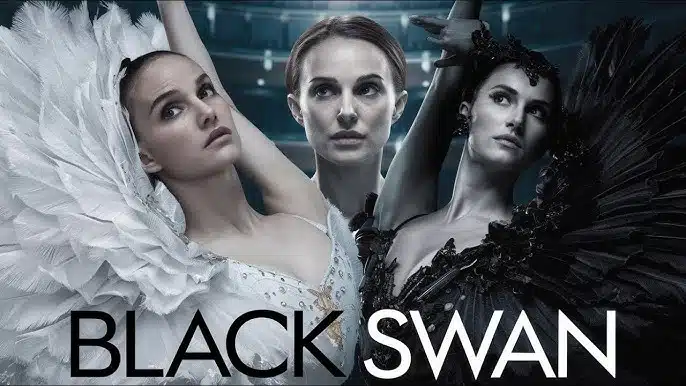
Black Swan Analysis: Destruction Born of the Cruel Desire Named Perfection
Within everyone, a pure white self we wish to show others and a pitch-black instinct we wish to ignore coexist. Most of us live by finding a suitable compromise between the two, but some willingly destroy themselves to break that boundary for the sake of a single “perfection.”
The film Black Swan is not a simple success story of a ballerina. It is a cruel coming-of-age tale and a psychological thriller where a woman, who has lived a controlled life, faces her dark shadow and achieves a paradoxical liberation through the process of being consumed by it.
🌿 Moments This Film Seeps Deep Into the Soul
- When you have felt a suffocating thirst while suppressing your true self to meet the expectations of others.
- When you are swept away by a mixture of longing, jealousy, and self-loathing while watching someone who seems more like “you” than yourself.
- When you need consolation offered to a soul trapped in the “good girl” frame, having forgotten how to express their own desires.
- The reason to read until the end: To track why the destruction Nina faces is read not as a tragedy, but as “completion,” and to uncover the meaning behind that chilling aesthetic ending.
🎞 Note Before Viewing
This work deals with a mad obsession toward artistic achievement and vividly depicts the psychological collapse of a character. While it includes hallucinations of self-mutilation and high-intensity emotional conflicts, these serve as essential devices to explain the relationship between the two women and the fragmentation of the self.
🎬 Movie Information
- Title: Black Swan (2010)
- Director: Darren Aronofsky
- Screenplay: Mark Heyman, Andres Heinz, John J. McLaughlin
- Country: USA
- Genre: Psychological Thriller, Drama
- Running Time: 108 minutes
- Platform: Disney+, Netflix, etc.
- Cast: Natalie Portman, Mila Kunis, Vincent Cassel, Barbara Hershey
📖 Black Swan: The Journey of a Pure Girl Growing the Wings of the Black Swan [No Spoilers]
Nina, a dancer in a New York ballet company, is a model ballerina who knows nothing but dance and practice. Under the overprotection of her mother, Erica—a former ballerina who retired early—Nina lives a life that is the epitome of the pure and disciplined “White Swan.”
One day, the company selects Swan Lake as the opening production for the new season, and the artistic director, Thomas, begins searching for a new Queen who can perfectly portray both the White Swan and the Black Swan simultaneously. Nina is judged suitable for the White Swan due to her flawless technique, but is criticized for being too stiff and innocent to portray the sensual and provocative Black Swan.
Then, Lily appears before Nina. Lily is a character with a charm diametrically opposed to Nina’s. Free-spirited, impulsive, and radiating a destructive energy, Lily becomes a powerful rival to Nina and, at the same time, a catalyst that awakens the “darkness” Nina does not possess.
As the obsession with securing the role, suspicion toward Lily, and conflict with the mother who has suppressed her selfhood explode, Nina’s daily life falls into a chaos where reality and hallucination intertwine. Will Nina be able to awaken the Black Swan within her and reach true perfection on stage?
🦢 The Boundary Between Nina and Lily: Interpreting the Mirror Stage and the Desire of the Other
To Nina, Lily is not a mere competitor. From a psychological perspective, Lily is the manifestation of the “Shadow” that Nina has repressed. Nina constantly discovers Lily’s image in the mirror—resembling her yet different. This symbolizes Nina’s desperate struggle to construct her ego within the image of the Other, much like Lacan’s “Mirror Stage.”
The mirror mise-en-scène repeated throughout the film visualizes Nina’s mental fragmentation. Nina feels terror while watching Lily, yet simultaneously craves her freedom. The relationship between these two women flows into a grotesque solidarity where they complete each other through destructive competition. The scene where Nina finally transforms into the Black Swan through a hallucination of killing Lily demonstrates the tragic irony that a whole self can only be acquired by eliminating the Other.
🩰 A Prison Named Motherhood: Erica’s Vicarious Satisfaction and Nina’s Infantile Isolation
Nina’s tragedy begins in the bedroom. Nina’s room, covered in pink, keeps her—now an adult—tethered to the position of a young child. Her mother, Erica, projects her own unfulfilled dreams onto her daughter, trapping Nina within the frame of “my sweet girl.” This is a manifestation of a profound power structure.
Erica is extremely wary of Nina losing her purity. However, artistic completion comes not from purity, but from the destruction beyond it. Nina’s act of pushing away her mother’s hand and locking the door is a subjective declaration of escaping the dominance named motherhood. The self-harm and hallucinations occurring in this process were the devastating costs she had to pay for the repressed self to break its shell.
🔎 Reinterpreting the Ending — Artistic Union and the Dissolution of the Subject Completed Through Death
Many viewers sigh as they witness Nina’s death or fatal injury in the ending of this film. However, Nina’s final line, “I was perfect,” is closer to ecstasy than a scream. The moment she checks the trace of self-destruction—the glass shard embedded in her abdomen—and takes the stage, Nina is no longer the White Swan nor the Black Swan, but “Art Itself.”
What Nina gains in the end is the fleeting glory of “perfection,” and what she loses is her body and her life in the real world. This signifies an extreme artistic state that can only be reached by completely extinguishing the ego. Nina’s fall was, in fact, a soaring. She became free from all relationships and norms that fettered her, and the price of that freedom was something that could only be paid with death.
Nina’s destruction is not a collapse of the self, but a process of sublimation where the incomplete self of reality is discarded to transition into an eternal artistic form.
🔍 Black Swan Ending Interpretation: Is Nina’s Hallucination Artistic Sublimation or Mental Collapse?
Q1. Was the sexual encounter with Lily that Nina saw real or a hallucination?
Within the context of the work, it is reasonable to view this as a hallucination projecting Nina’s repressed sexual desire and her longing for ego liberation. Nina wanted to break down her controlled self through the character of Lily. Even if the act itself was a fantasy, the psychological impact and change that experience gave Nina were real. This becomes the decisive turning point for Nina to embody the sensuality of the Black Swan.
Q2. What are your thoughts on the criticism that the ballet company’s depiction is excessively sadistic and exploitative of women?
This is a valid criticism. Thomas’s method of pushing Nina or the direction that drives jealousy between female dancers to the extreme is controversial from a modern perspective. However, this film is not a documentary exposing the reality of the ballet world; rather, it borrows the closed and perfectionist environment of ballet as an aesthetic device to maximize human internal madness. That very harshness can be understood as the stage setting that makes Nina’s transformation even more dramatic.
✨ Black Swan: Questions the Obsession with “Perfection” Asks Us
Black Swan does more than just show the madness of an artist; it asks painful questions of modern individuals living in a performance-oriented society. Are we not all killing the “Black Swan” within us to live as the “White Swan” that others expect?
Nina’s tragedy is not because she was particularly weak, but a quintessential example of what happens when the desire for recognition and the craving for perfection, which we all possess, reach a breaking point. Art blooms at the point where relationships and identities collapse, but that flower ultimately feeds on the life force of the performer.
True completion of the self begins not by reaching the perfection defined by the Other, but by having the courage to fully embrace even one’s own deficiencies and darkness.
💡 To You, Lost at the Boundary of Relationships
Are you erasing your instincts to be loved by everyone? Sometimes, the darkness that seems to destroy me becomes the key that makes me most like myself.
Are you prepared to willingly carve yourself out for the applause of others, or will you choose to remain as a living “self,” however imperfect?
💜 Violet Screen Curation: Aesthetics of Twisted Desire and Relationships
For those who wish to explore the fierce psychology and the essence of relationships between women, I recommend two works to follow the lingering resonance of Black Swan.
- The Novice (2021)
- Reason for recommendation: It depicts the process of a college rowing freshman, Alex, pushing her body and mind to the limit as she becomes obsessed with being number one. It is a masterpiece with a chilling and sensual direction, often called the rowing version of Black Swan.
- May December (2023)
- Reason for recommendation: It deals with the subtle relationship between Gracie, the subject of a past scandal, and Elizabeth, the actress tasked with portraying her. You can witness through Natalie Portman’s another brilliant performance how the attempt to understand another person mutates into deception and transgression.
To provide a more stable publishing environment, multilingual content, and better communication with our readers, we have moved our official publication to Substack.
All new film reviews and critical essays will be published on our new platform. This website will be closing down soon, so we would greatly appreciate it if you subscribed to our new space.
TODAY'S QUESTION
What's the most memorable new release you watched this year?
Your answer isn't saved. Feel free to share it in the comments below.


You May Also Like

Tierra firme (2017) and Seeking a Path on the Edge of Non-Traditional Families

Summerland, The Absolute Zero of Tender Solidarity Found in the Sea of Loss