
Booksmart: The Collapse of Isolated Superiority and the Reinterpretation of Relationships
The world does not operate solely within the binary frameworks we establish. At times, we disparage others to prove our own worth, finding a sense of security only within those exclusive fortress walls. However, it is only when those walls crumble that we finally face the true essence of others.
The film Booksmart is a profound text that transcends the simple teen comedy genre to address the power structures of relationships and the expansion of the self. The process by which the identity of a “top student,” meticulously constructed over four years, is dismantled through a single night of partying represents the growing pains that we all have experienced or will eventually face.
🌿 Moments When This Film Deeply Resonates
- When a chilling realization dawns that the way of life you believed in might not be the right answer.
- When you feel your best friend is suffocating you, or conversely, when you realize you are controlling them.
- In the early hours of the morning, when you feel ashamed of your own arrogance for having defined others in a “single sentence.”
- This is why you must read this article to the end. You will confront the structural reality of how your “prejudices” toward others have been eroding your “relationships.”
🎞 Note Before Viewing
While this work honestly and boldly depicts the language and sexual curiosity of high school students, these serve not as mere provocations but as essential narrative devices for the characters’ exploration of identity and expressions of intimacy.
🎬 Film Information
- Title: Booksmart (2019)
- Director: Olivia Wilde
- Screenplay: Emily Halpern, Sarah Haskins, Susanna Fogel, Katie Silberman
- Country: USA
- Genre: Comedy, Coming-of-age
- Running Time: 102 minutes
- Platform: Netflix, Google TV
- Cast: Beanie Feldstein, Kaitlyn Dever, Diana Silvers, Billie Lourd
📖 Booksmart, a Night Where the Perfect World of ‘Us’ Cracks [No Spoilers]
With only one day left before high school graduation, Molly (Beanie Feldstein) and Amy (Kaitlyn Dever) are certain they are the smartest in school and the victors with guaranteed futures. For the past four years, they have focused exclusively on their studies, deferring all pleasure, and have secured admission to prestigious universities as their reward. However, the day before graduation, Molly discovers the shocking truth that the so-called “party kids” she looked down upon have also been accepted into the same elite colleges or have secured positions at major corporations.
The moment the belief that studying and fun cannot coexist is shattered, Molly convinces Amy to head to “Nick’s party”—the last party before graduation—to compensate for their lost four years. However, the process of finding the party is far from smooth, and the night’s deviation brings to the surface the dependency and repressed desires hidden within their tight-knit relationship. In a chain of events, they realize how shallow their definitions of others were, while simultaneously facing an existential conflict where they must redefine each other’s existence.
🏰 An Exclusive Solidarity Born of an Isolated Kingdom and a ‘Sense of Superiority’
The relationship between Molly and Amy takes on a closed structure that strengthens internal solidarity by thoroughly excluding the outside world. They positioned themselves as an “intellectual minority” and defined others as the “ignorant masses.” Paradoxically, this sense of superiority became a wall that isolated them from the rest of the world.
Their friendship went beyond mere compatibility; it was a tool for self-justification that proved their choices were correct. Through Amy, who acted as a “submissive mirror,” Molly gained the conviction that her dogmatic lifestyle was righteous. For them, friendship was a fortress protecting each other from external threats, but within that fortress, their individual growth was destined to stagnate.
💥 Controlling Desires and a Declaration of Independence: The Divergence in Interpreting Booksmart
As they enter the unfamiliar space of the party, Molly’s controlling tendencies reach their peak. To Molly, the party is not an object of enjoyment but another “task” to be conquered, and Amy must be the partner to perform that task alongside her. This is where the film’s core psychological dynamics are revealed.
The Gap Year that Amy had been secretly planning was not just a travel plan, but a declaration of independence to escape Molly’s influence. In the worldview Molly constructed, Amy was always a supporting character, and Amy had been hiding her truth under that pressure. The intense argument in the bathroom is an explosion of the power imbalance accumulated over four years, serving as a “rite of passage” they both had to undergo to emerge as equal subjects.
🔎 Reinterpreting the Ending — An Expanded Union, Not a Final Parting
The ending of Booksmart is completed with the scene where the two say goodbye at the airport before heading their separate ways. This ending does not simply signify a physical distancing. Molly has learned the flexibility to sustain herself in a world without Amy, and Amy has become able to affirm her own desires (her connection with Hope) without Molly’s permission.
Ultimately, this night of chaos destroyed the blind dependency between the two and established a new foundation of respect in its place. They now face each other as “independent others” rather than “parts of oneself.” In the final moments, the choice to turn back and get back into the car signifies a return to a voluntary solidarity rather than a return to restraint. True growth is finally achieved when one does not confine others within their own framework but acknowledges their inherent complexity.
❓ Questions Regarding the Ending of Booksmart and the Representation of Women’s Narratives
Q. What differentiates this film from existing teen movies?
While traditional teen movies usually depict the process of winning “popularity” or “love,” this work centers on intellectual achievement and self-identity. Notably, it avoids portraying women as sexual objects or incarnations of jealousy, instead elegantly and humorously depicting their solidarity, private jokes, and the process of learning through mistakes. It is highly regarded for suggesting a modern direction for women’s narratives.
Q. How do you view the criticism that Molly’s controlling nature is excessively uncomfortable?
Molly’s character certainly has aspects that can divide opinion. However, this also serves as a device to break the obsession with “flawlessness” often imposed on female characters. By showing Molly’s arrogance and failures without filter, the film emphasizes that women are also multi-dimensional humans who grow through trial and error. The discomfort acts as an aesthetic tool that forces the audience to confront the desire for control hidden within themselves.
✨ Booksmart: All Prejudice is a Poisonous Mushroom Sprouting from Ignorance
Through the chaos of the night before graduation, this film asks us: how much of the version of others you have defined is real? What Molly and Amy broke was not school rules, but the prison of prejudice that confined themselves and judged others. A relationship should not be an isolated kingdom, but a plaza that constantly expands through encounters with others.
Growth is the courage to admit one is wrong, and maturity is the hospitality of making a place for others in one’s world.
💬 Is your ‘Isolated Kingdom’ doing well?
Perhaps we, like Molly, are pre-judging and excluding someone just to avoid being hurt. It makes one wonder whether the relationship you value most is helping you grow or if it is confining you.
Do you, like Amy, have a secret dream you are hiding for fear of disappointing someone’s expectations?
📽 Violet Screen Curation: Women’s Narratives to Carry the Lingering Afterglow
- Bottoms (2023): A “spicier” version of Booksmart. This chaotic story follows two marginalized high school girls who start a “fight club.” Its bold energy twists the clichés of the teen genre to perfection.
- Shiva Baby (2020): Set within the confined space of a funeral home, it deals with the psychological pressure and relational conflicts of the female protagonist. You can experience a strange humor and a search for self that blooms amidst discomfort.
To provide a more stable publishing environment, multilingual content, and better communication with our readers, we have moved our official publication to Substack.
All new film reviews and critical essays will be published on our new platform. This website will be closing down soon, so we would greatly appreciate it if you subscribed to our new space.
TODAY'S QUESTION
Which character has comforted you lately?
Your answer isn't saved. Feel free to share it in the comments below.


You May Also Like
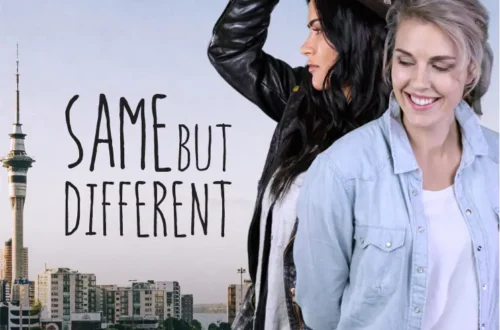
Same But Different (2019): Discovering Radical Hospitality and Love Beyond the Chaos of Identity

Professor Marston and the Wonder Women (2017): The Essence of the Eternal Solidarity Forged by Two Women in the True Story of Wonder Woman