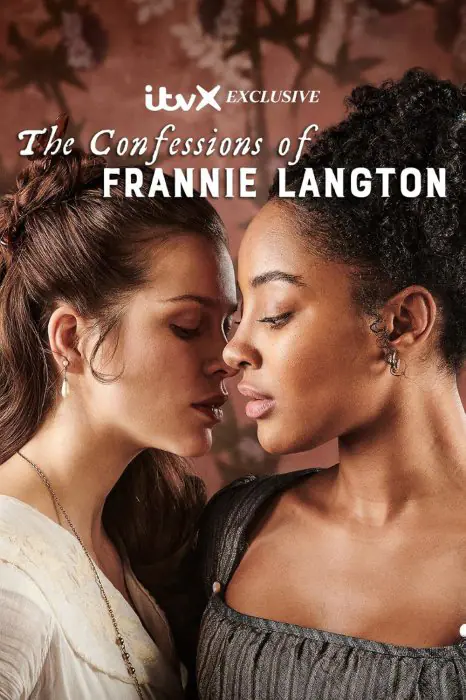
The Confessions of Frannie Langton: A Chronicle of Gothic Thriller and Entangled Desire
There was an era when simply existing meant becoming a subject for experimentation or someone else’s property. One woman has emerged, tearing through those chilling records of silence.
We often believe love to be a form of salvation, yet some loves are merely another name for subjugation. The story of Frannie Langton begins at this very boundary.
This work does more than merely exhibit past tragedies; it depicts, with devastating beauty, the process of two oppressed beings indulging in one another as they collapse.
🌿 When Salvation in the Name of Love Turns into Destructive Subjugation
This drama is a requiem for those who had to destroy themselves to erase the stigma imposed by their era. It captures moments within the darkness of a grand mansion where the warmth of another was the only tangible truth. Before the rigid walls of class and race, we witness how forbidden emotions devolve into madness. The reason to follow this narrative to its end is to understand the true “confession” Frannie finds amidst the ruins of tragedy.
🎞 Notes Before Viewing
Set in 19th-century England and Jamaica, this production unsparingly depicts racism, drug addiction, and physical and psychological violence. It is a relationship-driven thriller possessing a heavy emotional weight that transcends simple romance or mystery.
🎬 Drama Information
- Title: The Confessions of Frannie Langton (2022)
- Director: Andrea Harkin
- Screenplay: Sara Collins
- Original Work: Novel The Confessions of Frannie Langton by Sara Collins
- Country: United Kingdom
- Genre: Period Drama, Mystery, Drama, Queer
- Running Time: 4 Episodes (approx. 45–50 minutes each)
- Platform: ITVX, BritBox (Availability on domestic platforms like Wavve or Watcha may vary)
- Cast: Karla-Simone Spence, Sophie Cookson, Stephen Campbell-Moore
📖 The Confessions of Frannie Langton: Fragments of Truth Seething Beneath a Housemaid’s Silence [No Spoilers]
Born into slavery on a Jamaican sugar plantation, Frannie learns to read and write through the twisted scientific ambitions of her master. However, knowledge becomes not a path to freedom, but a shackle proving her value as a research subject.
Later sent—effectively sold—to the London mansion of wealthy scientist George Benham, she meets the mistress of the house, Marguerite. Intellectual yet isolated, Marguerite and Frannie quickly recognize the voids within each other. The secret communion between the two women soon evolves into an affection that defies social taboos, but the realities of Marguerite’s drug addiction and their disparity in status drive the relationship toward catastrophe.
Then, one night, the Benhams are found murdered in their bedroom, and Frannie is discovered lying beside them, drenched in blood. Having lost her memory, she stands in court as the sole suspect.
🩸 Violence Met by the Intellect of a Black Woman Trapped in an Anatomical Gaze
Frannie Langton’s confession directly critiques the hypocritical intellectualism of 19th-century British society. While Frannie can read and write, these skills are treated not as proof of her humanity, but as a means to showcase the eccentricity of a “tamed animal.”
Male authority figures, represented by John Langton and George Benham, thoroughly objectify Frannie by observing and recording her body. For Frannie, the light of knowledge becomes a darkness that only allows her to perceive her own tragedy more clearly. The work portrays the very act of Frannie picking up a pen as a revolution. Her will to reject a history recorded by others and reconstruct her life through her own voice is the most powerful narrative engine driving the series.
🕯️ The Twisted Mirror Therapy of Two Souls Met Behind the Glass
The relationship between Marguerite and Frannie is an expression of shared identity that goes beyond mere same-sex affection. Despite her status as an upper-class white woman, Marguerite is also a specimen preserved like an ornament within a mansion that functions as her husband’s laboratory.
Through each other, the two women confirm the walls of their respective prisons. Marguerite seeks refuge in Frannie’s wild vitality, while Frannie experiences “treatment as a human being” for the first time in Marguerite’s elegant solitude.
Yet, their bond could never be equal. The inherent imbalance of race and class causes even minor misunderstandings to transform into fatal betrayals. As love deepens, the desire to possess one another paralyzes their reason, much like the smoke of opium.
⚖️ A Tragic Interpretation of a Relationship Finalized on a Blood-Stained Bed
Ultimately, the most painful point of this drama is not identifying the murderer, but asking why they could only reach peace through death. Frannie’s lost memory of that night is, in fact, a defense mechanism against a truth she could not endure.
Marguerite’s death is a voluntary exit of a soul that failed to adapt to the role models forced upon her by society, as well as a twisted proof of her love for Frannie. Frannie collapses at the moment she realizes that while she did not kill her, she could not save her either.
The conclusion of the work is knotted not by Frannie denying her guilt in court, but by her declaring her own existence. What she gains is the cold truth; what she loses is the illusion called love. The end of this tragedy is the painful birth of a woman transitioning from an object of observation to the subject who records her own history.
💬 On the Ambiguity of Truth and the Ending Shaped by Frannie’s Blurred Memories
The setup of Frannie losing her memory of the incident due to the influence of drugs might seem like a typical trope of the mystery genre. However, it is closer to a structural necessity symbolizing the depth of the trauma she endured.
From a critical perspective, some point out that Frannie’s passive attitude or Marguerite’s volatile emotional shifts undermine the consistency of the narrative. Yet, these should be viewed as intentional directions meant to express the extreme instability of the two characters.
Ultimately, the truth does not reside in the “facts” judged by the court, but within the “confession” written by Frannie. The audience assembles Frannie’s incomplete memories alongside her, experiencing firsthand how narrow the exits available to women of that time truly were.
✨ The Confessions of Frannie Langton: A Singular Narrative Tearing Through the Shackles of Oppression
Borrowing the landscape of the 19th century, this work poses questions that remain valid today: how precarious a life defined by the gaze of others is, and what price must be paid to strip away that gaze and exist purely as “oneself.”
Love can sometimes be a poison, but human dignity is preserved only when one chooses even that poison for oneself. Frannie’s confession is not a record of the past, but a fervent outcry toward all marginalized voices living in the present. The most profound legacy left by this narrative is that the restoration of the subject begins only when one can name their own pain.
🏹 Are You Willing to Be Found Guilty to Prove Your Love?
Sometimes, there is a scream that speaks a greater truth than silence. Watching the choice of Frannie, who found her own name only after losing everything, one is inclined to ask what kind of confession you would leave behind.
When social stigma and personal sincerity collide, would you choose the “innocence” defined by the system, or the “guilt” required to protect your love?
💜 Violet Screen Curation
- The Five Devils (2022): A mysterious and chilling drama that tracks a forbidden love of the past through the senses and memory. It stands out for its modern variation on the gothic atmosphere found in Frannie Langton.
- Girl Picture (2022): Moving away from oppressive period dramas, this work portrays the dynamic relationships and desires of contemporary young women in a most honest and vibrant way. It is suitable for experiencing a sense of liberation following a heavy narrative.
To provide a more stable publishing environment, multilingual content, and better communication with our readers, we have moved our official publication to Substack.
All new film reviews and critical essays will be published on our new platform. This website will be closing down soon, so we would greatly appreciate it if you subscribed to our new space.
TODAY'S QUESTION
What's your favorite line from a WLW movie or show?
Your answer isn't saved. Feel free to share it in the comments below.


You May Also Like
Matlock (2024): Sarah and Kira, a Harmless Narrative of Love Piercing the Cracks of Perfectionism

Harlem: A Journey of Self-Discovery Born from the Chaos of Sexual Fluidity