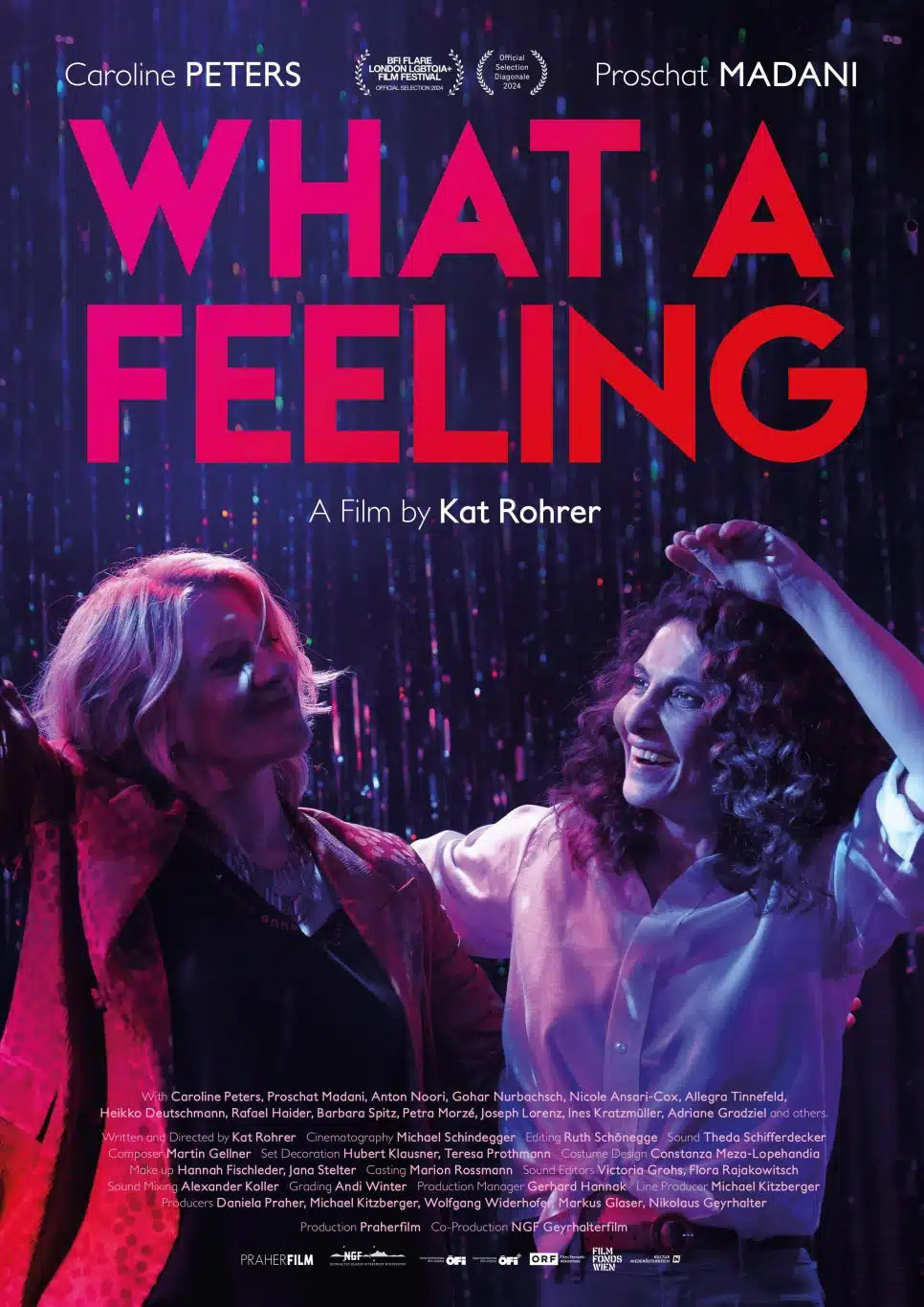
What a Feeling 2024: Mid-life Desire and Liberation Blooming from a Collapsed Routine
The trajectory of a dignified life cannot always be a smooth, straight line. Sometimes, it is only when the world we trusted most shatters miserably that the hidden, raw self finally rears its head. When the fence of ‘normalcy’ that has sustained us for 20 years is torn down by another’s declaration, we stand before an existential choice: to sink into loss or to embrace an unfamiliar freedom.
This work does not merely deal with a love that arrived late. It delicately captures the process of shedding the outer skin of a ‘successful woman’ as defined by society and filling one’s own deficiencies with the warmth of another.
🌿 Moments where this film sinks in especially deep
- For those who have forgotten the sound of their own voice while living to meet the expectations of others.
- For those who wish to escape the prison named stability and experience a pleasant state of disorder.
- For everyone who has agonized between cultural barriers and individual identity.
- The reason you should read to the end is that it proves the structural necessity of how a mid-life queer romance evolves beyond a simple love story into a ‘self-salvation narrative.’
🎞 Note before viewing
Rather than physical exposure or provocative depictions, this work focuses on the psychological fluctuations of the two characters and the density of their relationship. It is an emotion-centered drama dealing with the mature yet clumsy love of adult women.
🎬 Movie Information
- Title: What a Feeling (2024)
- Director: Kat Rohrer
- Screenplay: Kat Rohrer
- Country: Austria
- Genre: Queer, Romantic Comedy, Drama
- Running Time: 110 minutes
- Platform: Major international film festivals and VOD services
- Cast: Caroline Peters, Proschat Madani, Heike Makatsch, Godehard Giese
📖 What a Feeling: An Unfamiliar Attraction Met within the Cracks of Perfection [No Spoilers]
A successful doctor, a veteran wife of 20 years, and a warm mother. Marie Theres’ life was like a flawless diamond. However, on their 20th wedding anniversary, her husband Alexander’s sudden declaration of separation shakes the entire world that sustained her to its core. Drunk on alcohol and a sense of loss, she happens to step into the queer bar ‘Pussycat,’ where she meets Fa, a free spirit of Iranian descent.
Marie, who lived a strictly controlled life, and Fa, who expressed her identity proudly yet had to remain silent before the wall of her family. The two are quickly drawn to each other, stimulating each other’s missing pieces, but they soon encounter the massive wall of reality: the gaze of middle-class society and cultural oppression. In an extreme situation where work, family, and human relationships collapse in a chain reaction, Marie asks herself for the first time in her life what she truly is ‘feeling.’
🏗️ Emotional Architecture Built on the Debris of Loss: Interpretation of Relational Structure
The film does not illuminate Marie’s fall as a tragedy alone. Rather, it depicts loss as a process of ‘securing a site’ to establish a new identity. The process of Marie being suspended from the hospital and becoming alienated from her daughter is akin to the removal of the social titles that defined her. It is only when nothing remains that she can finally face the character Fa ‘human to human.’
Fa also confronts her own duality through Marie. While she is an outwardly free lesbian, her contradiction—having to play the role of an obedient daughter in front of her mother—explodes through her relationship with Marie. Their clash is not merely a personality difference, but a total war between the social personas each carries. This film suggests that love is not simply a matter of attraction, but a matter of the courage to expose one’s most shameful inner side to another.
🎭 Analysis of Spatial Mise-en-scène and the Process of Identity Transition
the contrast of spaces within the work vividly reveals the psychological changes of the characters. Marie’s neat and cold middle-class apartment stands in contrast to the boisterous and warm lighting of the queer bar where Fa frequents. The process of Marie permeating into the darkness of the bar is a visual transition of her accepting the instinctive desires she has suppressed for a long time.
In particular, the first night, which Marie cannot remember because she was drunk, contains the director’s intent to show that the true self can only be manifested when rational control is impossible. Marie’s act of returning to the bar later is not about finding lost memories, but a manifestation of an unconscious longing to find the lost ‘self.’ The comedic situations arising in this process lightly neutralize what could have been a heavy narrative of self-reflection, aiding the audience’s immersion.
🔎 Reinterpreting the Ending: Solidarity that Shatters the Illusion of a ‘Right Answer’
The reunion and kiss at the bar, the film’s climax, seem to follow the conventions of a typical romantic comedy, but the meaning beneath is much heavier. The process of Fa coming out to her mother and being accepted signifies the completion of self-acceptance beyond external recognition. Marie also proves that the role of ‘mother’ and desire as an ‘individual’ can coexist through reconciliation with her daughter, Anna.
Rather than confirming that the relationship between the two is a permanent happy ending, this conclusion is closer to a declaration that each is now ready to take full responsibility for their own lives. The kiss they share is a ritualistic act of saying goodbye to the conventions of the past.
Love is not a means to save another, but a process of gaining the engine to save oneself. This declarative structure leaves a deep lingering feeling, implying that even after the movie ends, the lives of these two women will continue in their own names, rather than as someone’s wife or daughter.
❓ In-depth FAQ on the Ending of What a Feeling and the Representation of Female Narratives
Q1. There are points of criticism that the sudden identity change of a middle-aged woman lacks realism. How should this be interpreted?
From a critical perspective, Marie’s change might feel somewhat radical. However, this is closer to an ‘awakening’ than a ‘change.’ The film paradoxically shows how strictly Marie has lived while suppressing herself through her husband’s infidelity and the cold treatment from those around her. Like a compressed spring snapping back, the manifestation of her identity was a structurally predestined explosion.
Q2. Isn’t the way Fa’s family conflict is resolved overly optimistic?
The identity of a queer woman of Iranian descent is a very heavy setting, but the film resolves it through the lens of hopeful solidarity rather than tragic realism. This is also a resistance against the prejudice that queer narratives must always be riddled with pain and discrimination. Even if reality is harsher, presenting ‘possibility’ aesthetically is also an important role of cinema.
✨ What a Feeling: Our Brilliant Flight Finally Beginning in the Place of Collapse
Ultimately, this work is a record of love and, at the same time, a manifesto of liberation. The confusion experienced by Marie and Fa exposes that the things we believed to be social safety nets were, in fact, shackles binding the individual. A collapsed routine is not the end, but the only opportunity to start again as the version of yourself that is most ‘you.’
The greatest plot twist in life is not something gifted by others, but begins the moment you acknowledge your own desire.
💬 Are you ready to face the truth hidden behind the silence?
When the relationship you believed to be the safest betrays you, will you choose a familiar unhappiness, or will you step toward an unfamiliar and dangerous happiness?
📽 Violet Screen Recommendations: The Aesthetics of Other Female Relationships
Blue Jean (2022)
- Reason for Recommendation: Set in 1980s Britain, it deals with the fierce internal conflict of a PE teacher who had to hide her identity. While What a Feeling depicts liberation in a bright tone, this film delves deeply into the weight of isolation and silence experienced by an individual within an oppressive social structure.
Drive-Away Dolls (2024)
- Reason for Recommendation: A queer road movie distinguished by Ethan Coen’s sensory direction. Similar to What a Feeling, it deals with the adventures of women who escape their daily lives through a chance event, venting the relationships and desires between women in a much more provocative and delightful way.
To provide a more stable publishing environment, multilingual content, and better communication with our readers, we have moved our official publication to Substack.
All new film reviews and critical essays will be published on our new platform. This website will be closing down soon, so we would greatly appreciate it if you subscribed to our new space.
TODAY'S QUESTION
Is there a film whose ending you wish had gone differently?
Your answer isn't saved. Feel free to share it in the comments below.


You May Also Like

La Graine (2023) Review: Love and the Conditions of Family Beyond the Boundaries of Normativity

Eloïse (2009) Analysis: The Awakening of Forbidden Identity and Tragic Desire