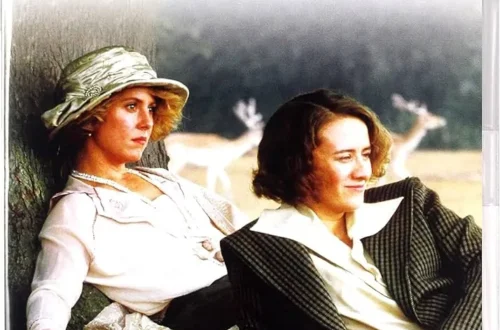
Magnetic Bonds: An Interpretation of the Cable Girls Ending and the Visceral Longing Within the Narrative
The footsteps of women who cross lines in pursuit of the mirage of freedom always leave behind footprints that are both beautiful and bruised. In 1920s Madrid, sitting before massive switchboards, what they yearned to connect was not the voices of others, but the reality of a “self” that had never been fully permitted.
This review follows the fervent trajectory of those who erased their given names to write new genders and identities amidst an era of oppression. Through the record of two souls who escaped the prison of the public eye to become each other’s salvation, we are prompted to question the true meaning of independence once more.
🌿 Moments When This Drama Permeates Deeply
- When the world’s definition of justice denies you, and you crave the gaze of the only person who reads you exactly as you are.
- When you need the courage to leave behind social status and a comfortable family to walk a thorny path guided solely by your inner voice.
- When you wish to witness the process of love transcending simple feelings of possession to sublime, noble sacrifice that completes the other’s identity.
- The reason to read until the end is to see how the narrative of Carlota and Óscar, which breaks through the limitations of the era, becomes a declaration that pierces through the dignity of our own time, moving beyond mere romance.
🎞 Note Before Viewing
This work is set against the turbulent period of early 20th-century Spain, characterized by conservative patriarchy and military coups. It densely explores radical relational settings such as women’s rights, sexual identity, and polyamory, maintaining a high level of psychological tension and social struggle rather than explicit physical exposure.
🎬 Drama Information
- Title: Cable Girls (Las chicas del cable, 2017–2020)
- Director: Carlos Sedes, David Pinillos
- Screenplay: Ramón Campos, Gema R. Neira, Teresa Fernández-Valdés
- Country: Spain
- Genre: Period Drama, Drama, Thriller
- Running Time: Seasons 1–5 (42 Episodes total)
- Platform: Netflix
- Cast: Blanca Suárez (Lidia Aguilar), Yon González (Francisco Gómez), Ana Fernández García (Carlota Senillosa), Ana Polvorosa (Sara Millán / Óscar Ruiz)
📖 Cable Girls Synopsis and a Flame-like Connection Toward Freedom [No Spoilers]
In 1928 Madrid, four women gather at Spain’s only national telephone company. Carlota, the daughter of an aristocratic family seeking to escape her patriarchal father’s control, meets Sara, a strict yet mysterious supervisor. Through a women’s suffrage group called the Lyceum Club, the two grow rapidly close, and Carlota begins a fluid but precarious emotional tightrope walk between her fiancé, Miguel, and Sara.
However, peace does not last long. The identity hidden deep within Sara begins to surface, and Carlota’s father conspires with military coup forces to tighten the noose around his daughter. Amidst spy operations, murder cases, and repeated cycles of arrest and jailbreak within the confined space of the telephone exchange, their relationship evolves beyond mere lovers into a camaraderie of life and death. Their struggle, which began with cutting telephone lines to find their own voices against the tyranny of the era, heads toward the swirling vortex of the great tragedy that is the Spanish Civil War.
📞 Interpreting the Relationship Between Carlota and Óscar: The True Self Hidden Behind a Name
The most radical point throughout the drama is the process of Sara establishing her identity as Óscar. This is not a simple “disguise,” but a direct confrontation with a transgender narrative that was denied existence even in the temporal setting of the 1920s.
When Sara confesses, “I am a man’s heart in a woman’s body,” Carlota accepts him as Óscar without a moment’s hesitation. Here, Carlota’s love is not fixed on the partner’s appearance or social gender, but demonstrates a pansexual tolerance that loves the essence of the soul. Their choice to endure the horrific “treatment” of a psychiatric hospital and opt for struggle in Madrid instead of fleeing to Berlin suggests that the “proof of existence” took precedence over individual happiness.
⚖️ Love Perfected Through Sacrifice and the Weight of the Cable Girls Ending
In Season 4, when Carlota is framed for a political crime, Óscar’s decision to go to prison in her stead is the pinnacle of this narrative. The irony of a person who has fought a lifetime to protect his own identity, once again surrendering his freedom for the one he loves, inspires deep reverence in the viewer.
The ending of Cable Girls concludes tragically amidst the artillery fire of the Spanish Civil War. The final moments of Carlota and Óscar, who acted as bait to help their comrades escape from a Francoist dictatorship prison camp, are rendered through a fade-to-black and the sound of gunfire. Their status as missing in action or deceased leaves a message more powerful than physical death. They did not disappear into the darkness of the era; rather, they walked into the light to become the soil for the freedom that future generations of women would enjoy. Sacrifice is not a loss, but the ultimate choice for the eternal preservation of value.
🕊️ Complete Union Beyond Eternal Fractures: 🔎 Reinterpreting the Ending
In the final episode, the scene where Carlota and Óscar stand before the soldiers alongside Lidia and Marga is the moment individual beings unite into a single organism of “solidarity.” Their death (or sacrifice) is not a severance of their relationship, but an eternal fracture created within the grand narrative of patriarchy and dictatorship.
Carlota discarded her aristocratic surname to become a fighter, and Óscar stripped away the yoke of womanhood imposed by society to claim his own name. What they gained in the end was not “survival,” but “dignity.” Even if their bodies vanished in the shelling, the moment he breathed his last breath by Carlota’s side, called by the name Óscar, their identities were completed. Their silence is not defeat, but remains the loudest outcry thrown at an unjust world.
❓ Regarding the Cable Girls Ending Interpretation and Narrative Contentions
Q. Did Óscar’s transition cause conflict in the relationship with Carlota?
There was confusion initially during the polyamorous triangle with Miguel when he was still Sara, but after establishing himself as Óscar, the relationship with Carlota actually became more robust. Through Carlota’s process of accepting Óscar’s change, the work asserts that the essence of love lies much deeper than the social frame of gender. From a critical perspective, some point out that modern queer discourse was overly projected compared to historical accuracy, but this serves as an aesthetic device that breathes life into the classical setting.
Q. Was the sacrifice of the protagonists in the final prison camp escape absolutely necessary?
Some viewers criticize their sacrifice as “nihilistic” because they expected a happy ending. However, the writers were wary of a deceptive conclusion where only the protagonists enjoy a peaceful life in the face of the horrific historical reality of the Civil War. Their sacrifice is the period that completes the theme of “freedom and solidarity” that the drama has pursued. Through this ending, readers are reminded of the actual price paid by the countless “nameless cable girls” of that time.
✨ Cable Girls, a Melody of Freedom Resonating Beyond Gunfire
Through the mirror of the 1920s, this work poses a question to us living in 2026. Are we living entirely under our own names now? The devotion and solidarity shown by Carlota and Óscar prove what the most sublime gift one human can give to another is, transcending gender and eras.
Freedom is not something granted, but a state of the soul won by staking what is most precious.
💬 What Is the Truth You Have Hidden in Silence?
We sometimes live only by responding to the “phone numbers” assigned to us by society. Do you have the courage to abandon a comfortable family like Carlota, or the will to rewrite your very foundation like Óscar, hidden within you?
Between walking the safest path and walking the path most true to yourself, before which choice are you hesitating?
📽 Violet Screen Recommendation: Variations of Other Female Narratives
- Gentleman Jack (2019): A powerful narrative based on the true story of Anne Lister, who navigated the 19th-century UK without hiding her sexual identity, claiming both her business and her love. You can feel the energy of a character forging her own path, much like Óscar.
- Warrior Nun (2020): This series explores deep trust and solidarity among women embedded within fantasy action. It is recommended for those who want to see the fierce friendship of women defying systems to pioneer their own destinies.
To provide a more stable publishing environment, multilingual content, and better communication with our readers, we have moved our official publication to Substack.
All new film reviews and critical essays will be published on our new platform. This website will be closing down soon, so we would greatly appreciate it if you subscribed to our new space.
TODAY'S QUESTION
When did you first feel fully accepted for who you are?
Your answer isn't saved. Feel free to share it in the comments below.


You May Also Like
Warrior Nun: An Interpretation of Ava and Beatrice—A Love More Intense Than Divine Calling

The Bisexual: Reconstructing Isolation at the Borders of Identity