Daughter from Another Mother (Madre solo hay dos): An Interpretation of a Grand Love Born of a “Fatal Misdiagnosis” Between Control and Freedom
Isolation sometimes begins in the fissures of a life that appears most perfect. The arrogance of believing one can design and control everything, or the solitary conviction that one can shoulder every burden alone, is only shattered when confronted with the mirror of another person. This series transcends the sensationalist premise of “switched at birth”; it is a philosophical exploration of the cracks that form when another’s life invades your own, and the solidarity that fills those gaps.
🌿 Moments When This Series Resonates Deeply
- When the values you have built are shaken to their core by someone entirely different.
- When you feel the suffocating pressure of being trapped within the societal frame of the “perfect mother.”
- When you seek the catharsis of two seemingly incompatible people filling each other’s voids.
- When you wish to witness the true comfort provided by a “chosen family” that transcends traditional ties of blood.
- Why you should read to the end: Because this review goes beyond a simple parenting comedy to conduct an in-depth analysis of the narrative necessity behind how these two women become each other’s salvation and, ultimately, lovers.
🎞 Note Before Viewing
This work deals with the realistic subjects of childbirth and parenting, revolving around interpersonal conflicts and emotional exchange. While some seasons include explorations of sexual identity and romantic depictions between adults, the series focuses on the essence of relationships rather than sensationalist direction.
🎬 Series Information
- Title: Daughter from Another Mother (Madre solo hay dos) (2021–2022)
- Director: Carolina Rivera, Fernando Sariñana
- Screenplay: Carolina Rivera
- Country: Mexico
- Genre: Comedy, Drama, Romance
- Running Time: Seasons 1–3 (26 episodes total)
- Platform: Netflix
- Cast: Ludwika Paleta (as Ana), Paulina Goto (as Mariana), Martín Altomaro (as Juan Carlos), Oka Giner (as Elena)
📖 Daughter from Another Mother: Tangled Fates and Intersecting Motherhood [No Spoilers]
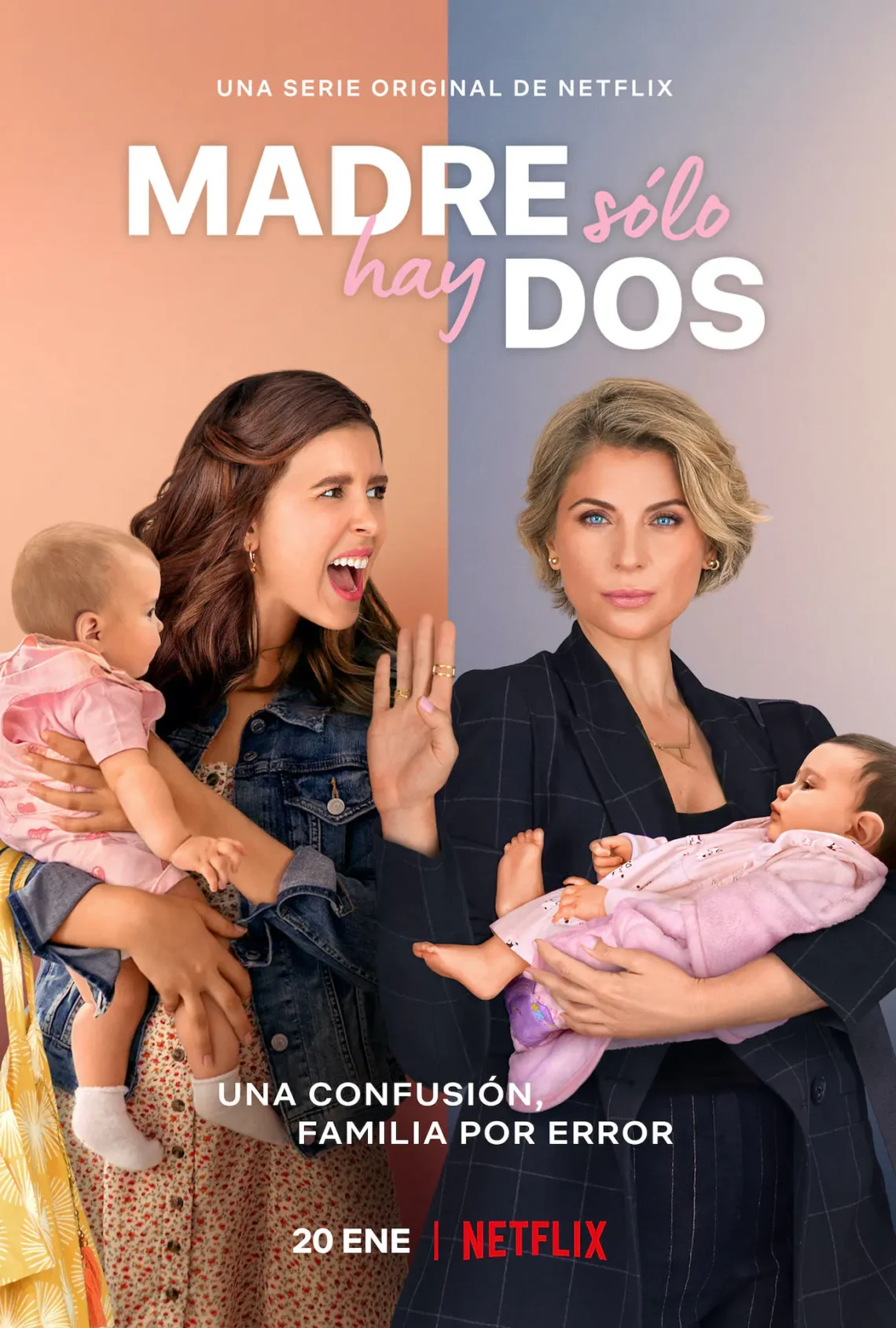
Ana, a successful entrepreneur who manages her life like an Excel spreadsheet, and Mariana, a free-spirited college student and app developer, give birth to daughters at the same hospital on the same day. However, due to a fatal mistake by the hospital, their babies are swapped, a fact only revealed four months later. Already deeply attached to the infants they have been raising, Ana attempts to use her power to reclaim her biological child, only to be met by Mariana’s steadfast resolve.
Ultimately, the two make the radical decision to live together in Ana’s mansion until the babies adjust to their new environments. The clash between Ana’s wealthy, conservative world and Mariana’s progressive, impoverished one turns the household into a daily battlefield.
Yet, by sharing the collective pain and joy of parenting, the two women begin to find in each other a level of understanding and support they never received from husbands or lovers. This peculiar cohabitation moves beyond a mere happenstance, becoming the starting point for a massive transformation that shakes the foundations of both their lives.
🧩 A Perfect Puzzle of Extreme Contrasts: An Analysis of Ana and Mariana’s Relational Structure
Ana symbolizes order and efficiency. To her, parenting is a task to be conquered, and emotions are variables to be controlled. Conversely, Mariana symbolizes intuition and liberation. For her, parenting is a communion with the child, and life is an unplanned adventure. The narrative pleasure of this series lies in the way this vertical structure (Ana) and horizontal structure (Mariana) collide, gradually smoothing out each other’s sharp edges.
Initially bound by the “medium” of the infants, the relationship gradually evolves into a catalyst for expanding their respective selves. Through Mariana, Ana realizes that her perfectionism was actually a byproduct of anxiety; through Ana, Mariana learns that her freedom must lead to responsible independence.
The tension generated in this process provides a solid psychological foundation that transcends simple friendship, moving through the setup of “fake lovers” to leap into genuine love.
🏹 Truth Hidden Behind the Shield of Pretense: Narrative Device and Interpretation of the “Fake Relationship”
The “fake relationship” dynamic spanning Seasons 2 and 3 is the highlight of the series. Chosen as a strategy to counter the external threat of a custody lawsuit, this tactic paradoxically becomes a tool that dissolves the physical and psychological barriers between them. Amidst the intimacy performed for the public eye, they engage in affectionate words and physical touch—things they might not have expressed otherwise—under the guise of “acting.”
This fake relationship serves as a crucial turning point, particularly for Ana. Having sought to build a perfect family within the confines of heteronormativity, she confronts her long-suppressed desires and identity through her relationship with Mariana. The moment a “strategic choice” transforms into a “fundamental attraction,” the series evolves from a parenting drama into a full-fledged queer narrative and coming-of-age story. This ironic structure, where a lie elicits the truth, masterfully demonstrates the ambiguity and complexity of human relationships.
🔎 Reinterpreting the Ending — True Union Achieved Through the Relinquishing of Control
The conclusion of Season 3 is perfected at the point where Ana completely sheds the armor of “control” she has held onto her entire life. When Mariana prepares to leave for Tijuana to pursue her dreams, the Ana of the past would have used any means necessary to keep her close. Instead, Ana realizes that true love is about “letting go” rather than possession, and heads to the airport.
This ending signifies more than just the fact that the two became a couple; it represents a mature agreement to belong to each other’s souls while maintaining their individual independence. Though physical distance may grow, the “chosen family” forged through their two daughters forms a union more solid than any blood tie.
Ultimately, the union of these two is not a process of eliminating their differences, but a process of completion where those differences are accepted as a unique landscape.
🧐 Inquiries Regarding the Ending and Narrative Structure of Daughter from Another Mother
Q. Does the unrealistic premise of the baby swap undermine the narrative’s probability?
The initial setup may appear to be a typical telenovela device. However, as the series progresses, the creators do not waste this setting on sensationalist twists; instead, they replace them with the heavy question: “Where does the qualification for motherhood come from?” The unrealistic beginning serves as a magnifying glass that amplifies the realistic agony and growth of the two women. From the mid-point onward, the psychological portrayal of the characters overwhelms the premise, securing narrative probability.
Q. What is your take on the opinion that the romance between Ana and Mariana feels abrupt?
Some viewers might feel that the friendship of Season 1 suddenly shifted into romance. However, upon closer inspection, the two have shared their most vulnerable moments since Season 1, forming a sense of emotional unity. The process of finding the “total understanding” in each other—something their male partners failed to provide—was built very meticulously. The romance is not a sudden change of heart, but rather the process of giving a “name” to a deep bond that already existed.
✨ Daughter from Another Mother: A Chronicle of Love That Destroys the Self to Rebuild the Other
This work asks us: What is the scope of the “normal family” you believe in? Ana and Mariana dismantled the roles of mother and wife as defined by society, along with the heteronormative order, piece by piece, building their own castle upon the ruins. That castle is not made of rigid walls, but is filled with flexible doors that can open toward each other at any time.
Ultimately, love is not a process of losing oneself, but an adventure of discovering unknown territories within oneself through the other. The most foreign stranger is the only path to discovering the deepest parts of oneself.
💬 Moments of Understanding More Intense Than Silence
Sometimes, the silence of staying up all night checking a child’s fever together proves a deeper love than tens of thousands of words. Have you ever broken your most rigid principles for the sake of someone you love? Or are you still waiting inside your own fortress for the other person to conform to you?
🟣 Violet Screen Curation: Other Masterpieces of Women’s Narratives
- Good Girls: The solidarity and conflict experienced by ordinary housewives who enter a world of crime for survival. While darker than Daughter from Another Mother, its tone regarding the subjective transformation of women is compelling.
- Workin’ Moms: A work that unflinchingly depicts the dissonance between parenting and career faced by modern women. It is highly recommended as it shares many resonances with Ana’s character.
To provide a more stable publishing environment, multilingual content, and better communication with our readers, we have moved our official publication to Substack.
All new film reviews and critical essays will be published on our new platform. This website will be closing down soon, so we would greatly appreciate it if you subscribed to our new space.
TODAY'S QUESTION
Which character has comforted you lately?
Your answer isn't saved. Feel free to share it in the comments below.


You May Also Like
Notas Aparte: A Positive Lesbian Narrative Opening the First Page of Growth

PLAYER The Series: An In-Depth Analysis of Deception-Based Relationships and an Interpretation of the Ending