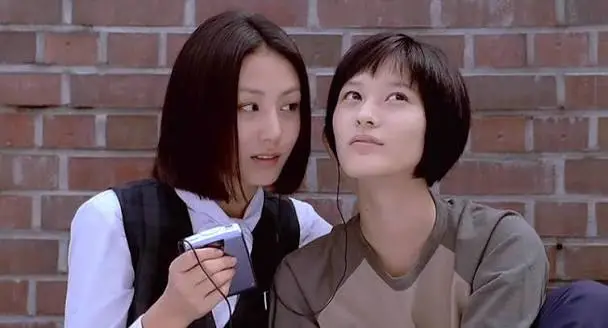
Memento Mori: Melodramatic Horror Born from Forbidden Relationships and Emotional Deprivation
Behind closed school gates, why must love blooming within an oppressive institution always take the form of horror? When a deep longing for someone collides with the gaze of the world, youth experiences destruction rather than growth.
Memento Mori (Whispering Corridors 2) is both the precarious world of two girls who threw away their very souls to prove themselves, and a chilling mirror reflecting the collective guilt of all who watched that world from the outside, turning them into ‘others.’
🌿 Moments When This Film Resonates Most Deeply
- Those who remember having to hide their true selves and love within the boundaries set by the world
- Those who have peered into someone else’s secret narrative and felt a strange sense of kinship alongside an inexplicable guilt
- Those who seek a resonant melodramatic horror born from characters’ obsession and grief, beyond mere jump scares
- Why read to the end: To reexamine the poignant relational dynamics between two girls hidden beneath the rough texture of 1999, and the flawless structural significance of the film’s ending
🎞 Pre-viewing Notes
This work is not a visceral horror centered on gore or explicit bodily harm. Rather, it deals with psychological pressure and emotional obsession stemming from forbidden feelings and social oppression, maintaining a poetic and poignant mise-en-scène embedded in everyday spaces like drinking fountains and the infirmary.
🎬 Film Information
- Title: 《여고괴담 두 번째 이야기》 (Memento Mori, 1999)
- Directors: Kim Tae-yong, Min Kyu-dong
- Screenplay: Kim Tae-yong, Min Kyu-dong
- Country: South Korea
- Genre: Horror, Romance/Melodrama, Thriller, School/Teen Drama
- Running Time: 97 minutes
- Platforms: Watcha, TVING, Wavve
- Cast: Park Ye-jin, Lee Young-jin, Kim Gyu-ri, Kong Hyo-jin
📖 Synopsis of Memento Mori and Emotional Waves Triggered by a Secret Diary [No Spoilers]
High school student Min-ah happens to pick up a red-covered diary at the drinking fountain. The diary is a secret exchange journal co-written by Hyo-shin and Shi-eun, two girls isolated within the school amidst strange rumors.
As Min-ah secretly reads through the diary, she catches glimpses of the intense, unique affection flowing between them and the loneliness of being misunderstood by others. As she gradually becomes absorbed in their emotional world through the journal, a shocking event occurs on the day of the school health examination: Hyo-shin leaps to her death from the rooftop.
Following Hyo-shin’s sudden death, the entire school is plagued by bizarre auditory hallucinations and unidentified phenomena, while Shi-eun becomes trapped in profound guilt and agony. Standing between the lingering traces of the deceased Hyo-shin and Shi-eun’s silence, Min-ah draws closer to the truth of the secret they held.
🌸 Analysis of Memento Mori: Emotional Fissures Left by a Forbidden Relationship
The Closed World Symbolized by the Red Diary and the Interpretation of the Forbidden Relationship’s End
To the two protagonists, Hyo-shin and Shi-eun, the exchange diary was not a mere notebook, but their sole sanctuary protecting them from the gaze of the outside world. Only within that space, beyond the reach of others’ eyes, could their identities become complete.
However, the school environment, which emphasizes collective discipline, does not tolerate their enclosed world. The moment the diary is discovered by a third party, Min-ah, and exposed to external eyes, the solid world linking the two girls begins to fracture.
Ultimately, the leak of the diary poignantly demonstrates how an individual’s most intimate solitude is dismantled by the violent curiosity of the collective.
🥀 Memento Mori Through Collective Silence and Apparitions
The strange sounds and apparitions enveloping the entire school after Hyo-shin’s death are not so much the vengeance of a malicious spirit as they are the boomerang effect of a collective guilt that turned away from Hyo-shin’s loneliness.
Although the students branded Hyo-shin as strange and ostracized her, it is only after her disappearance that they face the guilt of their own bystander apathy. The directorial choice to have Hyo-shin’s voice echo throughout the entire school embodies the moment when the voice of the oppressed finally dominates the space.
Hyo-shin’s death acts as an emotional explosion that completely collapses from within an oppressive collective system that rejected alterity.
🔎 Reinterpreting the Ending: Residual Traces of Memory Left After Shattering the Mirror
In the film’s ending, Shi-eun confronts the last trace left by Hyo-shin, finally facing her own feelings directly without evasion. Min-ah also closes the diary and comes to view the world through an entirely different lens.
Though Hyo-shin has physically vanished, the deep emotional waves she left behind remain as vivid scars and milestones that will never fade from the hearts of those left behind.
This ending expresses the cruel growth of the self, which only learns to fully embrace another’s solitude through tragic loss.
❓ Analysis and Structural Limitations of Memento Mori
Q1. What were the aesthetic intentions and structural limitations of the lesbian narrative depicted in Korean society at the time?
In late 1990s Korean commercial cinema, placing affection between women so delicately at the forefront was groundbreaking. However, critiques point to structural limitations in that this affection was consumed within the framework of supernatural horror or “tragic ruin.” Nonetheless, the film does not exploit this as sensational material; instead, it elevates it into an instrument that paradoxically proves how an oppressive institutional environment (the school) distorts a pure relationship.
Q2. Do the non-linear frame narrative and dreamlike direction hinder immersion as a horror film?
For audiences seeking purely genre-specific thrills, it may feel disjointed. However, this is an intentional directorial choice symbolizing Hyo-shin’s chaotic psychological state and fragments of memory. By scattering past and present, fantasy and reality, the viewer is led not to deduce events, but to physically experience the isolation and grief felt by the character.
✨ A Timeless Question Posed by the Tragedy of Memento Mori
This film poses questions about the violence within groups that remains unchanged over time, and the identity of minorities marginalized within it. When we fail to accept someone as they are and judge them through a collective lens, that society can become a terrifying space that corrodes someone’s soul at any moment.
Love becomes a tragedy when confined within set boundaries, but the moment one records and strives to distinctly remember that memory, it attains eternal dignity.
👁️ On Silence and the Gaze in Relationships
The obsession to possess another stems from deep inner solitude, and complete understanding is sometimes nothing more than an illusion.
When you feel a deep fracture in a relationship with someone, do you tend to confront the truth head-on, or do you distance yourself in silence to protect yourself?
🔮 Violet Screen Recommended Curation
- 《더 페이버릿: 여왕의 여자》 (The Favourite, 2018)
- Reason for recommendation: Recommended for those who desire dense psychological warfare and a meticulous analysis of relational dynamics among three women intricately bound by power and passion.
- 《타오르는 여인의 초상》 (Portrait of a Lady on Fire, 2019)
- Reason for recommendation: You can experience the aesthetic peak of a love blooming beneath forbidden gazes and a relationship preserved forever through memory.
TODAY'S QUESTION
What genre or mood do you always reach for when you're alone?
Your answer isn't saved. Feel free to share it in the comments below.


You May Also Like

Mother, May I Sleep with Danger? (2016) Review: A Cruel Waltz of Queer Vampirism and Twisted Maternal Love

Valoa valoa valoa: Coming-of-Age Film Analysis: The Mirage of Love and the Aesthetics of Guilt