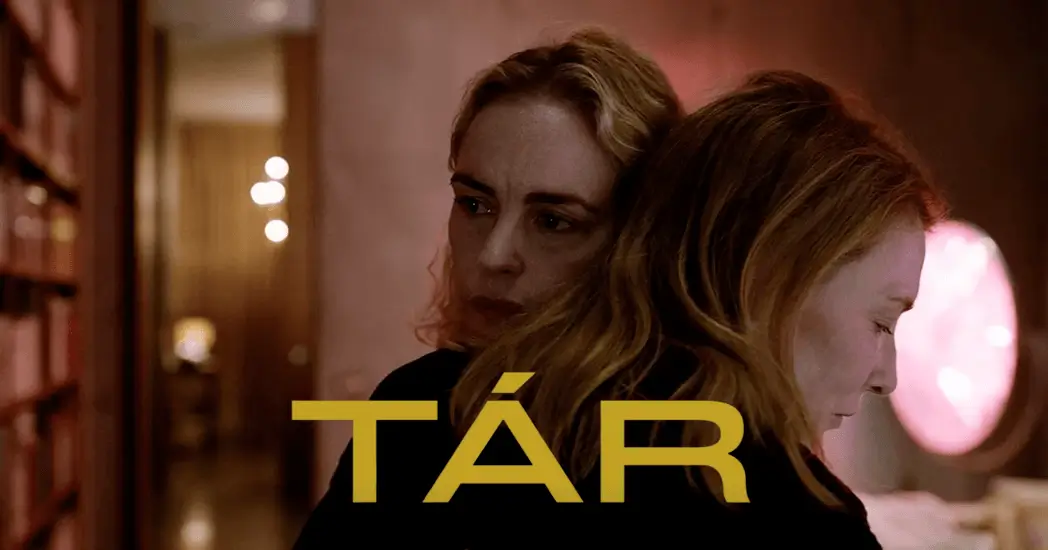
TÁR: An Analysis – The Dissonance of Power and the Abyss of a Fallen Maestro
The state of perfection often stands upon the most precarious of balances. At the very moment we believe we have reached the pinnacle, the fissures beneath our feet may have already begun to spread. Tracing the trajectory of Lydia Tár is a process of witnessing how power—beyond mere human achievement—erodes and dismantles the individual soul.
🌿 Moments When This Film Deeply Permeates
- When you feel the sturdy walls you have built beginning to crumble from the slightest noise.
- The chilling moment of realizing that relationships you believed you dominated were, in fact, silent transactions.
- When you wish to experience the psychological pressure of a ghost from the past encroaching upon present glory.
- The reason to read to the end: To understand the structural tragedy of the ending, where a pinnacle artist loses her original name and degenerates into a stranger.
🎞 Note Before Viewing
This work deals with the power structures of the classical music world and the meticulous psychological tension between characters. It is a masterpiece characterized less by physical explicitness and more by the exercise of verbal power, emotional gaslighting, and a gradually tightening depiction of neurosis.
🎬 Film Information
- Title: TÁR (2022)
- Director: Todd Field
- Screenplay: Todd Field
- Country: USA, Germany
- Genre: Drama, Music, Psychological Thriller
- Running Time: 158 minutes
- Platform: Netflix, Google TV, Apple TV (Purchase/Rent)
- Cast: Cate Blanchett, Noémie Merlant, Nina Hoss, Sophie Kauer
📖 《TÁR》: The Overture of Fissures Facing a Maestro of Power [No Spoilers]
Lydia Tár, the first female chief conductor of the Berlin Philharmonic, is a living legend in the world of classical music. She stands at the peak of her fame, awaiting a perfect live recording of Gustav Mahler’s Symphony No. 5 and preparing for the publication of her autobiography. Lydia maintains total control over her world, supported by the devoted service of her loyal assistant Francesca and her wife and orchestral concertmaster, Sharon.
However, as the new cellist Olga Metkina appears, microscopic cracks begin to form in Lydia’s ironclad control. Intensely fascinated by Olga, Lydia exercises biased power by manipulating audition scores and granting her a solo position. Simultaneously, tragic news arrives regarding Krista Taylor—a young musician who once enjoyed Lydia’s favor but was subsequently blacklisted—and the karma of a past Lydia tried to ignore begins to slowly suffocate her.
As movements to expose past inappropriate relationships overlap with the incident of a manipulated Juilliard lecture video, Lydia undergoes a profound psychological collapse, suffering from auditory hallucinations and insomnia. The baton begins to tremble in the hand that once conducted the world, and the perfect world of ‘Tár’ she constructed falls into an uncontrollable vortex of ruin.
🎻 Power Named the Baton: The Arrogance of a Master Who Rejected Horizontal Art
To Lydia Tár, music is a means of control rather than communication. She defines the role of a conductor as ‘one who stops and dominates time,’ treating orchestra members as tools to be subjected to her will.
This vertical relationship setting is repeated identically in her private life. She demands infinite devotion from her assistant Francesca under the guise of a promotion and maintains an emotional upper hand with her wife Sharon by keeping their relationship business-like.
The work obsessively digs into how Lydia exploits the ugly power structures hidden behind the noble art of classical music. The film suggests that her fall was caused not by external attacks, but by her own inability to bear the weight of the power she amassed by objectifying others.
🏚️ Crumbling Walls of Sound: The Metronome of Guilt Consuming Lydia
Throughout the film, what torments Lydia are intangible sounds. The sound of a metronome in the middle of the night, the sound of wind like someone’s scream, and melodies that linger like auditory hallucinations are warnings sent by her subconscious.
These are sensory embodiments of her debt toward Krista Taylor, whom she socially buried, and the unjust acts she committed. Lydia believed she conducted the world, but she cannot control the dissonance echoing from within herself.
The mise-en-scène also maximizes her isolation. The cold, modern architecture and vast rehearsal halls demonstrate her authority while simultaneously serving as visual proof that she is a solitary perpetrator with no one to lean on.
🔎 Reinterpreting the Ending: A Return to Linda Tarr and the Tragedy of a Master Turned Monster Hunter
The film concludes with Lydia Tár conducting the soundtrack for the video game 《Monster Hunter》 in a remote area of the Philippines. The scene of the world’s greatest maestro, who once discussed Mahler, wearing a headset and keeping time in front of a cosplaying audience provides a biting irony.
This ending signifies more than a mere social fall; it represents her exile into the world of ‘B-movie culture’ or ‘functional music’ that she so despised. Confirming at her childhood home in Staten Island that her birth name was ‘Linda Tarr,’ she realizes that her fabricated persona, ‘Lydia Tár,’ has completely vanished.
What she has lost is not fame, but the dignity of being able to conduct her own life. Now, she has degenerated from a subjective creator into a performer moving according to the designs of others. The fall of Lydia Tár is a death sentence for the artistic ego that has regressed from a proactive creator to a passive executor.
❓ In-depth FAQ on the Controversial Ending and Narrative of 《TÁR》
Q. Is this a film that criticizes the violence of ‘Cancel Culture’ toward Lydia Tár? Some viewers may feel that Lydia received an excessively harsh judgment due to manipulated videos and public opinion. However, the film does not portray her as a simple victim. Rather, by gradually revealing how the shadow of the power she wielded destroyed the lives of others, it clarifies that her fall is a result of poetic justice. Instead of criticizing cancel culture itself, the film focuses on exploring how individuals with power fall into moral blind spots.
Q. Why did Lydia vomit at the Philippine massage parlor in the ending? That scene is the moment Lydia witnesses the essence of the actions she has performed her whole life through the eyes of another. The sight of numbered women waiting to be chosen behind a glass window perfectly aligns, structurally, with the way she selected and exploited young women through the ‘Accordion Foundation’ or the orchestra. It is a physiological rejection triggered the moment she realizes she was a predator, marking the point where her arrogance completely collapses.
✨ 《TÁR》: Loss of Essence is More Frightening than the Solitude of the Peak
This film is not a success story of a genius artist, but a chilling report on how power encroaches upon an individual’s character and ultimately destroys them. The fall of Lydia Tár brings back to the surface the long-standing questions regarding the hierarchy of power in our society and the morality of the artist.
All domination performed in the name of love and art is bound to produce dissonance. What Lydia Tár lost was not the Berlin Philharmonic’s baton, but perhaps the pure sense of awe she felt when she first encountered music. The moment the desire to dominate consumes art, the master vanishes and only the monster remains.
💭 Between Silence and Domination, What is Your Choice?
If one is naturally exploiting the devotion of others for their own goals like Lydia Tár, can that truly be called a ‘passion for perfection’?
Between a noble fall that distorts the truth to protect power and a miserable truth that starts again from the bottom, which side would you choose?
📽 Violet Screen’s Recommendations: Other Perspectives Deepening Female Narratives
- Silver Haze (2023): Depicts an intense and healing bond formed between two women who meet as a nurse and a patient’s family member as they tend to each other’s wounds. While Tár deals with power-driven relationships, this work shows the emotional solidarity of those who fill each other’s deficiencies.
- The Five Devils (2022): A mysterious and sensory narrative that unfolds as two women, who were former lovers, reunite. Through the unique motifs of memory and scent, it explores the suppressed desires and complex layers of emotion between women.
To provide a more stable publishing environment, multilingual content, and better communication with our readers, we have moved our official publication to Substack.
All new film reviews and critical essays will be published on our new platform. This website will be closing down soon, so we would greatly appreciate it if you subscribed to our new space.
TODAY'S QUESTION
Which couple, on screen or in real life, are you rooting for right now?
Your answer isn't saved. Feel free to share it in the comments below.


You May Also Like

Ellie & Abbie (& Ellie’s Dead Aunt): A Tender Encounter Between First Love and Queer History

Bobbie’s Girl (2002): A Great Loss Shaking Daily Life and the Sublime Completion of a Chosen Family