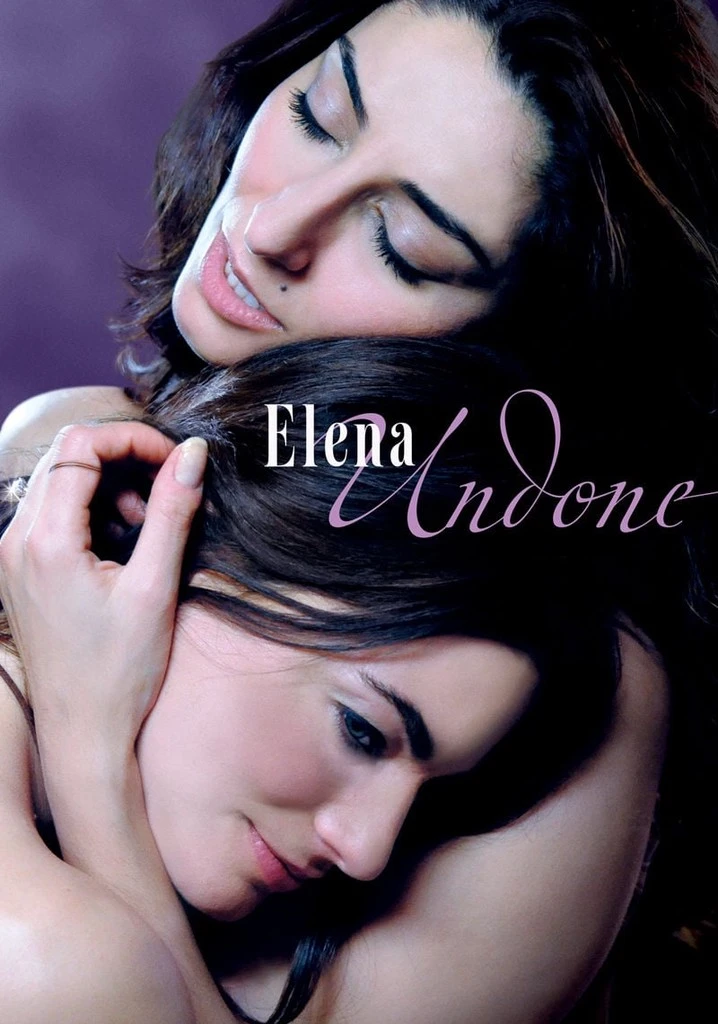
Elena Undone (2010): When the Repressed Self Faces Truth, the Aesthetics of Salvation Wrought by Flaws in a Relationship
We often experience the deepest isolation precisely when we believe our lives are stable. Within the rigid fences of standardized morality and religious conviction, for those who live suppressing their true desires and their very breath, an encounter with another person transcends mere attraction—it triggers an existential upheaval.
This film confronts the internal desolation hidden beneath a seemingly perfect tranquility, relentlessly tracing how that emptiness finds liberation through the mirror of another. It invites anyone who has ever harbored a longing to live authentically as themselves, even at the cost of completely derailing the trajectory of their life, into this profound and lyrical text.
🌿 The Moments This Film Deeply Permeates
- Nights spent losing yourself while trying to prove the utility of your existence within a narrative written by others.
- When an inner voice, long deferred for the sake of peace and stability, suddenly rears its head.
- The moment you face the boundary of a taboo that might destroy you, yet find yourself unable to turn back.
- The reason to read to the end: Because moving beyond simple societal deviation or romance, it reveals a map of liberation, charting how a woman breaking free from oppression subjectively redefines an entire “family of her own.”
🎞 Notes Before Watching
Throughout the piece, the internal religious and moral conflicts experienced by the characters are depicted with great density. In the process of the two protagonists confirming and exploring their feelings, the film includes high-density screen direction that sensually captures the emotional resonance of physical union—a relationship-driven drama operating in a language deeper and more transparent than mere words.
🎬 Film Information
- Title: Elena Undone (2010)
- Director: Nicole Conn
- Screenplay: Nicole Conn
- Country: USA
- Genre: Drama, Romance, LGBTQ+
- Runtime: 111 minutes
- Platform: Amazon Prime Video, Tubi
- Cast: Necar Zadegan, Traci Dinwiddie
📖 Elena Undone, A Fatal Attraction That Derails a Fixed Orbit [No Spoilers]
Living as the wife of a pastor at a conservative local church and having abandoned her long-held dream of being a photographer, Elena (Necar Zadegan) maintains an everyday life that appears entirely flawless from the outside. However, an unutterable emptiness nestled deep within her subconscious and repeated failures to conceive gradually consume her soul. Then, one day, she happens to cross paths with Peyton (Traci Dinwiddie), a novelist who intentionally defers her relationships with others amidst the profound sorrow and sense of loss from recently losing her mother.
Beginning with a fleeting exchange of glances in a park, their reunion at an adoption agency and the pretext of a photo shoot needed for Peyton’s writing process cause the worlds of these two women to intersect rapidly. A pastor’s wife who firmly believed herself to be heterosexual, and a writer who fears the ruin that a love affair with a married woman might bring—the irresistible emotional pull sparked between these two upends their lives, guiding them toward the starting point of a massive ethical conflict.
🎬 Variations of Identity and Moments Beyond Language Captured in a 3-Minute Long Take
🎞 The Liberation of the Frame and Physical Language Shattering Boundaries
When discussing this film, the most decisive moment that cannot be overlooked is undoubtedly the three-minute single-take sequence capturing the protagonists’ first kiss. Moving beyond mere visual spectacle, this long-breath filming technique functions as a cinematic device that instantly shatters the framework of patriarchal control and moral self-censorship from the church where Elena had been confined her entire life.
By omitting edit points and preserving the characters’ breathing alongside the minute shifts in their emotions, the union of the two women in this space gains a narrative that transcends a simple affair or transgression. It completely erases the vocabulary of a “pastor’s wife” prescribed by society, serving as a primal signal flare that announces the birth of a self responding solely to the existence of Peyton.
⚖️ The Pastor’s Wife and the Lesbian Novelist: Contrasting Power Structures and Oppression
The film sharply contrasts Elena’s position as the wife of Barry—a pastor standing at the apex of patriarchy and religion—with Peyton’s position existing outside institutional boundaries. The roles of “wife” and “mother” imposed upon Elena were mechanisms of oppression that thoroughly erased her personal desires and talent for photography.
Conversely, the encounter with Peyton becomes the catalyst for Elena to reclaim her artistic agency. The act of looking at Peyton through a camera lens and capturing her essence is a mise-en-scène proving that Elena has escaped being merely someone else’s subject, transforming instead into an observer of the world and the agent of her own narrative.
🔎 Reinterpretation of the Ending: Proclaiming a Subjective Family Beyond Moral Normalcy
In the latter half of the film, after all secrets are exposed, the park met six months later is no longer the space where they once lingered. The independence Elena chooses and her pregnancy through in vitro fertilization (IVF) are not an extension of the patriarchal marital system, nor do they signify a return to her former husband.
This development signifies a complete severance from patriarchal bloodline fetishism, an aesthetic choice demonstrating that a woman has fully reclaimed sovereignty over her own body and future. The community of Elena, Peyton, and the child reconstructed in the final picnic scene is an entirely new form of solidarity replacing the traditional unions guaranteed by blood and institutions. The ending of this work is a defiant proclamation announcing the birth of a new alternative family woven from subjective love, invalidating the moral normalcy dictated by the outside world.
💬 Contemporary Questions and Interpretations Posed by Elena Undone
❓ Can we interpret Elena’s coming out solely as a typical ‘lesbian narrative’?
The unique aesthetic achievement of this piece lies in the fact that Elena does not hastily preserve herself within the category of a specific sexual orientation. She passes through a stage of self-denial, stating “I am not a lesbian,” but soon realizes that the object of her attraction is not the entire gender of women, but exclusively the specific individual that is Peyton.
This presents a perspective that views identity not as a fixed mold, but as something fluid discovered in the process of confronting the abyss of one’s being, proving the possibility of an existential love that transcends the boundaries of gender.
❓ What is the contemporary limitation or aesthetic significance of Elena’s pregnancy and childbirth setup in the latter half?
Among some critics and audiences, there is divided criticism regarding whether a heterocentric value like ‘childbirth’ and ‘motherhood’ necessarily had to be placed at the destination of a queer narrative. However, analyzing this structurally reveals that Elena’s pregnancy signifies a transition to a ‘subjective motherhood’ designed and chosen by herself, erasing the ‘motherhood as a duty’ that had failed in her past life with Barry.
An independent pregnancy achieved through a friend’s sperm donation without dominant male intervention carries an aesthetic context that subverts patriarchal institutions, tossing an open question to the audience that forces them to reconsider what true normalcy actually is.
✨ Elena Undone, A Willing Collapse to Become the True Master of One’s Life
The word ‘Undone’ held within the title of this film does not remain anchored to negative meanings like ‘ruined’ or ‘unraveled.’ It is closer to a declaration of liberation, showing that she has personally unbuttoned the false life forced upon her by others and willingly collapsed the oppressive structure within.
Living in contemporary society, many of us also frequently defer our true desires under the names of social recognition and moral duty. The journey demonstrated by Elena clearly points out the structural truth that choosing internal honesty is the sole salvation of life, even if the pillars supporting one’s world shake and crack. The discovery of the true self begins only with the courage to willingly accept the collapse of the safe world surrounding us.
💬 Concerning an Encounter That Upends Your Universe
Has there been a moment of intense internal pull or a powerful encounter with another person that shook your very essence, enough to instantly destroy the stability of a life maintained for a long time?
Between a life of compromising by hiding your true self to protect societal perceptions and inner peace, and a life of derailing your orbit to find your own truth even at the risk of losing all comfort—I wonder which way your soul is breathing right now. Please share your thoughts and experiences in the comments.
📑 Another Perspective from Violet Screen: Womxn-Centric Narrative Curation
We propose two hidden masterpieces that handle different textures of relationships and internal growth, cracking open patriarchal institutions.
- The Film Imagine Me & You (2005)
- Reason for Recommendation: On the very day of her wedding to her long-time partner, the bride, Rachel (Piper Perabo), locks eyes with Luce (Lena Headey), the florist managing the floral arrangements, and experiences the first fateful attraction of her life. It unpacks the identity confusion and the essence of love that begin at the exact moment marital, societal stability is finalized, viewing it through a bright, delightful, yet delicate lens.
- The Film Desert Hearts (1985)
- Reason for Recommendation: One of the most iconic classic masterpieces in the history of lesbian cinema. Set in Reno, Nevada in 1959, Vivian (Helen Shaver), an English literature professor who lived a perfect and orderly life but remained internally isolated, meets Kay (Patricia Charbonneau), an untamed and free spirit, at a ranch where Vivian stays to process her divorce. It portrays the process of shattering the moral frames of conventional society and age barriers to face one’s true self through a classic and sophisticated visual aesthetic.
To provide a more stable publishing environment, multilingual content, and better communication with our readers, we have moved our official publication to Substack.
All new film reviews and critical essays will be published on our new platform. This website will be closing down soon, so we would greatly appreciate it if you subscribed to our new space.
TODAY'S QUESTION
Which character has comforted you lately?
Your answer isn't saved. Feel free to share it in the comments below.


You May Also Like
My First Summer: Fractures in an Isolated World and an Interpretation of Transparent Solidarity (Deficiency)
Saving Face: A Record of Women’s True Desires and Solidarity Hidden Behind the Gaze of Others