
Love Sick: Between Taboo and Longing, an Interpretation of the Pathological Narrative of Isolated Souls
Love is sometimes a process of erosion rather than healing. The moment the arrogance of believing one fully understands the abyss of another is shattered, we are confronted not with the other’s wounds, but with our own helplessness. Emerging from the Romanian New Wave, Love Sick (Legături bolnăvicioase) transcends a simple queer romance to obsessively delve into the fundamental isolation of human beings and the destructive inertia of toxic relationships.
When the act of loving someone becomes a struggle that denies one’s own past, does that love become a brilliant sanctuary or another prison? This film offers the coldest and dampest answer to that question.
🌿 Moments When This Film Deeply Permeates
- The night you sense a vast darkness behind the eyes of the one you love—a darkness you can never reach.
- When you experience the paradox of your pure goodwill and devotion becoming an unbearable burden of debt to the other person.
- When you find yourself walking back into the arms of familiar misery, caught between that and an unfamiliar happiness.
- The reason to read this article to the end: Because it provides a deep analysis of how the “pathological relationship” depicted in this film is not merely for provocative subject matter, but touches upon our internal self-destructive instincts.
🎞 Note Before Viewing
This work contains depictions of precarious and destructive relationships in the process of handling psychological tension and repressed desires between characters. It is closer to an authentic psychological drama where emotional transference is more intense than physical explicitness.
🎬 Film Information
- Title: Love Sick (Legături bolnăvicioase, 2006)
- Director: Tudor Giurgiu
- Screenplay: Răzvan Rădulescu, Cecilia Ștefănescu
- Original Work: Novel Legături bolnăvicioase by Cecilia Ștefănescu
- Country: Romania, France
- Genre: Drama, Romance, Queer
- Running Time: 86 minutes
- Platform: International film festival screenings and select digital distribution
- Cast: Maria Popistașu (Kiki), Ioana Barbu (Alex), Tudor Chirilă (Sandu)
📖 Love Sick: A Chilling Context of Romantic Liberation Being Submerged [No Spoilers]
In a boarding house in Bucharest, Alex, an innocent and diligent university student from the countryside, experiences the first intense emotional wave of her life upon meeting the free-spirited and captivating Kiki. To Alex, Kiki is a symbol of liberation and a new world she had never known; their relationship quickly evolves into a deep romance that transcends societal gaze.
An idyllic summer vacation in the countryside creates the illusion that their love will last forever. However, upon returning to the city, the bizarre family history surrounding Kiki surfaces. Kiki’s brother, Sandu, exhibits an abnormal obsession with his sister, constantly threatening the bond between Alex and Kiki. Consequently, Kiki gradually loses her balance between Alex’s healthy love and Sandu’s pathological restraint. Despite Alex’s devotion and dreams of a stable future, the deep deficiency and trauma embedded within Kiki begin to drive the trio’s relationship toward catastrophe.
🥀 Intrusion Beyond the Mirror: Interpreting the Relational Flaws in Love Sick
Through the contrasting figures of Alex and Kiki, the film obsessively tracks the asymmetry of love. For Alex, this relationship is growth and expansion; for Kiki, it is a repetition of concealment and exposure. Set against the parched landscapes of Romania, the narrative of these two women moves beyond a simple romance review into an anatomical observation of the human psyche.
🔗 Methods of Sharing Taboos and the Shackles of Family
The most terrifying presence in the film is not external hatred, but the internal invader: the brother, Sandu. He is Kiki’s past and an unbreakable blood tie, while simultaneously acting as a wall blocking her growth. Sandu’s obsession hacks away at Kiki’s ego and serves as a decisive mechanism preventing her from fully immersing herself in Alex. This provides the clue leading to the ending; the reason Kiki cannot push Sandu away is not simply due to violence, but because he has become fixed as a part of her identity.
📖 The Cruel Foreshadowing of Chateaubriand’s ‘René’
The line from the novel René casually quoted by Alex—”Love also happens between brothers and sisters”—is the turning point that shakes the film’s progression. While the naive Alex used it as a literary metaphor, for the secretive Kiki, it felt like a declaration stripping her shame bare before the world. At this juncture, the relational structure between the two collapses. Alex’s “purity” ends up attacking Kiki’s “secret,” and Kiki ultimately chooses to return to a past that shares her completely—no matter how painful—rather than staying with an “other” who does not (or cannot) understand her.
🔎 Reinterpretation of the Ending: The Eternal Fissure Left by Surrender, Not Escape
In the final scene, Kiki choosing Sandu’s darkness over the bright future offered by Alex leaves the audience with a profound sense of helplessness. This does not suggest that Kiki does not love Alex, but rather that her self-esteem has not recovered enough to withstand the weight of the “normalcy” Alex provides.
Ultimately, Alex lost her love but preserved her integrity, while Kiki gained a sanctuary but abandoned the dignity of her soul. Their parting is not merely a breakup between lovers, but an indicator of the process by which a human being fails to escape the gravity of trauma and falls. Kiki’s choice is not a weakness of will toward freedom, but a tragic return caused by a psychological impairment that finds comfort only within familiar pain.
❓ Love Sick: Interpretation of Controversies and Ambiguous Endings
Q1. How do you view the criticism that the film depicts queer relationships as “pathological” by cross-cutting homosexuality and incest?
There is certainly room for criticism here, as it seems to follow the trope of “misery porn” often found in queer narratives. However, the director’s intent is interpreted not as defining queer relationships themselves as pathological, but as showing how the trauma of a birth family—which an individual finds difficult to bear—erodes and destroys a healthy new relationship (love with Alex). In other words, the subject of the “sickness” is not the love, but the “past that could not be severed.”
Q2. Why did Kiki eventually leave Alex and return to Sandu?
Alex’s love demands “rightness” and “growth.” While healthy, this likely felt like an unattainable high standard for the broken Kiki. In contrast, the relationship with Sandu is destructive but provides a familiar space where Kiki does not have to struggle to prove or explain herself. Ultimately, Kiki chose familiar misery over the pain of change, a self-destructive defense mechanism often seen in individuals with deep-seated trauma.
✨ Love Sick: An Elegy Dedicated to the Unreachable Abyss of the Other
We believe we can save others through love, but sometimes love merely serves as a tool to confirm the other’s wounds. Alex’s failure is not due to her inadequacy, but proves that within the human interior, there exists an isolated territory that no other can ever invade or heal. The essence of a relationship is not in saving one another, but in recognizing each other’s “unsavability” and having the patience to stay by their side.
💭 The Depth of Pain Conveyed by Silence
Do you acknowledge that the will to save someone can sometimes be the greatest violence against them? Between the devotion of shouldering another’s misery and the coldness of severing a relationship to protect oneself, which do you believe is closer to true love?
📽 Violet Screen Recommendations: Variations on Similar Yet Different Female Narratives
- Water Lilies (2007) / Dir: Céline Sciamma A work that lucidly depicts the fever of first love and the subjectivity of desire. Highly recommended if you want to see the starting point of the emotional whirlwind experienced by Alex in Love Sick.
- Static (2023) / Dir: Jennifer Reeder This film interprets the mystery and repressed emotions permeating relationships between women through sensory mise-en-scène. It is a work that modernly reinterprets power structures and psychological pressure within relationships.
To provide a more stable publishing environment, multilingual content, and better communication with our readers, we have moved our official publication to Substack.
All new film reviews and critical essays will be published on our new platform. This website will be closing down soon, so we would greatly appreciate it if you subscribed to our new space.
TODAY'S QUESTION
Which film feels like your 'first love' story?
Your answer isn't saved. Feel free to share it in the comments below.


You May Also Like

Monster (2003): The Abyss of a Woman Turned Monster, Harsh Salvation in the Name of Love, and a Tragic Interpretation
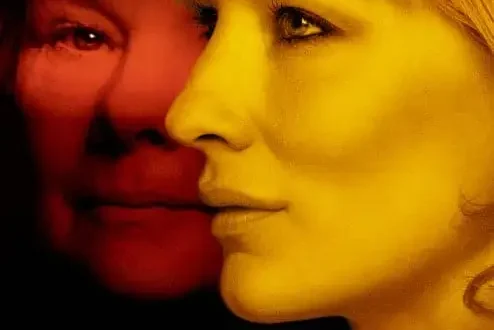
Notes on a Scandal (2006): An Interpretation of Destructive Desire Left by a Chronicle of Obsession and Isolation