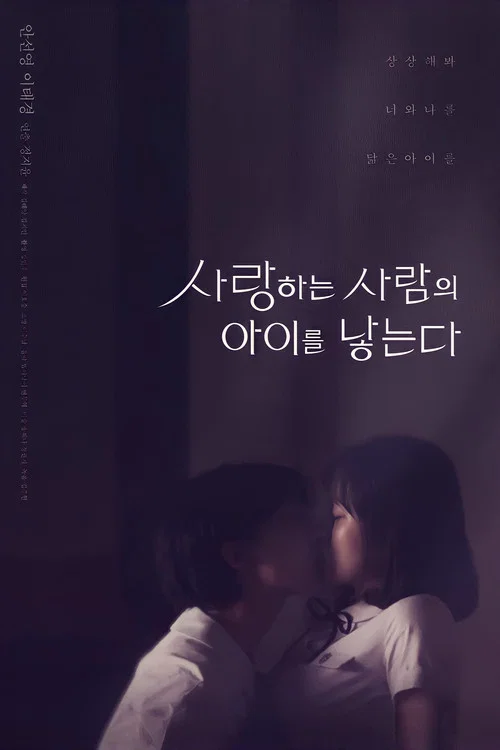
Family Plan (2016): An Interpretation of Tamed Relationships and Floating Desires Beneath the Shadow of Normativity
Every human being wanders between the desire to be fully understood and the instinct to remain protected within a social safe zone. There are moments when fitting oneself into the orbit of normativity set by the world appears easier than looking directly into the eyes of the person one loves.
The film Family Plan (2016) examines the cool void hidden beneath the surface of a normative life, along with a woman’s relational utopia designed as both an escape and a desire.
🌿 Moments When This Film Resonates Deeply
- Those who have chosen marriage with a person of the opposite sex while retaining a relationship with a same-sex partner, or those who have had to conceal their true feelings before the societal gaze.
- Those who wish to fully sense the weight of solitude and compromise hidden behind the frame of the “normal family.”
- Those who wish to observe how youthful promises become distorted yet realized within adult reality.
- Why you should read to the end: Because it structurally reinterprets the marks left behind a seemingly perfect choice and the meaning of the “eternal fracture” remaining in the relationship between the two individuals.
🎞 Pre-Viewing Notes
Focusing on emotional nuance, linguistic context, and the pressure of social relationships between two characters rather than physical or visual provocation, this work is an emotion-driven short film.
🎬 Film Information
- Title: Family Plan (Korean Title: 사랑하는 사람의 아이를 낳는다, 2016)
- Director: Jung Ji-yoon
- Screenplay: Jung Ji-yoon
- Country: South Korea
- Genre: Drama / Short / Queer
- Runtime: 26 minutes
- Platforms: Screened at domestic independent film festivals and queer film festivals
- Cast: Jeong Min (as Han Jae-hee), Yoon Sung (as Lee Tae-kyung)
📖 Family Plan Plot and Narrative Context [No Spoilers]
Jeong-min and Yoon-sung, who have maintained a romantic relationship since their school days, were each other’s deepest sanctuary and lover. However, upon reaching adulthood, Jeong-min hides her identity as a lesbian and begins preparing for marriage with a man, a union considered “normal” by society. Even on the day she fits her wedding dress, Jeong-min brings Yoon-sung along, keeping her close while reminding her of a bizarre proposal promised in the past.
That proposal was a plan for each of them to marry a man, have children, and then have those children fall in love with each other, thereby completing their own unfulfilled love. Faced with Jeong-min’s reckless and selfish demand, Yoon-sung experiences confusion and bitterness, yet her feelings for Jeong-min prevent her from straying completely from that orbit. Following the process of Jeong-min’s marriage preparations and slices of daily life raising a child afterward, the film captures the subtle shifts that their relationship undergoes.
💡 Family Plan In-Depth Interpretation: The Aesthetics of Fetters and Escape
🔗 Analysis of Jeong-min and Yoon-sung’s Relational Structure: Selfish Utopia and Silent Compliance
Jeong-min’s proposal of “completing love through their children” is an extreme escape mechanism aimed at maintaining her attachment without defying heteronormative standards. By marrying a man, Jeong-min secures a social safe zone, while using a third party—the child—as a medium to avoid releasing her emotional hold on Yoon-sung. On the other hand, Yoon-sung, while resisting this unrealistic design, remains unable to leave Jeong-min’s side, thereby passively accepting her position within a compromised relationship.
🏛 Social Context and Mise-en-Scène Regarding the Myth of Normativity
The conversations surrounding the bridal shop and the marital home in the film depict the utterly ordinary and typical landscape of a heteronormative society. Phone calls with her mother-in-law, along with discussions regarding house contracts and interior design, co-opt Jeong-min into the framework of a perfect “normal family.” However, when Jeong-min, clad in her dress, directs her gaze not toward her husband but toward Yoon-sung, the frame starkly contrasts how fragile an emotional foundation these normative structures rest upon.
🔎 Reinterpreting the Ending: An Unfulfilled Union and an Eternal Fracture
As years pass, Jeong-min gives birth to a child and looks at the child alongside Yoon-sung. Jeong-min searches for traces of Yoon-sung in the child’s behavior, wishing to believe that her plan is being fulfilled step by step.
However, this ending is not a confirmation of the two walking together, but rather of an eternal fracture etched into their relationship. The world built by Jeong-min is not a genuine solidarity, but merely a half-truth that holds even another’s life (her child’s) hostage while failing to confront her own identity. Within that landscape, Yoon-sung exists merely as a mirror reflecting Jeong-min’s desire, unable to lead her own life.
Jeong-min’s choice is a paradoxical compromise aimed at attaining social dignity through the concealment of her identity, and as a result, the relationship between the two permanently secures parallel lines that can never reach each other.
❓ Family Plan Ending Interpretation
Q. How should one interpret the criticism that Jeong-min’s actions are excessively selfish and lack autonomy?
The criticism that Jeong-min’s actions inflict pain upon Yoon-sung and attempt to utilize another person’s life is justified. However, this film was not created to morally defend Jeong-min. Rather, it exposes the terror felt by a queer individual within a patriarchal and heteronormative society, as well as the structural tragedy in which that terror manifests as a deformed desire (extension through children). Readers can recognize Jeong-min’s selfishness while simultaneously reflecting upon the weight of social pressure that drove her to such ends.
Q. At the ending, are the two in a state of happiness, or a state of despair?
On the surface, the child grows and interacts with Yoon-sung as Jeong-min designed, presenting an appearance of tranquility; however, a deep contradiction lies beneath that surface. While Jeong-min attempts to vicariously fulfill her desire, it remains unknown whether the child will act according to her wishes in the future, and Yoon-sung continues to wander without having found her own true life. This can be viewed as a deferred tragedy persisting beneath a veneer of false tranquility.
✨ A Melancholy Portrait of Love Left Beyond Institutional Fences
Family Plan calmly illuminates how compromise and concealment performed under the name of love restrict an individual’s life. Even in modern society, many continue to conceal their essence or maintain relationships in distorted ways for the safety net of an “ordinary life.” This work asks whether the comfort provided by the fence of normativity is indeed true happiness, or a fetter that perpetually deceives oneself and the person one loves.
When social approval conflicts with individual truth, the sanctuary obtained through compromise ultimately remains another form of isolation.
💬 On Hearts That Failed to Reach
Even within the comfort obtained through compromise, the erased trace of another person that ultimately lingers remains as a strange void that sometimes shakes an entire life.
Have you ever bypassed or compromised your true emotions in the face of social conditions or realistic circumstances? Or have you ever quietly observed someone else’s compromise for their sake? Please leave your deep thoughts in the comments.
🎬 Violet Screen Recommended Curation
- About My Daughter (딸에 대하여, 2024): A work that deeply addresses the complex emotional line and solidarity of a mother observing her lesbian daughter living amid societal prejudice.
- Green Night (녹야, 2023): A queer road movie depicting the intense autonomy and relational boundaries of two women who embark on a dangerous journey together to escape an oppressive reality.
TODAY'S QUESTION
Is there a hidden gem you always recommend to friends?
Your answer isn't saved. Feel free to share it in the comments below.


You May Also Like

Love Tech Review: An In-Depth Analysis of Algorithmic Breakup Predictions and the Expiration Date of Emotion

Battle of the Sexes: A Silent Revolution and the Search for Identity Beyond the Court