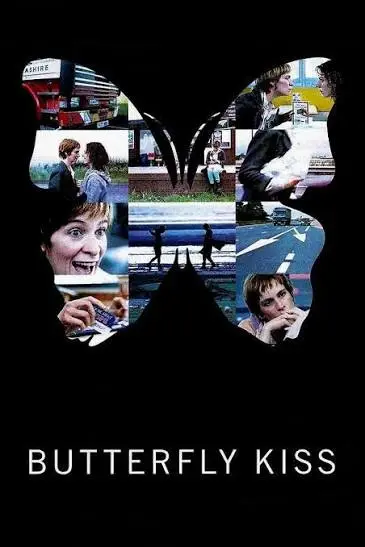
Butterfly Kiss (1995) Lesbian Romance: Analysis The Borderline Between Love and Destruction
The desire to be loved sometimes redeems a person, but at other times, it draws them into the most dangerous relationship. Where does the boundary lie between wanting to understand someone’s pain and accepting even their wrongdoings?
The 1995 film Butterfly Kiss is a British independent film that explores the boundaries of love and obsession, solidarity and complicity, and salvation and destruction through the meeting of two women.
In this work, love between women is not depicted merely as a safe haven. Rather, it obsessively demonstrates how a relationship alters a person’s life when one embraces another’s violence in the name of love.
🌿 Moments When This Film Seeps In Deeply
- The moment you wanted to be someone’s special person for the first time — It makes you think about how deeply a person who has lived in loneliness for a long time can fall for the one who chose them.
- The moment you made excuses for the wrongdoings of someone you love — You face the process of how the desire to protect someone gradually turns into relinquishing your own judgment.
- The moment you assumed the role of a savior in a relationship — It makes you reflect on whether the belief that you can change someone is truly love, or a reluctance to let go of the fact that you are needed by that person.
- The moment you had to choose between love and self-preservation — This is a work you must read to the end to confirm how far the relationship between two women can go, and who loses what at the end of it.
🎞 Note Before Watching
Caution is advised when viewing, as it contains violent murder scenes, expressions evoking bodily dismemberment, and sexual scenes.
Although it deals with love and intimacy between women, it focuses on psychological anxiety and destructive relationships rather than a light, romantic queer romance.
🎬 Film Information
- Title: Butterfly Kiss (1995)
- Director: Michael Winterbottom
- Screenplay: Frank Cottrell-Boyce
- Country: United Kingdom
- Genre: Road Movie, Crime Drama, Psychological Thriller
- Running Time: 88 min
- Platform: Global VOD & Overseas Streaming Services
- Cast: Amanda Plummer, Saskia Reeves, Paul Bown, Des McAleer
📖 Butterfly Kiss Synopsis and the Dangerous Journey of Two Women [No Spoilers]
Eunice wanders around gas stations along the highways of Northern England, searching for a woman named Judith. She asks the women at the cash registers if they know the name Judith, and resorts to violence if she does not receive the answer she wants from her questions.
One day, gas station clerk Miriam feels compassion for Eunice, who has doused herself in gasoline, and takes her to her home. Miriam, who has lived a lonely and monotonous life, spends the night with Eunice and feels strongly drawn to her. However, Eunice disappears the next day, and Miriam eventually sets out on the road to find her.
The two women embark together on a journey to find Judith, but along the way, a dangerous relationship unfolds as Eunice’s serial murders and twisted religious beliefs clash with Miriam’s unconditional devotion.
🎭 In-Depth Analysis — Interpretation of Love and Salvation in Butterfly Kiss
🥀 Butterfly Kiss Analysis: The Desire to Be Loved and the Loss of Self
The most important psychological starting point in this film is the deficiency present in both women.
Eunice is consumed by a sense of unworthiness, guilt, and an obsession with being punished. Miriam, on the other hand, lives a restricted daily life without forming deep relationships with others.
The reason the two are drawn to each other is not because they are prepared to form a healthy relationship. Rather, it is because they believe that the other’s deficiency will fill their own.
To Eunice, Miriam is someone who does not reject her; to Miriam, Eunice is the first person to make her feel special. This asymmetry carries danger right from the starting point of the relationship.
Miriam does not give up on the relationship even after learning of Eunice’s violence. She goes beyond merely understanding Eunice, believing she can change her.
However, there is a difference between wanting to understand the actions of someone you love and taking responsibility for those actions on their behalf. The film illustrates the exact moment when that boundary collapses.
⛓ Butterfly Kiss Analysis: Eunice’s Chains and the Symbolism of Guilt
The tattoos, piercings, and chains carved into Eunice’s body are not simple external decorations.
She accepts the act of inflicting pain on her own body as punishment and atonement. While wishing for someone to punish her, she is unable to stop the violence she herself commits.
There is a significant contradiction here: Eunice perceives herself as a victim who suffers, while simultaneously being a perpetrator who inflicts pain on others.
To her, the chains are objects that remind her of her sins, as well as a visual apparatus that makes visible her belief that she ought to be punished.
Miriam’s attempt to unfasten the chains in the second half holds a meaning beyond simple physical liberation. Miriam believes Eunice can escape a life of self-punishment.
However, removing the chains does not mean that the structure of guilt and violence disappears. The film leaves a gap between external atonement and actual responsibility.
🛣 Butterfly Kiss Analysis: Spaces of Isolation Formed by Highways and Gas Stations
In this work, the two women move centered around highways, gas stations, motels, and unfamiliar vehicles rather than a stable residential space.
There is no sense of settlement or belonging in these spaces.
A gas station is a place to stay briefly and leave, and the highway, though appearing to have a destination, is actually a space that forces continuous, endless transit.
The relationship between the two women mirrors this.
While traveling together, they rely on each other, but there is no clear consensus on where that movement is heading.
Director Michael Winterbottom utilizes black-and-white interview footage and unstable spatial compositions to compel the audience to question the characters’ memories and actions, rather than simply following the events.
In particular, the desolate landscape around the highways visualizes the state of emotional displacement existing within the two women.
🖤 Butterfly Kiss Ending Analysis: Wounds Left Behind in the Name of Salvation
In the latter half, Miriam reaches a point where she can no longer turn a blind eye to Eunice’s crimes.
She ends up killing a person as well, and Eunice tells Miriam that now both of them have entered hell. The position of savior that Miriam initially dreamed of disappears, and she herself becomes someone who has set foot in the world of violence.
The two discuss the true nature of the journey to find Judith. The reason Eunice sought Judith was not simply to meet the person she loved again. She reveals that her intention was to make Judith a religious sacrifice.
Afterward, Eunice believes she must become the sacrifice herself to avoid hell.
Finally, the two women head to the beach. Eunice recites Bible verses, enters the sea, and demands that Miriam push her head underwater.
In the final scene of the film, Miriam holds Eunice’s dead body in the water. That image evokes the Pietà, where the Virgin Mary holds the dead Jesus.
What is important in this scene is the outcome of the relationship left behind for Miriam, rather than Eunice’s death itself.
- What Eunice gained: The final choice of ending her pain and sins in the manner she believed in.
- What Eunice lost: The possibility of living alongside another person, and the opportunity to take responsibility for her sins and change.
- What Miriam gained: The experience of the intensity of loving someone and how far that love can transform her.
- What Miriam lost: Her capacity for judgment, her moral boundaries, and a future living together with the person she loved.
The final Pietà image does not turn Miriam into a sacred savior. Rather, it reveals the paradox of a woman who tried to save the person she loved, only to end up having to bear that person’s death.
The ending of this film demonstrates that salvation cannot be completed through the sacrifice of another.
Although the violence ends with Eunice’s death, the things Miriam committed and the sins she must remember do not disappear. She survived, but she cannot return to her former life.
Therefore, this ending is neither a victory of love nor a simple tragedy. It is the final result of a relationship showing that the desire to save a person can destroy oneself as well.
🔎 Butterfly Kiss Analysis: Controversies Surrounding Female Representation and the Ending
Q. Why couldn’t Miriam leave even after learning about Eunice’s crimes?
Miriam’s devotion is formed exceedingly fast, and the process of accepting Eunice’s violence is also developed in a compressed manner compared to realistic psychological progression.
The reason is that while Miriam loves Eunice, she simultaneously relies on the sense that she is a necessary existence to someone.
Ultimately, what she tries to protect is not just Eunice, but also her own sense of existence and worth that she feels only when she is with Eunice.
Q. Is the final scene a sacrifice of love, or the destruction of a relationship?
Both interpretations are possible.
Viewed through religious imagery, Miriam appears as a figure fulfilling the final request of the person she loves. From the perspective of a relationship, however, it is a ruinous end for two people who failed to save each other.
Particularly given that Miriam directly bears Eunice’s death, the final scene is closer to loss than liberation.
Whether the audience accepts this scene as a sacrifice or as irreversible self-destruction remains an important question left behind by the work.
✨ Butterfly Kiss: Love Is Not About Saving Another, But About Not Losing Yourself
The reason Butterfly Kiss remains worth discussing even after 1995 is that it separates the issue of love from responsibility.
We try to understand our partner’s faults simply because we love them, and sometimes we even try to shoulder their wounds on their behalf.
However, understanding another person and joining in another person’s violence are not the same thing.
This film is also intriguing in that it deals with love between women. Two women become objects of love and the entirety of life for each other, but that relationship does not necessarily lead to liberation or happiness.
Love should not be about accepting everything about the other person, but rather a relationship that safeguards each other so they can live as themselves.
💬 How Much Can You Endure Simply Because You Love Someone?
The desire to understand the faults of a loved one sometimes leads to choices that give up one’s own life.
If the person you loved repeatedly committed wrongdoings and tried to drag you into those wrongdoings as well, would you remain by their side until the end, or would you leave even if you loved them?
🎬 Violet Screen Curation — Films Dealing with Love Between Women
Here are two works where relationships between women are at the center of the story, exploring love and desire in different ways, much like Butterfly Kiss.
- Bound (1996)
- Centering on the relationship between two women played by Gina Gershon and Jennifer Tilly, this work combines a dangerous criminal plot with love and trust. The complicity and mutual agency of the two women are more distinct than in Butterfly Kiss.
- Desert Hearts (1985)
- Through the love between two women played by Patricia Charbonneau and Helen Shaver, this film deals with identity, freedom, and social oppression. Recommended when you want to see love between women that transforms each other’s lives rather than a destructive relationship.
TODAY'S QUESTION
Which couple, on screen or in real life, are you rooting for right now?
Your answer isn't saved. Feel free to share it in the comments below.


You May Also Like
[The Girl King] Interpretation of a Queen’s Longing, Isolation, and Abdication: Breaking the Taboos of an Era

My Sole Desire: Solidarity and Parting at the Edge of Desire