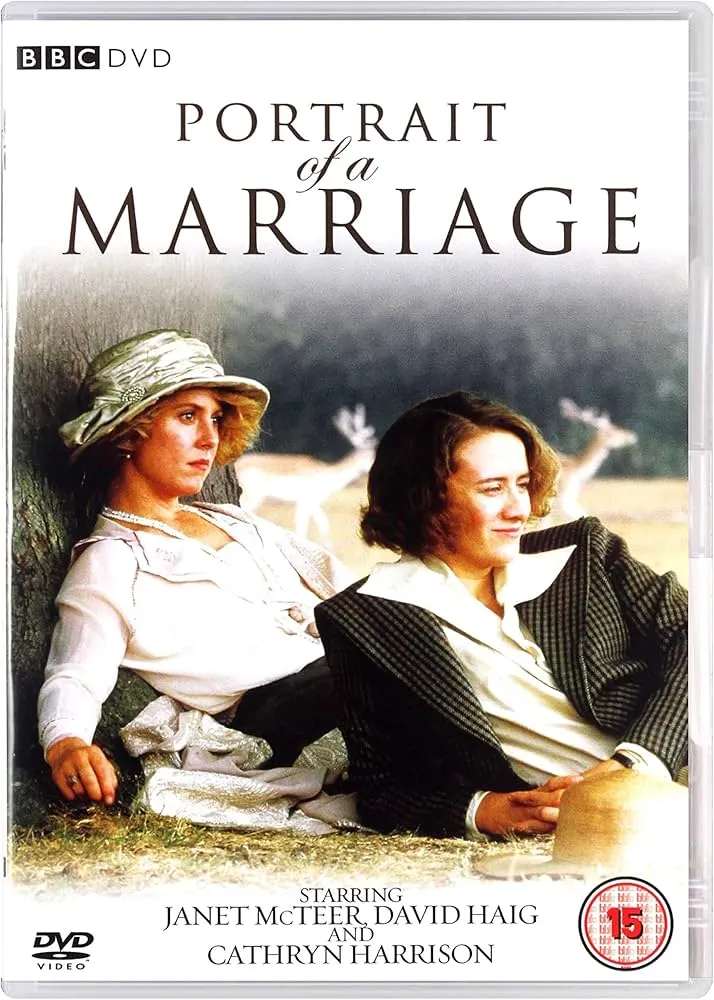
Portrait of a Marriage (1990): Passion Coveted in the Name of Freedom and Fractures in an Open Relationship
The freedom we grant to another may ultimately be nothing more than an illusion that remains valid only within the boundaries of our own control. A longing that turns its back on a safe perimeter to leap into the flames reveals its cold truth only after it has destroyed every rule of the relationship.
🌿 Moments When This Series Sinks In Deeply
- When you wish to painfully confront the fiction of honesty hidden behind social conventions and the guise of open relationships
- When you want to delve into the reverse side of human psychology, constantly wandering between stable warmth and destructive passion
- When you long to witness the precarious boundary between selfish desires to fully possess another and independent dignity
- The reason to read this review to the very end is that it clearly elucidates the structural essence of complete union and fracture left in the wake of a passion once thought eternal.
🎞️ Notes Before Watching the Series
This work addresses the sensual and destructive love between two women who challenge the taboos of 1910s–1920s British high society. While moments of physical and emotional rendezvous are directed with delicacy and high density, the series refrains from provocative depictions, focusing with precise control on the passion, jealousy, and emotional tremors generated between the two characters.
🎬 Series Information
- Title: Portrait of a Marriage (1990)
- Director: Stephen Whittaker
- Screenplay: Penelope Mortimer
- Original Work: Nigel Nicolson, Portrait of a Marriage
- Country: United Kingdom
- Genre: Drama / Biography / Romance
- Runtime: Season 1 (4 episodes, approx. 220 minutes)
- Platform: BBC
- Cast: Janet McTeer (as Vita Sackville-West), Cathryn Harrison (as Violet Trefusis), David Haig (as Harold Nicolson)
📖 Portrait of a Marriage Plot and Narrative Context: Destructive Passion Arriving Within an Open Union [No Spoilers]
In the late stages of World War I, Vita maintains a stable domestic life with her husband Harold and two children at a peaceful country estate. The couple maintains a unique, open companionate relationship, respecting each other’s sexual identities and allowing mutual sexual freedom.
However, the arrival of her long-time childhood friend Violet sends intense shockwaves through Vita’s quiet life. Disappointed that Vita has been tamed by social frameworks and the role of a wife, Violet approaches her with intense conviction, reigniting the precarious passion that had laid dormant between them.
While maintaining her companionate love with her husband, Vita continues a dangerous secret affair with Violet, frequently cross-dressing as a man. Yet when Violet decides upon a marriage of convenience, Vita is seized by uncontrollable jealousy and possessiveness, driving their relationship into an unmanageable elopement amidst family opposition and societal pressure.
🎭 Character Psychology and Relational Structure in Portrait of a Marriage: The Conflict Between Safe Boundaries and Destructive Desire
🗝️ The Fiction of Open Relationships and the Interpretation of Possessiveness in Portrait of a Marriage
On the surface, the union of Vita and Harold appears to be a modern and intellectual alliance that transcends the taboos of its era. However, as Vita enters the tempest of passion that is Violet, the hidden reverse side of the “freedom” she sought stands exposed. Vita attempts to covet Violet while retaining Harold as a safe harbor; yet when Violet attempts a compromise through marriage to another man, Vita manifests a fierce possessiveness.
Vita’s dual psychology—demanding total indulgence for herself while seeking absolute possession of her partner—proves that the freedom they preached was, in truth, merely a selfish desire for conquest and complete control. A power structure that refuses to yield its safe perimeter while seeking to claim even dangerous desires becomes the very catalyst that dismantles the relationship from within.
🥀 Cross-Dressing and the Symbolism of Space: An Analysis of Her Encounters with Violet Under Social Taboos
Vita’s act of dressing in men’s attire to navigate the hotels and boarding houses of London extends beyond mere visual staging. It is a piece of mise-en-scène representing her attempt to break free from the social limitations and norms imposed on women in the early 20th century, seeking to possess Violet purely as a subject of her own emotions. Yet this cross-dressing does not grant true freedom; rather, it paradoxically exposes the harsh limitations of an era where one had to wear another’s mask simply to evade society’s gaze.
The overseas spaces to which they fled were likewise not sanctuaries from reality, but mere illusions built upon sand, liable to collapse at any moment. Spaces of passion that could exist only under a mask eventually stood exposed before the unyielding wall of reality, laying bare their inherent vulnerability.
🔎 Reinterpreting the Ending: Complete Union and Eternal Fracture Met at the End of Elopement
The drama of Vita and Violet’s elopement across Paris and Greece meets its catastrophe when Violet’s hidden truth is uncovered. Upon discovering that Violet had engaged in actual sexual relations with her husband, Vita turns cold in an instant and returns to England. On the surface, this ending appears to show Vita regaining stability by returning to her family’s embrace and maintaining her open marriage with Harold.
Yet the tranquility Vita reclaimed came at the cost of permanently carving away the most incandescent fragment of her life: Violet. While Vita preserved her “dignity” through a perfect intellectual alliance with her husband, she entirely surrendered the most primal, burning “narrative of passion” of her existence. The epilogue, in which Harold belatedly realizes the depth of her love while reading Vita’s past letters, coldly confesses that their restored marriage was, in truth, a shell emptied of its emotional core.
Vita’s choice is a structural compromise that permanently sealed away her most burning transgression in order to preserve her domestic life.
🔍 On the Ending and Relationships of Portrait of a Marriage
Q1. Was Vita’s decision to leave Violet and return to Harold a submission to the limitations of her era?
Vita’s return was not a matter of simple societal pressure or surrender. The moment Vita discovered a fracture in the absolute devotion Violet claimed to offer (her physical relations with her husband), her illusion regarding her partner shattered, leaving her possessiveness without justification. For Vita, Harold was an intellectual, safe harbor who would accept her regardless of her transgressions; her relationship with Violet, by contrast, was a dangerous gamble that required dismantling her entire life. Thus, Vita’s choice can be understood as a calculated decision to preserve her own identity and social standing.
Q2. How should we interpret the criticism that the relationship between the two women is depicted as somewhat selfish and destructive?
The relationship between the two women portrayed in this work is neither an idealized solidarity nor a romanticized melodrama. As critics point out, it bears strong destructive traits—marked by mutual jealousy, possessiveness, and deep emotional wounds inflicted on one another. However, this stems from the work’s refusal to package the two figures as “perfect victims” or “romantic heroines,” choosing instead to depict them as complex human beings driven by desire and possessiveness. Its aesthetic significance lies precisely in its structural exploration of how even selfishness and jealousy constitute primal facets of love.
✨ Portrait of a Marriage: A Portrait of the Soul Defining Itself Beyond the Walls of Convention
Rather than merely recreating a scandal of the past, this work poses a fundamental question to us today: “How do we preserve our own dignity within a relationship?” The struggle between the desire to possess one another under the guise of love and the instinct to safeguard one’s own freedom remains valid across eras, reverberating through all our lives.
The fierce wandering demonstrated by Vita and Violet was, in the end, a grand rite of passage—constructing a life defined not by the gaze of others, but by their own terms. True love is not the possession of another, but the process of finally arriving at oneself through the medium of that relationship.
💬 Which form of love would you choose?
A life of conformity—stable and peaceful, yet devoid of passion—or a dangerous passion that, even if it burns you to ashes, leads you to discover your true self?
When a moment arrives that threatens to shake the very foundations of your life, which path will you choose to walk? Please share your deeper thoughts in the comments.
🎬 Violet Screen’s Curated Recommendations
- Gentleman Jack
- Reason for Recommendation: Based on the life of Anne Lister, a real historical figure in 19th-century Industrial Revolution Britain, this series depicts her candid and unabashed female-same-sex romances. It allows viewers to feel the intense energy of a female subject who refuses to bend to social conventions.
- Tell It to the Bees (2018)
- Reason for Recommendation: Set in a small rural village in 1950s Scotland, this film captures the secret solidarity and love that blossoms between two women amid prejudice and oppression, framed through a warm and lyrical mise-en-scène.
TODAY'S QUESTION
Which character has comforted you lately?
Your answer isn't saved. Feel free to share it in the comments below.


You May Also Like

Vis a Vis: An Interpretation of Obsession and Redemption Blooming Within a Secluded Paradise
I Wanna Be Sup’tar: An Interpretation of Salvation and Liberation for Two Women Blossoming Amid the Illusion of Stardom