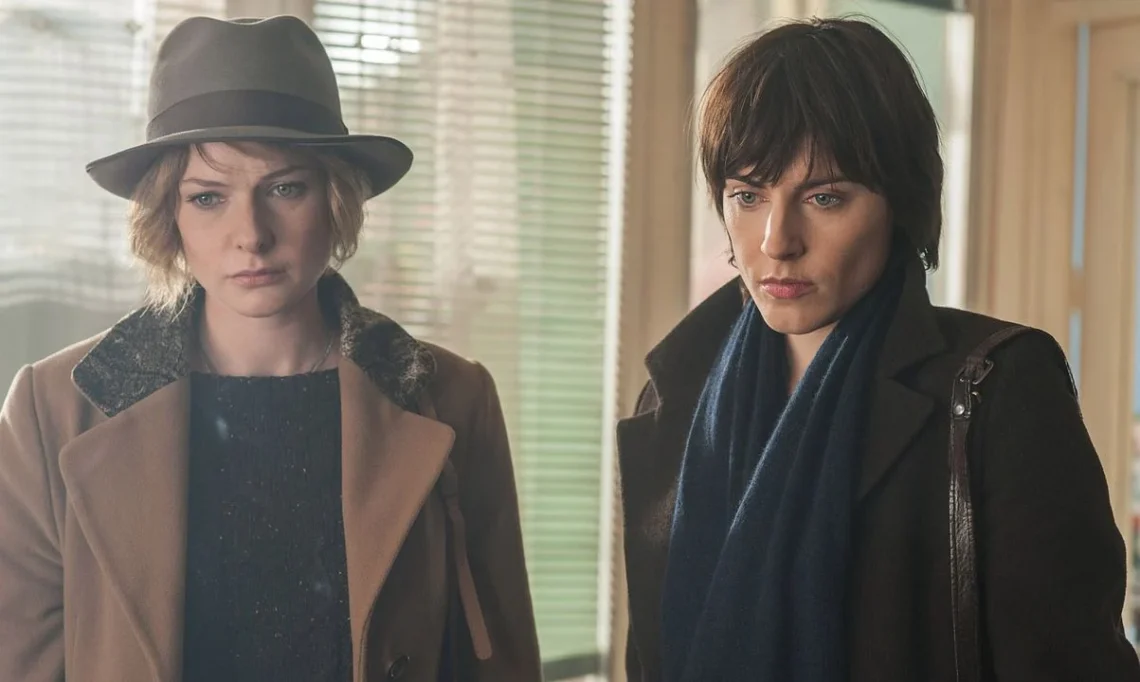
Despite the Falling Snow: The Aesthetics of Female Narrative and Ending Interpretation Melting the Cold Winter of the Cold War
Human beings constantly experience isolation within the massive vortex of ideology and history. At the end of that lonely solitude, what we yearn for may ultimately be the gaze of just one person who truly looks into our core essence.
Despite the Falling Snow (2016) is a work that meticulously captures a secret desire blooming amidst the cold, historical deprivation of the Cold War, and the deep solidarity of two women who confront each other across generations. The process through which past wounds lead to present healing proves the power of love to completely embrace the pain of others, going beyond merely restoring a forgotten history.
🌿 Moments When This Film Deeply Permeates
- A night when you face your own deprivation in the cold city and need comfort
- Those who have wandered in search of true warmth within relationships where lies and truth are intertwined
- A moment when courage is needed to face the secrets of the past when they shake your present life without running away
- Why you must read to the end: Because you can discover the true salvific meaning of solidarity that overcomes tragic destiny and the meticulous psychological shifts of women across eras.
🎞 Notes Before Watching the Film
Although this work wears the outer shell of a spy thriller, it is a relationship-centered drama that focuses on the loneliness and subtle emotional connections felt by the characters rather than the sensationalism of events. Scenes revealing physical intimacy also focus on visualizing the psychological vulnerability and intimate communion of the characters rather than provocative depiction.
🎬 Film Information
- Title: Despite the Falling Snow (2016)
- Director: Shamim Sarif
- Screenplay: Shamim Sarif
- Original Work: Shamim Sarif’s novel of the same name
- Country: United Kingdom, Canada
- Genre: Drama, Romance, Mystery
- Running Time: 97 minutes
- Platform: Amazon Prime Video, Google Play
- Cast: Rebecca Ferguson (Katya / Lauren), Antje Traue (Marina), Sam Reid (Young Alexander), Charles Dance (Old Alexander)
📖 Despite the Falling Snow: Two Women’s Pursuit of Truth and Emotional Trajectory Intertwined Across Eras [No Spoilers]
Lauren, an artist, prepares for her solo exhibition in Moscow while simultaneously seeking to uncover the mystery surrounding the disappearance of her aunt, Katya—the lost wife of her uncle Alexander, who has carried the wounds of the past throughout his life.
Feeling loneliness and confusion in unfamiliar Moscow, Lauren meets Marina, a cold-headed political journalist, who willingly acts as a helper on Lauren’s journey. The two step closer to the truth by tracking down the elderly Misha, who knows traces of Katya, but in the process, it is revealed that Marina also has her own hidden agenda, enveloping their relationship in a strange tension.
The tragedy brought about by Katya’s double life during the past Cold War era casts a shadow over the two in the present, and the dormant conflicts begin to fluctuate once again.
🔎 Heritage of the Past and the Aesthetics of Duality: Interpretation of the Relational Structure Between Lauren and Marina
The relationship between Lauren and Marina, which drives the present timeline of Despite the Falling Snow, functions as a core device that varies and heals the narrative of ‘destruction caused by ideological confrontation’ previously shown by Katya and Alexander. If Lauren represents a pure personal desire to find the truth about her aunt, Marina represents an investigative will to prove the wounds of the past within the cold reality of the post-Soviet era.
Beyond being a functional helper providing clues to the past that are difficult for Lauren to access, Marina is also an inheritor of a legacy, having a father who was a victim of the past Cold War. Her clandestine collection of Lauren’s drawings or sketches to maintain her duality as an informant mirrors the plot of ‘secrets and lies’ that Katya had to endure as a spy. However, their critical value lies in the fact that they do not blindly replicate the tragedy of the past.
🔎 Reinterpretation of the Ending: Salvation through Solidarity Reached by the Unlocked Truth
In the latter half of the film, the scene where Lauren discovers Marina’s hidden motives and betrayal, confronting her with the words, “Are you going to break my heart?” forms the emotional climax of the piece. At this moment, instead of rushing toward a catastrophe, the relationship between the two shifts into a channel of reconciliation that acknowledges each other’s vulnerability. This is because Marina also confesses that she has become genuinely fascinated by Lauren as a human being, moving beyond her objectives of journalism and revenge.
This ending demonstrates that the two present women are filling the ideological fracture—which the love between Katya and Alexander ultimately failed to bridge—through complete emotional reconciliation and understanding. If the betrayal of the past destroyed lives, the betrayal of the present conversely becomes an occasion to confirm each other’s deprivation and heal wounds.
The tragic debt of history is not redeemed through individual punishment, but through the forgiveness and solidarity of those left behind.
Lauren obtains the key to dissolving her uncle’s long-standing solitude through Marina, and Marina achieves dignity and growth by freeing herself from the ghost of the past that oppressed her father through Lauren.
💬 Reflections on the Mode of Female Representation and Narrative Limitations in
- Q. How do you evaluate the criticism that the romantic development between Lauren and Marina feels somewhat abrupt and cold?
- A. As many critics point out, the critique that the emotional lines of the two progressed too rapidly relative to the pace of the narrative, failing to build sufficient emotional chemistry, is valid. This is a structural limitation that arose from trying to digest two timelines—past and present—within a short running time of 97 minutes. Marina’s subtle psychological changes or Lauren’s solitude tended to be consumed as a functional romance without the space to dig deeply into the narrative. On the other hand, however, the calm directorial tone that does not exaggerate emotions aligns well with the desolate atmosphere of Moscow immediately following the Cold War, and can be appreciated in an aesthetic context for generating a restrained tension. I suggest that readers also watch it directly to judge whether this dryness is a flaw in the film or a unique atmosphere of its own.
- Q. What is the historical and social significance gained by adapting the lesbian narrative of the original novel into a film?
- A. In the mainstream Cold War spy genre, relationships between women and queer narratives have long been erased or excluded. Director Shamim Sarif’s decision to place a sexual minority romance at the forefront amid the open atmosphere of the 1990s post-Soviet era, based on her own original work, is in itself a progressive mode of female representation. Although there is regret that it remained a secondary arc to the main plot, it holds positive cinematic value in that it depicts the pluralism of love that arrived with the dismantling of ideology.
✨ , The Great Connection of Women Breaking a Massive Silence
What one confronts at the conclusion of interpreting this film is the vitality of identity and desire that never disappears even before a massive historical storm. The film poses a clear question about how the history of silence and betrayal forced upon individuals by the monster of the state can be subverted and healed through the intimate solidarity and love of women.
While love sometimes puts us in danger, the film paradoxically proves through the white snow scattering across the screen that it is only deep trust and love for humanity that salvages those wounds.
No matter how long the winter of an era may be, human solidarity facing the truth does not surrender the spring that will finally arrive.
🕵️ At the Crossroads of Forgiveness and Obsession, Your Choice Is
If a wrong committed by someone in the past shook your present life and love, would you sacrifice the relationship to unearth the truth, or would you choose silence to protect the warmth of the present?
🍇 Another Perspective from Violet Screen: Recommended Female Narratives to Watch Together
- Tell It to the Bees (2018)
- Reason for Recommendation: Set in an exclusive rural village in 1950s Britain, it deals with a secret love between a shunned female doctor and a heartbroken mother who build a bond while filling each other’s voids. It will offer a warm emotional variation for those who like the historical pressure and secretive atmosphere of Despite the Falling Snow.
- The Secret Diaries of Miss Anne Lister (2010)
- Reason for Recommendation: A period drama depicting the story of a real-life figure who did not hide her identity and desires despite the limitations of the era and social oppression, confidently trying to win love. You can experience the relational dynamics of subjective women and the power of solidarity in a more dense and intense tone.
TODAY'S QUESTION
What changed the most for you after coming out?
Your answer isn't saved. Feel free to share it in the comments below.


You May Also Like

My Mother Likes Women: The Shattering of a Rigid Illusion Called Family by a Midlife Lesbian Declaration

Review of Carol (2015): The Irresistible Liberation Forged Through Gaze and Silence