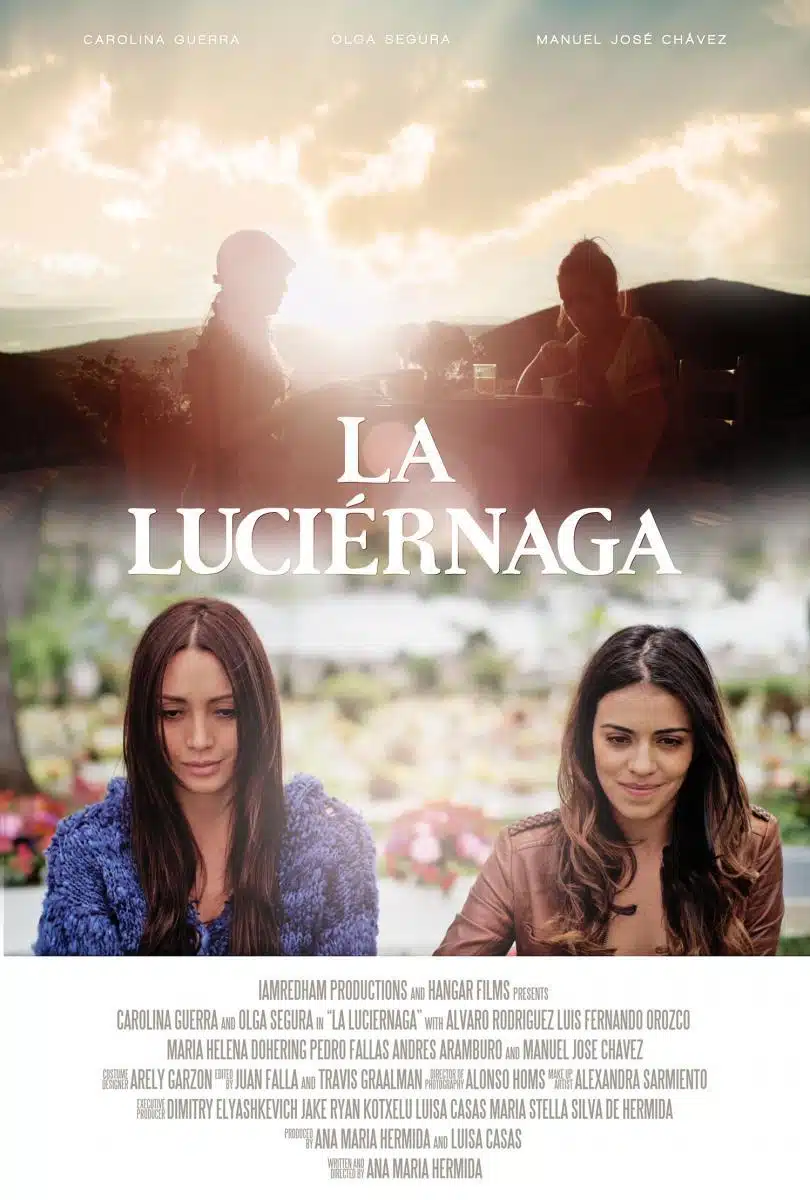
La Luciérnaga Film Analysis: Salvation in the Name of Desire Found at the Edge of Loss
It is only when we lose someone that we truly discover the loneliness of others pooled in the void they leave behind. Grief becomes the sharpest blade, carving us out, yet simultaneously serves as the most transparent adhesive capable of binding us to another. Bloomed within the heavy atmosphere of Colombia, this film elegantly traces how the tragedy of loss awakens a woman’s suppressed self and transforms a forbidden love into the sole light of her existence.
🌿 Moments When This Film Deeply Permeates
- When the silence with a familiar spouse feels less like a sanctuary and more like a suffocating prison.
- When the only person who can share the grief of losing a loved one happens to be “his person.”
- When you wish to shed the heavy coat of guilt and be honest with nothing but your own desire.
- The reason to read this piece to the end: To uncover the structural aesthetics of how a relationship born of tragedy transcends moral judgment to culminate in a grand declaration of individual independence.
🎞 Note Before Viewing
This work depicts emotional fluctuations and dense psychological ties between characters rather than physical indulgence. It is a quiet, profound narrative focusing on the essence of relationships, internal collapse, and subsequent reconstruction rather than provocative stimulation.
🎬 Movie Information
- Title: La Luciérnaga (The Firefly, 2015)
- Director: Ana Maria Hermida
- Screenplay: Ana Maria Hermida
- Country: Colombia, USA
- Genre: Drama, Romance, Queer
- Running Time: 88 minutes
- Platform: VOD and individual streaming services
- Cast: Carolina Guerra, Olga Segura, Manuel José Chaves, Diego Cadavid
📖 The Firefly: A Strange Bond and Emotional Resonance Born of Shared Loss [No Spoilers]
Living confined within the cold, urban daily life of Bogotá, Lucía receives news of her brother Andrés’ sudden death. The tragedy struck on the very day he was to be married. Having been the last to hear the news due to their estranged relationship, Lucía is crushed by an unbearable weight of debt-like guilt. Escaping the noise of the funeral, she arrives at her brother’s apartment, where she encounters Mariana, the woman who was Andrés’ fiancée.
Mariana, wearing sorrow instead of a bridal gown, and Lucía, exhausted by a hollow marriage with her husband Adrián. These two women begin to slowly permeate each other’s lives, centering on the shared vanishing point that is Andrés. Conversations held while organizing his belongings gradually become a comfort that licks at each other’s wounds, and that comfort soon evolves into an uncontrollable attraction. In a space shadowed by social conventions, moral guilt, and the ghost of the deceased, in which direction will the light they choose lead them?
🦋 Vitality Occupying the Space of Death: Analysis of Relational Structure and Mise-en-scène
Andrés’ apartment, the primary stage of the film, is a masculine space that no longer exists, yet paradoxically functions as a sanctuary where the two women can breathe most freely. Through this enclosed space, the director contrasts the claustrophobia of Lucía’s marital life with the emptiness of the loss Mariana faces.
For Lucía, home is a monochromatic place symbolizing emotional severance from her husband Adrián, whereas her brother’s apartment transforms into a polychromatic space where senses are revived through Mariana as a medium. Here, the mise-en-scène shifts according to the emotional distance between the two. The rigid framing of the early stages is replaced by supple, warm tones as they confirm each other’s warmth and share emotions, visually proving the process of suppressed femininity exploding with grief as a catalyst.
🕯️ Variations of Apparitions and Memory: Confronting the Self Beyond Guilt
The childhood memories and apparitions of her brother that Lucía witnesses are not mere supernatural devices. They symbolize the alienation within the family and the self-negation she has long ignored. Within the Catholic background and patriarchal order of Colombian society, Lucía was always required to be faithful to the roles of “good wife” and “quiet younger sister.”
However, as her relationship with Mariana deepens, the apparition transforms from an object of fear to one of “understanding.” The process where desire for Mariana fills the space where guilt for her dead brother vanishes is a struggle for identity—a woman living as an appendage to others’ lives finding her own center. The film adds depth to the narrative by using strokes of magical realism to depict Lucía’s process of integrating her past (brother) and present (husband) to move toward the future (Mariana).
🔎 Reinterpreting the Ending — The Weight of a Great Choice Emerging Through the Cracks
The path Lucía chooses at the end cannot be dismissed as simple “infidelity” or “escape.” The moment she decides to end her stable but dead marriage with Adrián to be with Mariana, the film finally reveals the true meaning of the title “The Firefly.” A firefly glows only in the dark; its light is brief, yet it is a signal of survival created by burning its own energy.
The union of Lucía and Mariana is a complete integration, filling the cracks left by Andrés’ absence with each other’s presence. Her act of packing her bags and leaving the house is a dismantling of the family as a social contract and a declaration of a new community based on emotional truth. She has lost a comfortable dwelling but gained the dignity of being herself.
The ending of this film completes a structural subversion where the sharer of sorrow is elevated to a life partner, affirming freedom beyond the closed door.
🕯️ Ethical Debates and Interpretive Horizons of The Firefly
Q1. How do you view the criticism that the premise of falling in love with a brother’s fiancée is ethically uncomfortable?
This point certainly divides the audience. However, the film encourages us to interpret this not as “betrayal” but as an “extension of mourning.” These two are the ones who loved Andrés most deeply, the only beings who can fully comprehend the pain of losing him. Rather than applying an ethical yardstick, the work sublimates the critical gaze into aesthetic understanding by structurally showing how humans crave the warmth of another in states of extreme loss.
Q2. Do the religious symbols and fantasy scenes not interfere with the narrative flow?
It may feel ambiguous to some, but this is an extension of the magical realism unique to Colombian literature. It is closer to a directorial intent that prioritizes the internal landscape of the characters over logical plot progression. The apparitions are manifestations of the unconscious that Lucía has suppressed; passing through this process is what gives her final decision its necessity. Readers will find a richer appreciation if they accept these not as events, but as “psychological landscape paintings.”
✨ The Firefly: Alchemy That Burns Loss to Create the Light of Love
This film does not ask where love comes from. Instead, it relentlessly asks where love takes us. Lucía’s journey begins with the death of another but ends with the discovery of her own life. This poses a chilling question about whether the numerous relationships we form in modern society truly let us live, or if they are erasing “me.”
Love is sometimes reconstructed in its most noble form upon the debris of the cruelest tragedy.
💡 At the end of a relationship, will you choose safe silence or a precarious light?
We often kill the firefly within us to meet the expectations of others. If there is a truth that can only be met when one has the courage to lose everything like Lucía, are you ready to open 그 [UNCLEAR: 그] door?
📽️ Violet Screen Recommendation: Other Masterpieces of Deep Female Solidarity and Narrative
- The World to Come (2020): Set against the 19th-century American frontier, this work densely portrays two women becoming each other’s salvation through literary communion and grief within their isolated lives.
- The Girl and the Spider (2021): A modern drama that captures the subtle tension, desire, and realignment of relationships flowing between women amidst the mundane fractures of parting and moving, caught through original mise-en-scène.
To provide a more stable publishing environment, multilingual content, and better communication with our readers, we have moved our official publication to Substack.
All new film reviews and critical essays will be published on our new platform. This website will be closing down soon, so we would greatly appreciate it if you subscribed to our new space.
TODAY'S QUESTION
What's the most memorable new release you watched this year?
Your answer isn't saved. Feel free to share it in the comments below.


You May Also Like
Uranus 2324: Eternal Reunion in the Multiverse, an Interpretation of Isolation and Solidarity as Love

Booksmart: The Collapse of Isolated Superiority and the Reinterpretation of Relationships