Lucky, Apartment: The Psychology of Space and Memories of Odor Captured by a Female-Centric Film
Space is the most transparent shell that bears witness to human desire and anxiety. We scrape together everything we have to build solid walls and lock our doors, yet we cannot completely block out the lack and isolation of others that leak through the cracks in the concrete.
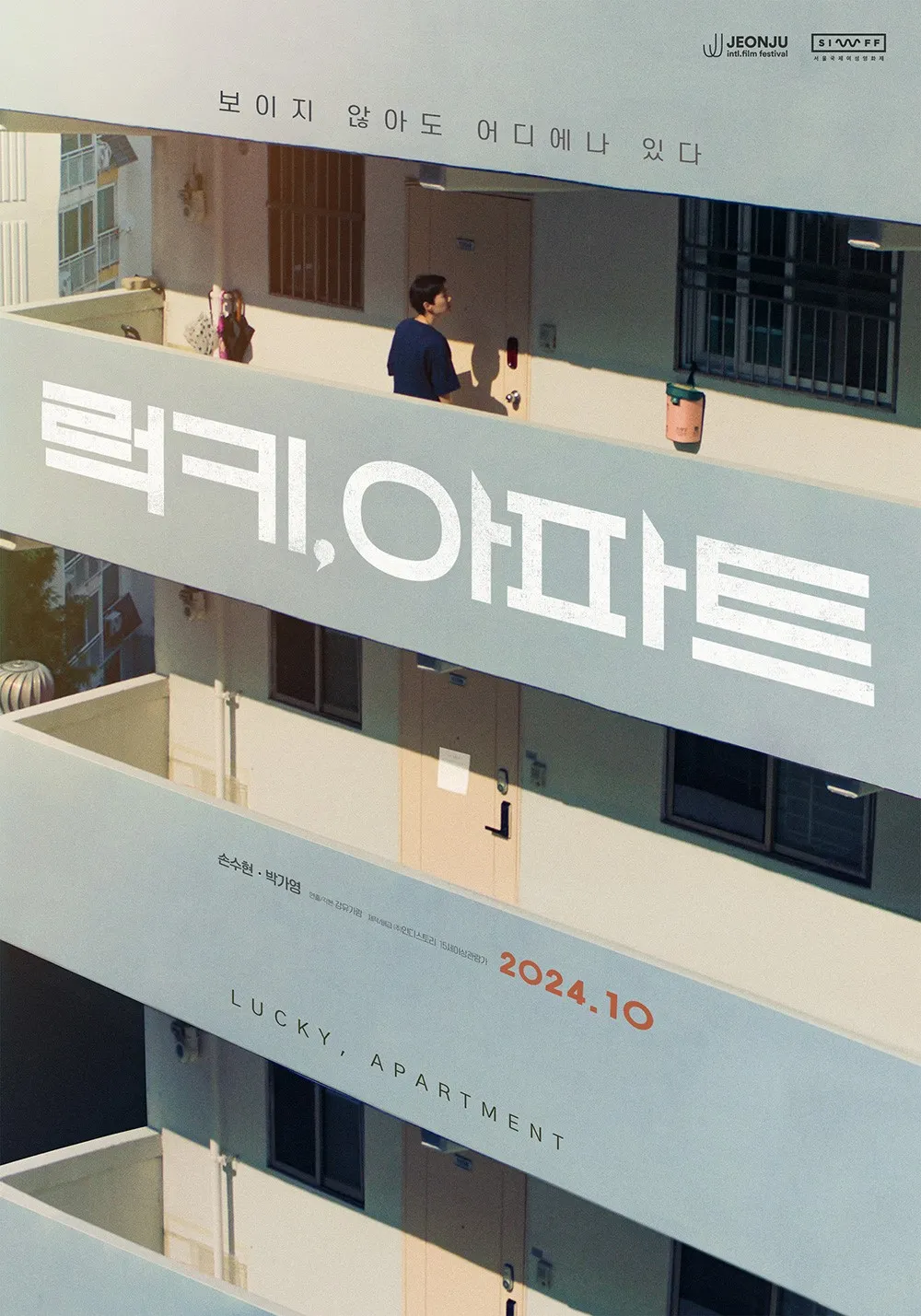
The film Lucky, Apartment relentlessly traces how the home—the most private of sanctuaries—becomes a stage that amplifies social exclusion and individual anxiety.
🌿 Moments When This Film Penetrates Especially Deep
- When you suddenly realize that the space sustaining your life is in contact with the solitude of others
- When your relationship with a loved one begins to crack bit by bit in the face of economic reality
- When you want to quietly reach out to the hidden history of the invisible people erased by society
Why you should read to the end: Because this review goes beyond a simple spatial thriller, offering profound humanistic answers regarding the alienation and dignity that we all must face someday.
🎞 Note Before Viewing
Instead of provocative or sensational depictions, this is an emotion-driven work that densely deals with the characters’ internal conflicts and the breakdown of their relationship. Through the sensory motif of a foul odor, it heavily portrays the social reality faced by minorities.
🎬 Film Information (2024)
- Title: Lucky, Apartment (2024)
- Director: Kang Yu-garam
- Screenplay: Kang Yu-garam
- Country: South Korea
- Genre: Drama
- Running Time: 96 Minutes
- Platform: Independent theaters and theatrical VOD
- Cast: Sun-woo (Son Soo-hyun), Hee-seo (Park Ka-young)
📖 Lucky, Apartment: A Mysterious Odor and Psychological Cracks Shaking a Cozy Nest [No Spoilers]
Sun-woo and Hee-seo, a lesbian couple of nine years, scrape together all their financial resources to purchase a small apartment on the outskirts, dreaming of a stable future. However, when Sun-woo loses her job due to the economic downturn and sustains a leg injury, the pressure of mortgage interest falls entirely on Hee-seo, a pharmaceutical sales representative, causing their relationship to begin to strain.
Then one day, a mysterious, foul odor rises from the apartment below. Sun-woo becomes exceptionally sensitive to this smell and attempts to uncover its cause, but the residents, fearing a drop in property value, try to cover up the incident. Amidst the social conflict surrounding this invisible stench, the couple’s once-solid home and their trust in one another spiral into an uncontrollable structure of conflict.
🏚️ A Social Interpretation of Isolation and Aversion Metaphorized by the Odor in Lucky, Apartment
The Invisible Intruder Called Odor
The foul smell rising from the lower floor in the film transcends simple physiological discomfort; it functions as a sensory device witnessing the lonely death of a minority that our society actively endeavors to erase. The residents’ selfish attitude of attempting to conceal the odor out of concern over falling property values exposes a cold aspect of capitalist society, where real estate assets take precedence over human dignity.
Mirror Therapy of the Past and Present
The life of the “flowerpot grandmother” downstairs discovered by Sun-woo is not merely another person’s tragedy, but a mirror reflecting the anxieties of old age that Sun-woo and Hee-seo might face in their own future. The reality of being unable to claim even a long-term partner’s body due to a lack of legal family recognition forces a sharp confrontation with the institutional alienation faced by queer narratives.
🚪 The Capitalization of Space and an Interpretation of the Psychological Relationship Structures Confronted by the Characters
The Fence of “Yeong-kle” (Financial Over-Leveraging) and Psychological Debt
The apartment secured for sanctuary begins to transform into a massive economic pressure and a psychological prison for Hee-seo the moment Sun-woo loses her job. Hee-seo’s silence, forced to hide her identity at work, and Sun-woo’s sensitivity, isolated inside the home, represent the tangible and intangible costs paid by minorities in a society centered on the heteronormative “normal family” ideal.
Cracks in the Relationship and the Expansion of Solidarity
The conflict between the two is not a matter of individual personality differences, but a structural fracture that occurs when external, concealed aversion and pressure penetrate private space. Nevertheless, Sun-woo’s process of tracing the reality behind the odor demonstrates an agentic growth curve that expands beyond private love toward solidarity with socially marginalized classes.
🔎 Reinterpreting the Ending: Eternal Territory Left by Mourning and Memory, and the Growth of Dignity
Complete Settling Left by a Private Funeral
The temporary grave that Sun-woo and Hee-seo construct behind the apartment building in the latter half of the film is an act of political mourning that privately restores the dignity of the deceased, which the state and society denied. This act heals the psychological cracks in the relationship they faced, solidifies their sense of solidarity as minorities, and brings about a complete bond toward one another.
The Territory of Dignity That Arrives After Loss
Though they may have failed to seamlessly integrate into the perfect middle class within the capital-dominated apartment system, they have acquired the human dignity found in protecting each other. While their lives will continue within an unstable reality even after the ending, they will now endure more resiliently through each other’s presence and memory.
By acquiring the historical continuity of the queer community, the film’s ending expands the limitations of private space into a territory of social solidarity.
❓ Realistic Questions and Interpretations Posed by the Ending and Narrative of Lucky, Apartment
Q. Is the structural transition jarring, starting as a mystery thriller and suddenly shifting into a human drama?
A. The depiction of the foul odor and nightmares in the early part of the film follows the grammar of a conventional mystery thriller to draw the audience in, but the narrative shift in the latter half may leave viewers who expected genre pleasures feeling disappointed. However, rather than remaining a piece of genre play, this is an intentional aesthetic choice by the director to force a confrontation with the social reality of lonely deaths—the true entity behind the odor.
Q. Are the apartment residents represented in too flat and villainous a manner?
A. The criticism that the narrative loses dimensionality because the exclusive attitudes of the residents, including the building representative, are depicted somewhat like stereotypical villains is structurally valid. However, this representation functions as a device to maximize and expose the violence of collective egoism generated by a real estate-stratified society rather than focusing on individual malice, leaving it open for the audience to judge whether these figures reflect our own portraits.
✨ Lucky, Apartment: How to Rescue Minority Dignity from Within Mass Concrete
This film serves as an excellent subject of review, sharply questioning the violence inherent in the asset of a “home” and the crisis of identity hidden within it for those of us living today. Securing a space to share with a loved one goes beyond simple physical ownership; it is directly linked to the process of having one’s existence validated by society. The work warmly restores marginalized identities through the ways in which humans care for one another, even within the traps dug by capitalist desire.
Solidarity achieved through sensing the solitude of others is the sole existential defense mechanism that allows us to endure an era of every-man-for-himself survival.
💬 Our Attitude in Confronting the Odor of Others Instead of Silence and Avoidance
We sometimes choose to look away or remain silent regarding the uncomfortable truths around us to protect our peaceful daily lives and assets.
Will you choose silence to protect your own nest, or will you open the door to your neighbor’s solitude, even if it means risking cracks in your own world?
🎬 Violet Screen’s Recommended Curation: The Deep Resonance of Other Female-Centric Narratives
- Concerning My Daughter (2024)
- Reason for Recommendation: An independent film that deeply addresses alternative forms of family and minority care issues through the gaze of a mother watching her daughter and her same-sex partner attempt to protect one another against societal prejudice.
- Heavy Snow (2024)
- Reason for Recommendation: Set against the snowy landscapes of Gangneung, this film beautifully captures the yearning and growing pains of two women, leaving a soft, lingering impression with a distinct psychological narrative texture.
To provide a more stable publishing environment, multilingual content, and better communication with our readers, we have moved our official publication to Substack.
All new film reviews and critical essays will be published on our new platform. This website will be closing down soon, so we would greatly appreciate it if you subscribed to our new space.
TODAY'S QUESTION
What changed the most for you after coming out?
Your answer isn't saved. Feel free to share it in the comments below.


You May Also Like

Desert Hearts (1985): Desire for Liberation and Narrative Salvation in the Desert of Oppression

Film The Venus Effect Review: An Interpretation of Existential Awakening and Solidarity Beyond the Boundaries of Queer Identity