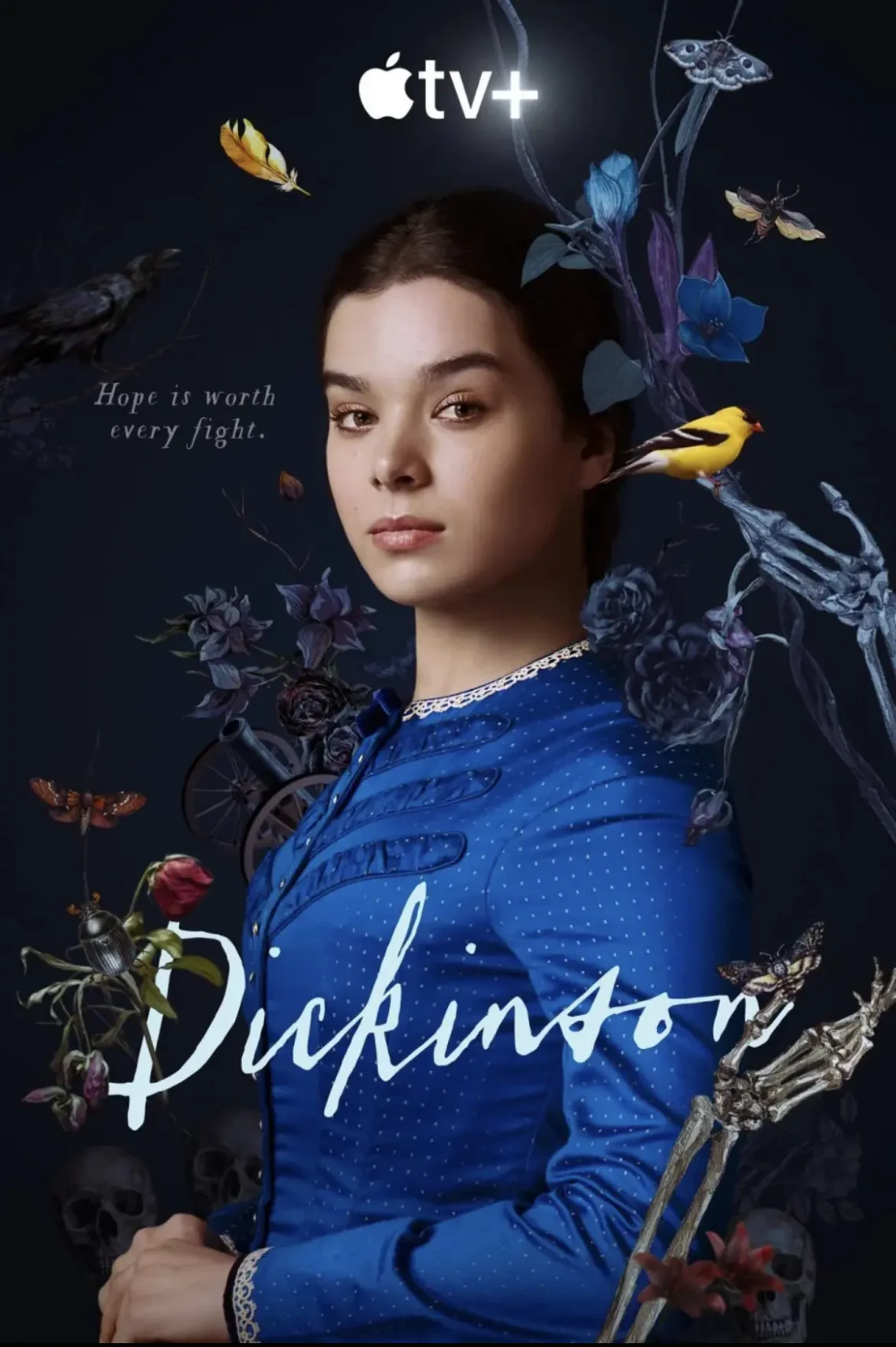
Dickinson: The Isolated Desires of a Genius Poet and a Radiant Solidarity Ahead of Its Time
Language sometimes becomes a prison, but for some, it is the only way out. It is marvelous to witness how the sentences of a woman standing before the colossal wall of the 19th century reach out and vibrate within us today.
What Emily Dickinson kept in her ink bottle was not merely verses of poetry. It was a bursting thirst for ‘Sue Gilbert’—a name the world would not permit—and an elegant rebellion against an era that sought to confine her.
We all live with our own ‘White Room’ in our hearts. This work restores, through sensual visual beauty, the most intimate confessions that bloom in that space where others cannot understand and only ‘I’ can be whole.
🌿 Moments When This Drama Especially Sinks In
- A chilly evening when the world feels too fast and you feel you’ve lost your own unique color.
- When a secret love you could never tell anyone circles only within your heart, leaving you breathless.
- When you want to cast off the social roles that define you (daughter, wife, professional) and exist solely as ‘yourself.’
- This is why you must read this article to the end. Because you will realize that your isolation was, in fact, the most brilliant seed of creation.
🎞 Note Before Watching the Drama
As this work reconstructs Emily Dickinson’s inner world with a modern sensibility, the emotional density between characters is exceptionally high. The narrative unfolds around a ‘resonance of souls’ more intense than physical contact and the deep bond between women; I recommend focusing on the language exchanged through their eyes.
🎬 Drama Information
- Title: Dickinson (2019-2021)
- Director: Alena Smith, David Gordon Green, et al.
- Screenwriter: Alena Smith
- Country: USA
- Genre: Period Piece, Comedy, Drama, Romance
- Runtime: Seasons 1–3 (approx. 30 minutes per episode)
- Platform: Apple TV+
- Cast: Hailee Steinfeld, Ella Hunt, Jane Krakowski, Toby Huss
📖 Dickinson, A Journey Where Desire That Failed to Become Poetry Breaks Through Reality [No Spoilers]
Amherst, Massachusetts, mid-19th century, dominated by a strict patriarchal order. Emily Dickinson writes poetry every night, rejecting the ‘destiny’ of women: domestic labor and marriage. To her, the world is a narrow, suffocating prison, but in her imagination, Death is a gentleman arriving in a carriage, and the bee is a messenger of a vast universe.
Emily’s only sanctuary and muse is one person: her dear friend Sue Gilbert. However, as Sue becomes engaged to Emily’s brother, Austin, their relationship enters a complex and precarious phase that transcends the name of friendship. Emily sinks deeper into the world of poetry in the face of the cruel reality of having to welcome the woman she loves as a ‘sister-in-law.’
The work flows around Emily’s growth as she discovers her identity as a poet and her intense, unbreakable solidarity with Sue. This bizarre harmony—wearing 19th-century costumes and dancing to modern hip-hop—visually proves how far Emily’s spirit was ahead of her time, captivating the audience.
🖋️ A Sanctuary Named Language, the ‘Interpretive’ Connection Between Emily and Sue
🐝 Bees and Carriages: Queer Longing Hidden Within Emily Dickinson’s Symbols
To Emily, poetry was not a product to be presented to the world, but a private love letter handed to Sue. The ‘bee,’ which appears repeatedly in the work, is not just a part of nature, but functions as a sensual medium that stimulates and awakens forbidden desires.
The verses she wrote in her room were walls built to preserve a pure world with Sue, whom she wished to protect even at the cost of social death. Their relationship gains powerful narrative strength in existing as each other’s only readers, capable of deciphering one another’s souls beyond physical union.
🖼️ The Yellow Dress and the White Room: Artistic Liberation Bloomed in Oppressed Spaces
The color changes in Emily’s attire and the enclosed space of her room are central to her psychological transformation. The drama delves obsessively through mise-en-scène into the fact that the only power 19th-century women could possess was ‘silence’ and ‘recording.’
When Emily locks her door to prevent family expectations and social scrutiny from crossing the threshold, she finally becomes free. The brief encounters with Sue that take place within expand this isolated space as wide as the universe, visually manifesting how oppression is sublimated into art.
🔎 Reinterpreting the Ending — Eternal Unity Achieved by Choosing Isolation
At the end of Season 3, Emily no longer craves recognition from the outside world. She finds completion in the act of tending her own garden and writing poetry itself. This is not a defeat by society, but a dignified declaration that she will not allow her world to be invaded.
In the conclusion, the relationship between Emily and Sue evolves into an emotional totality that transcends physical distance. Sue becomes the conduit for sharing Emily’s poetry with the world, and Emily becomes a creator living eternally within Sue’s interiority. Their love mocks the institutional framework of marriage, reaching a state where art and life merge into one.
Emily Dickinson’s silence was not a disconnection, but the highest level of defensive wall erected toward the world to obtain the true understanding of only one person.
❓ Dickinson: The Clash Between Historical Fact and Modern Interpretation
Q1. Doesn’t the modern production (music, manner of speech), which differs from historical fact, hinder immersion?
On the contrary, that is the very identity of this work. The production team used modern devices to convey how ‘hip’ and subversive Emily Dickinson’s poetry was to the people of that time. It is a clever choice that allows 21st-century viewers to immediately experience the emotional vibrations Emily would have felt in the 19th century, proving the enduring vitality of a transhistorical female narrative.
Q2. Is portraying the relationship between Emily and Sue specifically as ‘lovers’ a distortion of the original history?
Recent scholarship and the numerous letters Emily sent to Sue strongly suggest that their relationship was much more than a simple friendship. Through the process of restoring hidden truths, the work makes visible the love and solidarity between women that had been erased from history. This is not a distortion, but a legitimate reinterpretation of a text previously obscured by prejudice from a modern perspective.
✨ Dickinson, Consolation Offered by a Poet of the Future Who Has Finally Arrived
This work does not stop at taxiderming a historical figure; it poses a question to everyone struggling to find their voice at this very moment. “What are the walls that confine you, and where is your poetry heading?”
Emily Dickinson ultimately refused to become famous, but her isolation has returned as a most abundant legacy. The drama Dickinson demonstrates through beautiful and provocative imagery how noble a struggle it is to protect one’s inner self over the recognition of others.
True identity is not defined by the gaze of others, but is completed by the fragments of pure desire protected while keeping oneself in isolation.
📧 What kind of ‘Poetry’ is hidden in your room?
Is there a sincerity you have kept hidden in a corner of your diary, unable to show anyone? Like the transparent confession Emily showed only to Sue, I am curious about what ‘way of understanding’ you cherish most.
Between protecting yourself through silence and revealing yourself to the world, which courage do you need more right now?
📽️ Violet Screen Recommendations: Other Perspectives Exploring Women’s Interiors and Relationships
- Love Lies Bleeding (2024): A masterpiece set in the 1980s that unfolds the explosive desire and solidarity of two women with a noir sensibility. Recommended for those who wish to encounter the passionate energy of Dickinson in a modern, raw texture.
- Drive-Away Dolls (2024): A road movie featuring the sensible direction of Ethan Coen. Within the escapades of two women seeking freedom, queer humor and lighthearted insights into relationships are embedded, making for an enjoyable watch.
To provide a more stable publishing environment, multilingual content, and better communication with our readers, we have moved our official publication to Substack.
All new film reviews and critical essays will be published on our new platform. This website will be closing down soon, so we would greatly appreciate it if you subscribed to our new space.
TODAY'S QUESTION
Is there a film whose ending you wish had gone differently?
Your answer isn't saved. Feel free to share it in the comments below.


You May Also Like
Amar es para siempre (2013~): An In-Depth Analysis of the Brilliant Female Narrative Within an Era of Oppression
Queendom (2025): From Nemeses to Soul Salvations, a True Interpretation of Love Attained Through Body-Swap GL