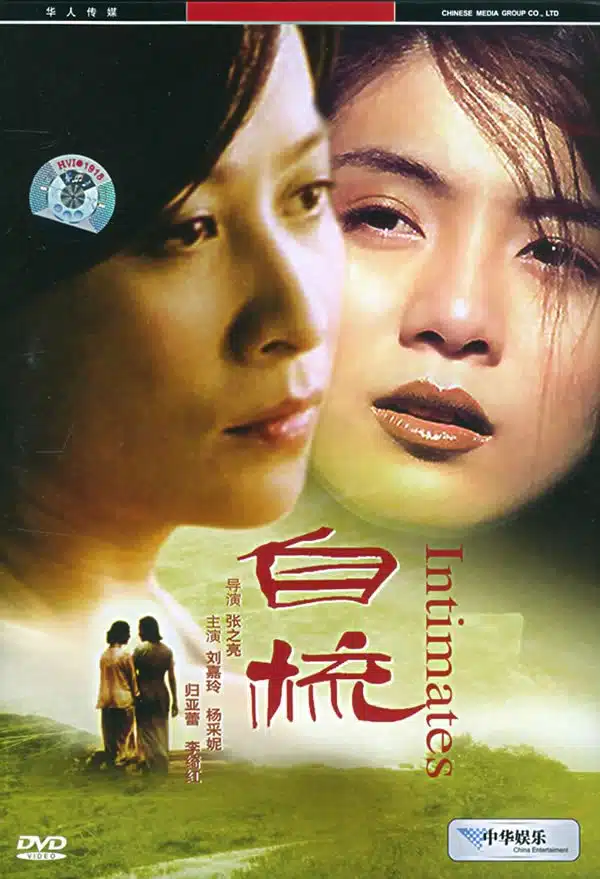
Intimates (1997): An Interpretation of the Salvific Ending Reached by Female Solidarity and Queer Narrative
The deepest solitude arises not from the absence of others, but from the absence of a language that can fully validate one’s self. Set against the unyielding walls of patriarchy and the immense violence of war, the stories of women who bound up their own hair to save themselves are not mere historical records.
Through the lives of two women who become mirrors for each other across time, the film Intimates relentlessly traces how love becomes synonymous with survival.
🌿 Moments When This Film Deeply Permeates
- For those who wish to step outside the relational frameworks defined by the world and become each other’s sole sanctuary.
- For those who want to break free from the illusions of androcentric romance and witness the power of solidarity that sustains life.
- For those weary of superficial, ostentatious relationships who long for a profound affection that embraces raw wounds exactly as they are.
- This is why you must watch until the very end to witness the structural resolution: a white-haired reunion after weathering the weight of fifty years, proving to be an affirmation of human dignity far beyond mere melodrama.
🎞 Note Before Viewing the Film
Set against the backdrop of patriarchal Chinese society and wartime conditions in the 1930s, this work depicts the physical and mental tribulations experienced by its characters. Sensationalism focused on physical stimulation is excluded; instead, it is a profound melodrama centered on the emotional amplitude of two female characters, their mutual salvation, and the essence of their relational solidarity.
🎬 Film Information
- Title: Intimates (自梳, Ji Sor, 1997)
- Director: Jacob Cheung (장지량)
- Screenplay: Charcoal Tan (등비라)
- Country: Hong Kong
- Genre: Drama, Melodrama/Romance
- Running Time: 117 minutes
- Platform: Individual verification required for OTT availability
- Cast: Carina Lau (유가령), Charlie Yeung (양채니), Theresa Lee (이완순)
📖 Intimates, Two Women’s Survival and Tender Journey Against an Era of Oppression [No Spoilers]
Ah-wai, a successful businesswoman left cynical by her lover’s betrayal, accompanies Yuk-wan, an acquaintance of her father who wishes to return to her hometown. During their journey to Shunde, the elderly Yuk-wan unburrows memories buried deep within her heart since the 1930s, and the story flows back into the past.
At that time, Fook-wai, a resilient laborer at a silk factory, faces the crisis of a forced marriage due to her father’s gambling debts. She refuses marriage in a male-dominated society and performs the Ji Sor (self-combing) ritual, swearing a vow of lifelong celibacy. Meanwhile, Yuk-wan, the eighth concubine of a wealthy factory owner, lives hiding an absolute loneliness behind her glamorous exterior. Differing in social status and disposition, the two women first meet at the factory, quickly growing close as they recognize each other’s deficiencies and shared oppression.
However, as Fook-wai is betrayed by her past lover, Ah-nam, and cast into a tragic predicament, their relationship shifts beyond mere friendship into a fateful solidarity on the precipice of life and death. Yuk-wan risks everything to stay by Fook-wai’s side as her sole companion, but they face a cruel moment of separation amidst the bombings of World War II.
⚓ The Subjective Structure of Solidarity Among Ji Sor Women Defying an Era of Violence
The Declaration of Ji Sor (Self-Combing): An Escape from Patriarchal Power Structures
The Ji Sor ritual in the film, where a woman combs up her own hair, is not a compliance with custom, but a symbol of subjective resistance that refuses to become the property of men. The marital pressure exerted on Fook-wai points to a patriarchal economic structure that completely instrumentalizes women’s labor and bodies.
Fook-wai chooses Ji Sor as an exit strategy within this closed narrative, seeking to seize sovereignty over her own life. Conversely, Yuk-wan occupies the position of a concubine at the deepest center of that very structure, experiencing the vanity of power firsthand. When these two women, starting from antithetical positions, encounter each other in a space defined by the “absence of men,” their relationship begins to act as the most potent fracture threatening the existing social order.
The Collapse of Androcentric Romance and the Aesthetics of Mutually Salvific Solidarity
The conflict and betrayal Fook-wai experiences with Ah-nam serve as a narrative mechanism that exposes the fragility of the illusions traditional heterocentric romance offers to women. Ah-nam represents the cowardice of patriarchal men by irresponsibly abandoning Fook-wai.
In this desperate situation, Yuk-wan is the only one who rescues Fook-wai physically and spiritually. Yuk-wan’s choice to shoulder Fook-wai’s pain is not a patronizing act of pity, but a bond of dignity between subjects sharing the same oppression. From this point forward, the internal structure of their relationship transitions into a state of complete interdependence and affection, causing the film’s queer narrative to take on an even deeper hue of liberation.
🔎 Reinterpretation of the Ending — A Fifty-Year Love Achieved Beyond the Wartime Pier
The ending of Intimates is a structural victory that nullifies all separations enforced by the era, moving past a sentimental conclusion of an old-age reunion. Yuk-wan’s act of leaping from the boat amidst wartime bombings proves that emotional union with Fook-wai held a higher value than physical survival.
The meeting of these two elderly women, who have carried each other in their hearts for fifty years, demonstrates the resilient permanence of female narratives that do not erode under the weathering of time. Their white-haired hands clasped at the railway station comfort past losses while signaling that their lives, which will continue beyond the ending, have finally become whole.
The white-haired reunion of Yuk-wan and Fook-wai is a historical declaration that entirely restores the subjectivity that had been castrated by the violence of the era.
🔎 On the Narrative Ambiguity and Mode of Female Representation in Intimates
Q. Does the realistic plot development, where Fook-wai wavers due to her male lover Ah-nam, constitute a limitation that weakens the queer narrative between the two women?
A. Superficially, the moment Fook-wai attempts to break her Ji Sor vow to choose a man might appear as a divisive element that disrupts narrative consistency. However, this is a structural device that realistically depicts the material pressures and heterocentric illusions of romantic love faced by women of that era. Ah-nam’s cowardly betrayal and Fook-wai’s resulting life-threatening crisis expose how hollow the promises of the patriarchal heterosexual system truly are for women. Consequently, this disillusionment becomes an inevitable catalyst that elevates her relationship with Yuk-wan from mere friendship to an alternative love of life, dignity, and a distinct queer narrative.
Q. From a contemporary perspective, how should we interpret the ambiguity surrounding whether the main characters’ emotions represent romance or sisterhood?
A. The strength of Intimates lies in its representation of love between women within an Eastern and historical context through Ji Sor, rather than measuring their relationship against Western frameworks of queer identity. Their emotions transcend physical intimacy, closer to an existential resolve to take complete responsibility for each other’s lives. Rather than defining this through a binary of romance or friendship, the film’s aesthetic intent becomes clearer when viewed as a form of “female-subjective union” that evades existing vocabulary. The judgment is left to the audience, but this very ambiguity serves as a rich text that expands the spectrum of relationships.
✨ Contemporary Implications Left by Intimates: The Conditions of Affection That Withstand the Weathering of Time
The narrative of Intimates does not merely linger as the tragedy of a past generation, but poses a heavy question to contemporary society, where individuals frequently feel isolated despite an excess of connections. The work demonstrates through the lives of two women what our final bastion must be when capital and androcentric values fragment human beings. Unconditional support and solidarity remain the sole keys for individuals to maintain dignity and grow, regardless of the era. The structural value of this film resides in the unyielding will of two subjects who ultimately refused to let go of each other, even in the face of immense tragedy.
🔗 Reflections on Relational Distance and Choice
True solidarity begins at a responsible distance that refuses to stand by idly in the face of each other’s wounds.
Would you choose the “silent celibacy” of isolating yourself before a blocked reality, like Fook-wai in the past, or would you risk danger to plunge into another’s life and complete the “salvation of solidarity” like Yuk-wan? I am curious about your choice.
🎬 A Narrative of Solidarity and Liberation Selected through the Lens of Violet Screen
The Dream Songs (2023)
- Reason for Recommendation: A Korean independent film set in a high school that portrays the tender, delicate emotional lines between two female students. While Intimates depicts a grand solidarity within a turbulent history, this work captures the love and loss blooming inside the brilliance of daily life through dreamlike mise-en-scène, offering a profound emotional variation.
Concerning My Daughter (2024)
- Reason for Recommendation: A well-made drama focusing on a female couple steadfastly protecting each other against worldly prejudice, observed through the perspective of a mother. It calmly and weightily depicts the tightly knit relationships of women in front of heavy, realistic social walls, delivering a deep resonance.
To provide a more stable publishing environment, multilingual content, and better communication with our readers, we have moved our official publication to Substack.
All new film reviews and critical essays will be published on our new platform. This website will be closing down soon, so we would greatly appreciate it if you subscribed to our new space.
TODAY'S QUESTION
What's the most memorable new release you watched this year?
Your answer isn't saved. Feel free to share it in the comments below.


You May Also Like

1448 Love Among Us: Thai GL Film Review, A Narrative of Love Trapped Outside the Law

L’amore è imperfetto Review: A Journey of the Heart Sanctioning Imperfection