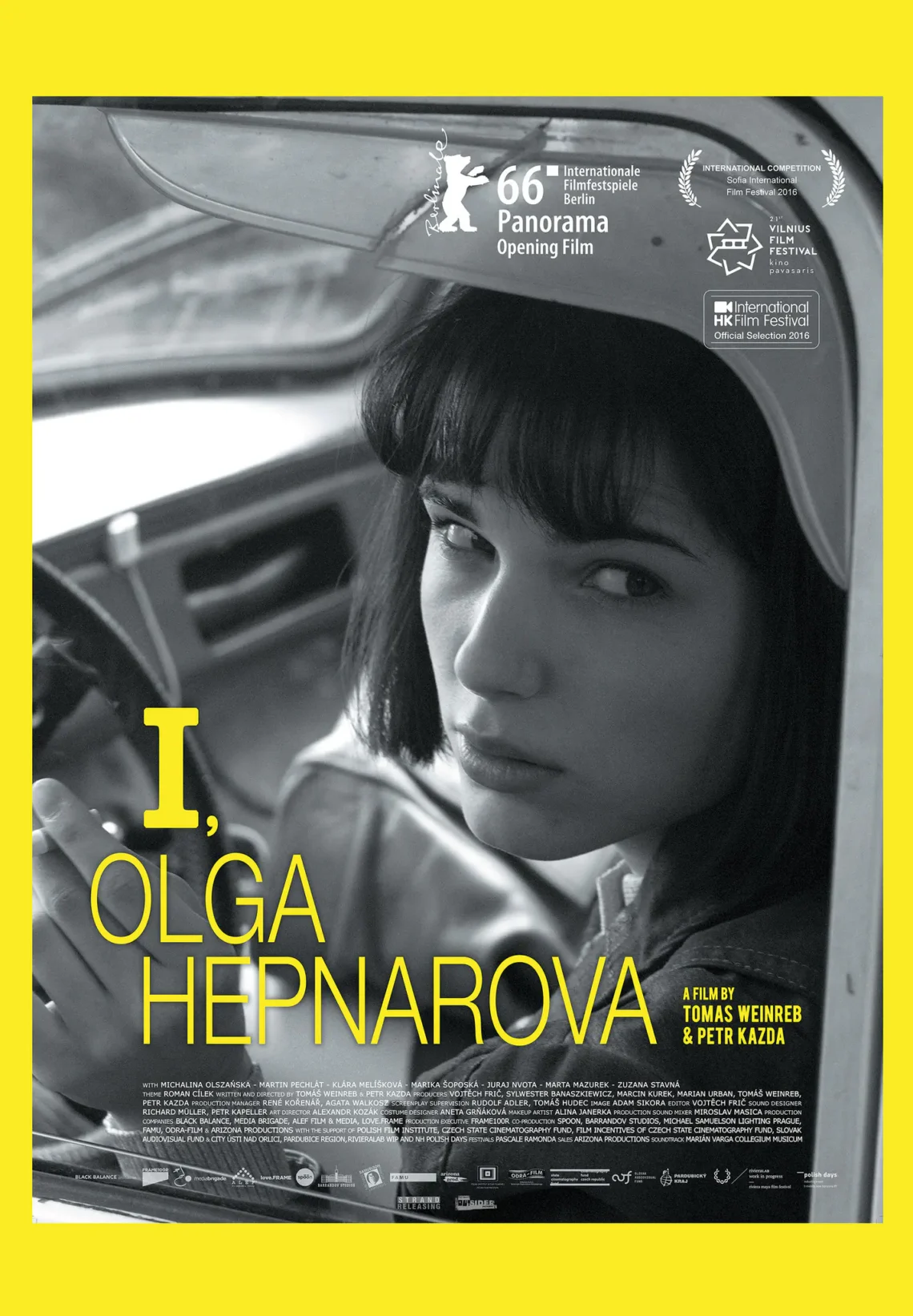
I, Olga Hepnarová (2016) — A Massacre Become a Silent Scream, A Chilling Record Gazing into the Abyss of Alienation
Where does a soul go when it fails to find its place in the hell of others? When the definition of a human being as a “social animal” becomes a suffocating noose, an individual may choose ruin to prove their existence. The film Já, Olga Hepnarová (2016) follows the true story of a woman who murdered eight people in 1970s Czechoslovakia and became the last to be executed, chillingly tracing the trajectory of the “psychological lynching” endured by a single human being beyond a mere criminal record.
🌿 Moments When This Film Seeps In Deeply
- On days when all the world’s noise feels like a mockery and you wish to face a wall alone
- When the weight of the word “intimacy” feels so burdensome that you feel the urge to isolate yourself
- When you want to confront the chilling process of how the indifference of others destroys human dignity
- The reason you must read until the end: This piece was not written to defend Olga’s actions, but to structurally reflect on the alienation and absence of solidarity in our time through the tragic message she left behind.
🎞 Note Before Watching
As this work deals with the tragic crime and execution process of a real person, it maintains a generally heavy and dry atmosphere. It should be noted that the film has a high level of psychological pressure, emphasizing mental isolation and neurotic anxiety rather than depictions of physical violence.
🎬 Film Information
- Title: I, Olga Hepnarová (Já, Olga Hepnarová, 2016)
- Director: Tomáš Weinreb, Petr Kazda
- Screenplay: Tomáš Weinreb, Petr Kazda
- Country: Czechoslovakia, Poland, France, Slovakia
- Genre: Drama, Crime, Biography
- Running Time: 105 minutes
- Platform: Mubi, Apple TV (Varies by region)
- Cast: Michalina Olszańska, Martin Pechlát, Marta Mazurek
📖 <Já, Olga Hepnarová> Plot: The Prelude to Cold Revenge Chosen by a Rejected Being [No Spoilers]
In 1970s Prague, a young woman named Olga lives completely separated from her family and society. Feeling a deep void in her relationship with her strict and cold mother, she attempts suicide but fails, only to experience even greater alienation upon being confined to a psychiatric hospital. After her release, she chooses the profession of a heavy truck driver to minimize contact with the world, yet she never finds peace within her relationships with colleagues or in brief romances with women who happen into her life.
Olga defines herself not as a “psychopath” but as a “victim of social lynching” and begins planning a massive revenge against the world that rejected her. The rage seething within her becomes armed with meticulous logic, and finally, on July 10, 1973, Olga drives her truck toward a tram stop in Prague. Waiting there are innocent citizens she has never once met.
⛓️ Interpretation of Olga’s Neurotic Isolation and Social Lynching Trapped in Monochromatic Angles
The black-and-white aesthetic chosen for this film is not a mere artistic device. In the world Olga perceives, there is no saturation. The camera constantly observes Olga’s rigid shoulders and unfocused eyes from behind or captures them from the side, visualizing the claustrophobic pressure she feels. In particular, the smoke she exhales while smoking is depicted as a minimal protective shield to guard her fragile ego.
Olga writes letters incessantly. Those letters are not so much for a recipient as they are a final existential declaration hurled at a world that denies her existence. Rather than dismissing her crime as “madness,” the film meticulously analyzes how the collective exclusiveness hidden behind the surface of ordinary daily life slowly erodes an individual’s soul. The violence inflicted upon her was invisible indifference and contempt, and the film explicitly defines this with the keyword “social lynching.”
🖤 Analysis of the Psychological Structure of Ruined Relationships and the Solidarity Among Women Olga Dreamed Of
Olga attempts physical and emotional connections with several women. However, those relationships are far too light or transient to fill Olga’s fundamental deficiency. What she craved was not mere gratification of sexual desire, but an absolute understanding that could fully affirm her wounded interior. Yet, as social taboos and individual neurosis intertwine, the possibility of solidarity is thwarted every time.
The power structure revealed through this process is unique. While identifying as a victim, Olga adopts an aggressive attitude to seize the initiative in relationships. This is a manifestation of a defense mechanism—hurting others first to avoid being hurt. From the perspective of female narrative, this work paradoxically emphasizes the importance of relationships by showing the disastrous ruin brought about by the failure of solidarity, rather than the success of proactive connection.
🔎 Reinterpretation of the Ending — A Desperate Existential Period Completed on the Gallows
In the film’s conclusion, Olga shows no regret or reflection regarding her actions. Her final statement in court sounds not like a defendant’s excuse, but like a demand to complete this tragedy by sentencing her to death. To her, the death penalty might not have been a punishment, but a final ritual of being officially “expelled” from this weary world.
In the final moment of ascending the gallows, the film does not miss Olga’s trembling gaze. Unlike her bold declarations, her body collapsing before the primal fear of death proves that she, too, was ultimately a human being who wanted to be understood. What she gained was eternal rest, but what she lost was the single life she could have used to sublimate her pain.
The death of Olga Hepnarová signifies the conclusion of a hypocritical cycle where the alienation neglected by society gives birth to a monster, and by executing that monster, society once again feigns tranquility.
💬 Regarding the Ending of <Já, Olga Hepnarová> and the Representation of Female Criminals
Q1. Isn’t there a risk of glorification in blaming Olga’s crime on society?
The film never glorifies Olga’s actions. The camera captures her crime scene in an extremely dry and inhuman manner. The point of criticism lies in the fact that the pain Olga felt cannot be a justifiable reason for murder. The intent of the work is not to defend Olga, but to track ‘why’ she became such a monster, thereby revealing the cracks in the systems of our society. The audience is led to empathize with her pain while remaining coldly detached from her choices.
Q2. What is the unique position of this film as a female narrative?
While existing female narratives have mainly focused on solidarity, overcoming, and growth, this work gazes directly into female destructiveness and darkness. By rejecting frames like the “pure victim” or the “maternal being” and presenting a female figure who is intensely selfish, cynical, and destructive, it expands the spectrum of female characters. This can be evaluated as an important aesthetic attempt to treat women as three-dimensional existential beings from a modern perspective.
✨ <Já, Olga Hepnarová> — A Cold Question Toward the “Other” Within Us
Olga’s tragedy did not stop in 1973. In our digitalized modern society, alienation has become more sophisticated, and individual isolation has hidden deeper behind virtual connections like “likes.” This work warns us that the trivial exclusions and indifferences we practice daily can become blades that threaten someone’s survival. Was Olga a monster, or was she a mirror created by our society?
What pushes an individual to the edge is the silence of the collective, and the moment that silence breaks, tragedy begins.
🗨️ Where the Gaze of the Isolated Rests
Have you ever neglected someone’s silence by mistaking it for “tranquility”? When the effort to understand another’s pain is frustrated, do you choose solidarity, or do you choose deeper isolation?
📑 Violet Screen Curation: Variations of Twisted Interiors and Chilling Relationships
- Eileen (2023) Set in 1960s Massachusetts, it depicts the process of Eileen, an ordinary woman working at a prison, getting swept into a vortex of crime after meeting Rebecca, a captivating counselor.
- Monster (2003) Through the tragedy of the real-life figure Aileen Wuornos, it poignantly portrays how a life at the absolute bottom becomes a monster while desperately trying to hold onto love.
To provide a more stable publishing environment, multilingual content, and better communication with our readers, we have moved our official publication to Substack.
All new film reviews and critical essays will be published on our new platform. This website will be closing down soon, so we would greatly appreciate it if you subscribed to our new space.
TODAY'S QUESTION
What's the most memorable new release you watched this year?
Your answer isn't saved. Feel free to share it in the comments below.


You May Also Like
Vita & Virginia: Immortal Sentences Conceived Through the Intersection of Two Genius Souls

El Contacto Cero: Queer Melancholia Born on the Cliff of Heartbreak and the Complete Deconstruction of Relationships