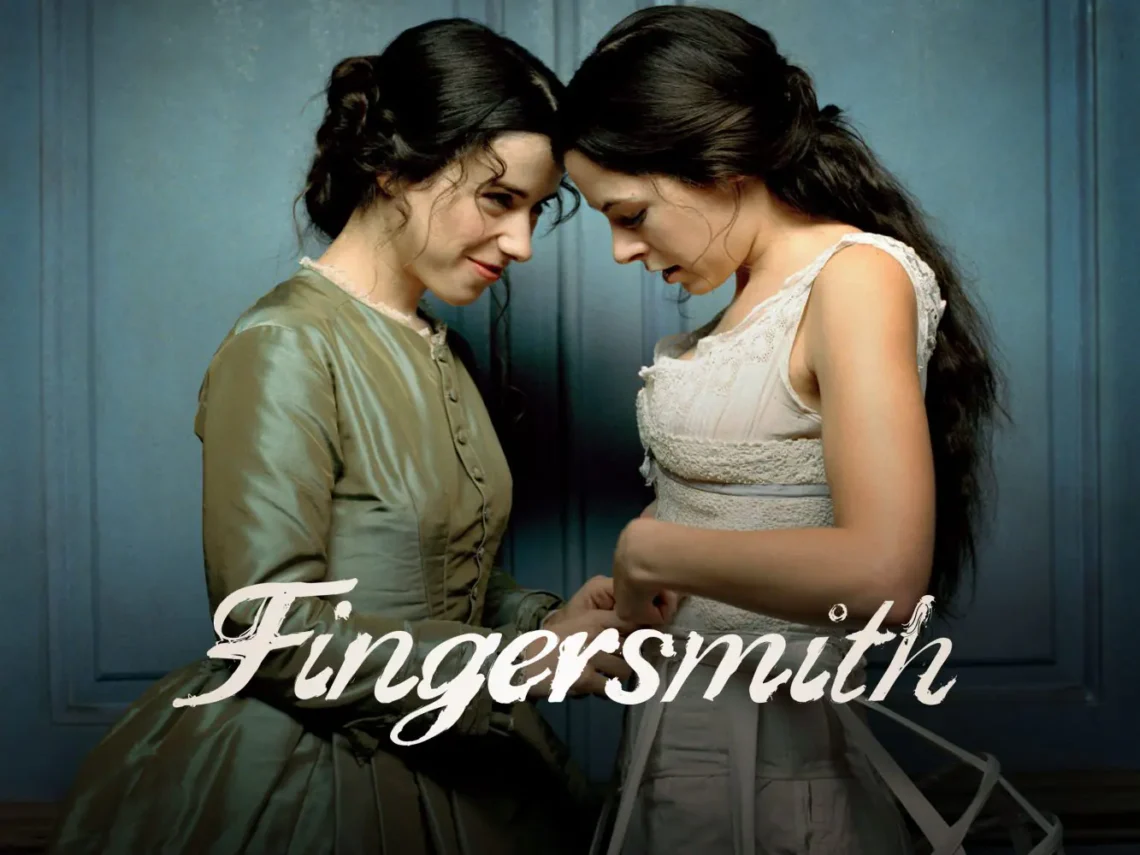
Fingersmith: An Interpretation of Cold Solidarity and Liberation Born Within a Labyrinth of Twisted Desire
In the fog-shrouded London of the Victorian era, the lives of those who could only survive by stealing the lives of others were always built upon the hungry emotion of deprivation. Whether in the isolated library of a wealthy estate or the filth-ridden back alleys of the slums, each yearns for the mirage of ‘freedom’ in their own way.
The drama Fingersmith (2005) wears the outer skin of a simple caper involving deception and counter-deception, but its essence is a desperate journey of women finding their identities by mirroring one another within the massive shackles of patriarchal systems and class. In a paradoxical situation where one must destroy the other to survive, the gaze shared between these two women leaves a resonance deeper than betrayal.
🌿 Moments When This Drama Especially Seeps In
This work simultaneously illuminates the ugly nature of humanity and sublime attachment hidden behind the costumes of a flamboyant period piece. For those who have felt the following emotions, this meticulous narrative will serve as both a perfect consolation and a shock.
- A chilly afternoon when you feel you have lost your true ‘self’ while performing to meet the standards of the world.
- Facing the paradoxical moment when betrayal from the one you trusted most becomes, instead, your salvation.
- The desperation where the warmth of only one person feels like the sole exit amidst an oppressive environment.
- The reason to read until the end is that this review goes beyond the pleasure of plot twists to prove the structural necessity of how two wounded souls become each other’s ‘saviors.’
🎞 Note Before Watching
This work focuses on psychological tension and the creation of a private, intimate atmosphere rather than physical exposure. As it is set against the backdrop of 19th-century British class society and sexual repression, a somewhat dark atmosphere is maintained, but this serves as a device to further highlight the relationships between the characters.
🎬 Drama Information
- Title: Fingersmith (2005)
- Director: Aisling Walsh
- Screenplay: Andrew Davies
- Original Work: Sarah Waters’ novel Fingersmith
- Country: United Kingdom (BBC)
- Genre: Crime, Drama, Romance, Thriller
- Running Time: 181 minutes (3 parts)
- Platform: Wavve, Watcha, etc.
- Cast: Elaine Cassidy, Sally Hawkins, Rupert Evans, Imelda Staunton
📖 Fingersmith: The Prelude of Two Women Bound by Swapped Fates and Betrayal [No Spoilers]
Sue, raised as a ‘fingersmith’ (pickpocket) by the notorious fence Mrs. Sucksby in 19th-century London, receives an irresistible offer one day from the charming con artist ‘Gentleman.’ The plan is to seduce Maud, a reclusive heiress in the countryside, marry her, and then lock her in a madhouse to steal her inheritance. Sue takes on the role of winning Maud’s heart by finding employment as her maid under false pretenses.
Upon meeting at the cold estate ‘Briar,’ Maud appears to be a naive lady ignorant of the world, contrary to Sue’s expectations. However, Sue begins to feel a strange sense of kinship with Maud, who lives a prison-like life reciting erotic texts under the surveillance of her strict uncle. As the calculated seduction transforms into sincere compassion and love, the gears of a massive conspiracy surrounding the two women turn, and a full account of betrayal that no one expected begins to reveal itself.
🔒 Fingersmith Interpretation: The Gaze of Women Burning Down the Patriarchal Library
The space that dominates the first half of the drama is the library ruled by Maud’s uncle. This is not a temple of knowledge but a prison where women are taxidermied as tools for ‘masculine sexual fantasies.’ Maud reads texts there, but she cannot find her own voice.
At this moment, Sue appears as the being who awakens ‘bodily sensations’ in Maud. The acts of removing gloves, brushing teeth, and gazing at each other in the mirror symbolize the liberation of repressed desire. From the perspective of in-depth analysis, their relationship goes beyond simple homosexuality; it is closer to a struggle to shatter the ‘Saint and Whore’ frame defined by men and to confirm each other’s true essence.
🔗 The Core of the Fingersmith Review: Transcending the Shackles of Class and Birth
The twists that erupt in the middle of the work prove that this drama is more than a simple fraud story. The crossover structure, where Sue is confined to a madhouse and Maud heads to the slums, shows that the essence of the pain they experience ultimately stems from the social violence inflicted upon the female gender.
The question of who deceived whom is not what is important. What matters is that the reason they had to deceive each other was to survive on a board designed by men (Gentleman and the Uncle). The betrayal of these two, as seen through this review, paradoxically becomes the passage that allows them to understand each other’s lives most deeply.
🔎 Reinterpreting the Ending — Their Own Truth Built Upon a Destroyed Paradise
The ending of Fingersmith depicts the reunion of two people facing each other on the ruins where all fakes have vanished. After the death of Mrs. Sucksby and the revelation of the secret of their births, Sue seeks out Maud once again. Those footsteps, which once headed toward her to steal an inheritance and at another time to seek revenge, ultimately end in an instinctive return to find her own missing piece.
Maud no longer recites the writings of men; she writes down the truth solely for Sue. The lingering resonance of this ending cannot be explained by the easy word ‘forgiveness.’ It is a total union where they share the scars of the wounds inflicted upon each other, accepting even those scars as part of their love. The two now become beings called only by each other’s names, rather than being someone’s daughter or someone’s heiress.
Their reunion is not a liquidation of the past, but an existential solidarity that is finally completed by witnessing each other’s pain.
🗳 Ambiguity of the Fingersmith Ending and the Power of Female Narrative
Q1: Is Maud’s betrayal within the realm of the forgivable?
From a critical perspective, some point out that Maud destroyed Sue’s entire life for her own freedom. However, rather than a matter of individual morality, this should be interpreted as a tragedy of a structural system that forced women into the extreme choice of ‘having to trample others to escape.’ The work treats Maud’s guilt as heavily as Sue’s pain, showing that their relationship stands upon wounds of equal weight.
Q2. Is the relationship between Sue and Maud love, or a sense of kinship?
Since they initially tried to use each other, their emotions are mixed with hatred and resentment. However, as the secrets of their births are revealed, they confirm that they are mirror images of ‘swapped fates.’ This is closer to an existential solidarity as beings who understand each other’s deprivation best, moving beyond simple romance. Through this ambiguous boundary of emotion, the audience is prompted to reconsider the complexity of relationships.
✨ Fingersmith: A Record of Freedom Written After Erasing Sentences of Oppression
This work is a masterpiece that splashes the ink of modern ‘female subjectivity’ onto the worn paper of the 19th century. By tracing how love becomes a fraud and how fraud becomes salvation again, it asks us: Are the status and life you believe in truly your own?
Fingersmith is a victory report of women who refuse a life edited by the desires of others and seize their own narratives.
True liberation begins when one discards the language of the oppressor and finds one’s own truth only within the eyes of the beloved.
🖋 Silence sometimes becomes the most powerful deception, but it also becomes the deepest language of understanding.
If you were in Sue’s position, what words would you have spoken first upon meeting Maud again—the woman who betrayed you and locked you in a madhouse? Please share the most intense moment of ‘betrayal and forgiveness’ left in your heart.
💜 Violet Screen’s Recommended Curation
If you enjoyed the chilly yet passionate narrative between women in this work, these two following works will also leave a deep mark on your heart.
- Blue Jean (2023): Set in 1980s Britain, it deals with the struggles of Jean, a teacher who must live while hiding her identity. While Fingersmith unraveled era-specific oppression through a thriller, this work depicts the process of a woman affirming herself through an extremely realistic and cool-headed lens.
- The Favourite (2018): Explores the fierce power struggles and desires of three women at the pinnacle of power, as well as the solitude hidden behind them. If you enjoyed the class-based tension of Fingersmith, this is a must-watch movie.
To provide a more stable publishing environment, multilingual content, and better communication with our readers, we have moved our official publication to Substack.
All new film reviews and critical essays will be published on our new platform. This website will be closing down soon, so we would greatly appreciate it if you subscribed to our new space.
TODAY'S QUESTION
Which character has comforted you lately?
Your answer isn't saved. Feel free to share it in the comments below.


You May Also Like

Daughters of Bilitis (2011) – The Love and Dignity of Three Generations of Women Rising Above the Walls of Their Time

Wynonna Earp ‘WayHaught’ Deep Analysis: A History of Solidarity and Salvation That Shatters Toxic Queer Narrative Clichés