The Walls of the Viewfinder and the Noise of Truth: A Deep Dive into the Relationship of Honeybear and Ash in HBO’s
Isolation can sometimes serve as a safe sanctuary, but the moment one begins to love another, that sanctuary transforms into the most cramped of prisons. To reveal one’s most vulnerable truths to another—the act of ‘coming out’—is more than a mere announcement of sexual orientation; it is a monumental event that dismantles the boundaries of one’s world to inhabit the world of another.
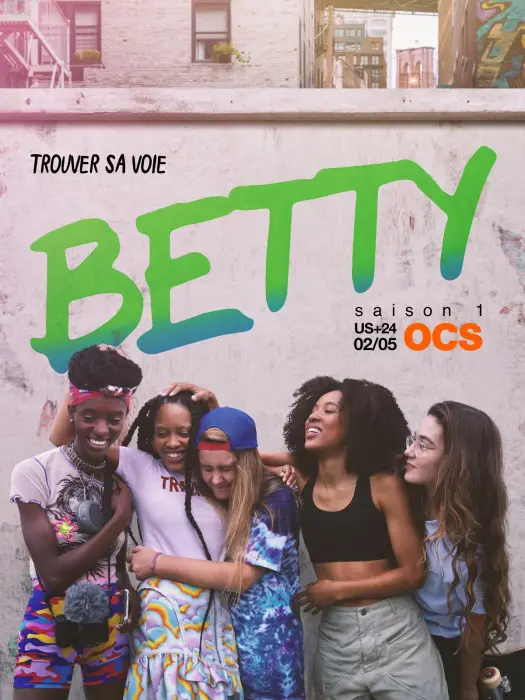
The HBO series Betty gazes at this intense and dazzling process of connection through girls riding skateboards over the gritty asphalt of New York City.
🌿 Moments When This Drama Permeates Deeply
- To those who have once confessed their feelings through a lens behind a viewfinder rather than through words.
- To those who have spent nights stepping backward, fearing their own hearts might be scorched by the very fire of a partner’s free-spirited nature they so admired.
- To lovers confused about where honesty ends and intrusion begins under the collective name of ‘us.’
- Because we seek confirmation that the only way to suture the fissures left by clumsy communication is, ultimately, the truth that sheds all cowardice.
🎞 Notes Before Watching
This work deals with the daily lives and growth of youth, naturally incorporating physical intimacy and sexual discourse. These are not devices for provocation but act as core narrative tools that reveal the structures of trust and power between characters.
🎬 Drama Information
- Title: Betty (2020–2021)
- Director: Crystal Moselle
- Screenplay: Crystal Moselle, Lesley Arfin, et al.
- Country: USA
- Genre: Drama, Youth, Queer
- Running Time: 6 episodes per season (approx. 30 minutes per episode)
- Platform: HBO Max (Wavve, etc.)
- Cast: Kabrina Adams, Katerina Tannenbaum
📖 The Plot of Honeybear and Ash in <Betty>: Stepping Out of the Viewfinder into Each Other’s Arms [No Spoilers]
Within the skateboard crews of New York, the camera is Honeybear’s sole shield and window of communication for observing the world. Into her lens one day enters Ash, a woman of free and unrestrained charm. Honeybear, an introvert, lives while concealing her identity from her family.
Season 1 begins with the fluttering of a one-sided crush and leads to an awkward first date, but the relationship faces a rapid cooling period as Honeybear flees from her reality (her family). However, through a sincere video apology, the two reconnect.
Entering Season 2, they appear to be a stable couple, but they hit a larger wall of communication regarding differences in sexual experience and the proposal of ‘polyamory’ as a new way of relating. Amidst jealousy, misunderstandings, and the specific backdrop of the pandemic, the two undergo painful growing pains for a ‘sustainable relationship’ beyond mere attraction.
🛹 Desire Hidden Behind the Lens: Honeybear’s Gaze and Ash’s Reality
For Honeybear, the camera is not just a hobby but a defense mechanism. By recording others, she secures a safe distance where she does not have to expose herself. Conversely, Ash is a visceral existence living outside the camera, colliding directly with life through her body.
In Season 1, the relational structure takes the form of ‘observer’ and ‘subject.’ Honeybear’s tendency to hover around Ash, harboring desire yet unable to approach, symbolizes her repressed interiority—a result of having to hide her sexual identity.
Specifically, the act of ignoring Ash when encountering her father on the ferry starkly illustrates the cowardly isolation that occurs when the social self and innate desire collide. This narrative moves beyond a simple romance review, forcing an analysis of the psychological cost a queer woman must pay to secure her own space.
🔮 Dissonance Between Polyamory and Monopolization: Experiments and Interpretations of Relationships in Season 2
The core issue of Season 2 is a ‘divergent dream’ regarding ‘relational flexibility.’ Ash, who is more experienced, seeks to expand the relationship by proposing polyamory, but to Honeybear, this feels less like an expansion and more like an intrusion threatening her own place.
Through the episode title “Blue Is the Warmest Threesome,” the drama plays on a classic queer film trope to address the emotional violence brought about by unconsented openness. The sense of alienation Honeybear experiences after joining the agreement while keeping her discomfort silent proves how dangerous ‘consideration’ devoid of ‘honesty’ can be between lovers.
Ultimately, their conflict is not a matter of sexual technique but a question of sovereignty regarding how far they will permit each other’s boundaries. This structural mismatch—where Ash’s freedom triggers Honeybear’s anxiety, and Honeybear’s closedness triggers Ash’s thirst—is the most realistic cross-section of modern dating.
🔎 Reinterpretation of the Ending: A New Fortress of Honesty Built Upon Damaged Trust
The reconciliation shown in “The Let Out,” the finale of Betty Season 2, does not follow the grammar of a common happy ending. The process where Honeybear commits a retaliatory transgression and subsequently speaks with Ash, who witnesses it, is closer to a procedure for confirming the absolute bottom of the relationship.
Yet, paradoxically, this permanent fissure binds the two together more firmly. Now, the ‘illusion of wanting to look cool’ has vanished between them. In its place, a complete transparency—revealing each other’s pettiness and wounded pride—fills the void.
Following the finale, they may not be able to trust each other as perfectly as before. However, the fact that they have become a pair who can share even their doubts is what matters. Love is not a consideration that avoids intruding into the other’s world, but a process of endurance, withstanding the noise of two worlds colliding and breaking.
❓ On the Narrative of Honeybear and Ash in <Betty>, Its Contentious Ending and Interpretation
Q. Who is more at fault: Honeybear’s passive attitude or Ash’s proposal of polyamory?
From a critical perspective, one must acknowledge that Ash’s proposal could look like gaslighting that exploits Honeybear’s immaturity. Furthermore, there are points suggesting that Honeybear’s silence is a form of bystanderism that eats away at the relationship. However, the aesthetic of this work does not lie in determining who the perpetrator is.
The work shows, without filtration, the process by which asymmetrical experience levels operate as power structures within a relationship. Ash’s proposal may have been a sincere exploration, and Honeybear’s acceptance likely a desperation not to lose her love. The ambiguity of this point compels viewers to ask whether there has been ‘coercion’ packaged as ‘consent’ in their own romances. While the conclusion is left to the audience, it leaves the message that true consent is valid only when the right to refuse is a prerequisite.
✨ <Betty>: How to Tune into Each Other’s Frequency Amidst City Noise
This series depicts, with the velocity of skateboarding, how women create their own spaces and connect with others within the vast expanse of New York. The relationship between Honeybear and Ash transcends a simple romance; it is a record of the struggle to learn how to maintain one’s dignity while simultaneously standing in solidarity with the ‘Other.’
Their love resembles skateboarding—not on smooth asphalt, but balancing on a street full of countless bumps. To fall, to skin one’s knees, and yet to climb back onto the board: that is the essence of growth.
The completion of a relationship is not the absence of conflict, but the sharing of the scars earned by passing through that conflict together.
🎧 The Courage to Face Transparent Truth
Is there a truth you haven’t uttered for fear of losing the other person that is perhaps causing your heart to fester? Sometimes, the word ‘no,’ thrown at the risk of breaking the relationship, is paradoxically what saves it.
To the person beside you now: are you hiding behind a lens, or are you showing your whole face?
💜 Violet Screen Curation: Other Sensuous Female Narratives
- <Dickinson> (Apple TV+): A masterpiece that unpacks the interiority of the real-life figure Emily Dickinson with modern sensibilities and a queer narrative. A poetic work that is a must-watch if you enjoy the atmospheric tone of Betty.
- <Feel Good> (Netflix): An autobiographical story by comedian Mae Martin that humorously yet painfully digs into the complex psychology between addiction, love, and queer identity.
To provide a more stable publishing environment, multilingual content, and better communication with our readers, we have moved our official publication to Substack.
All new film reviews and critical essays will be published on our new platform. This website will be closing down soon, so we would greatly appreciate it if you subscribed to our new space.
TODAY'S QUESTION
If you could say one thing to someone today, what would it be?
Your answer isn't saved. Feel free to share it in the comments below.


You May Also Like

Las Pelotaris 1926: An Interpretation of Obsession and Liberation Blooming on a Forbidden Court

Las Estrellas: The Narratologies of Mutual Healing Demonstrated by Flozmin’s Slow-Burn Romance