The Substitute Review: From the Shackles of ‘Substitution’ to Becoming Each Other’s ‘Only One’
A life born to fill the void of another’s loss harbors a profound emptiness within its very existence. When those who have lived as mere “substitutes,” filling the empty spaces of others and losing their own faces in the process, finally confront each other across the mirror, what kind of salvation begins?
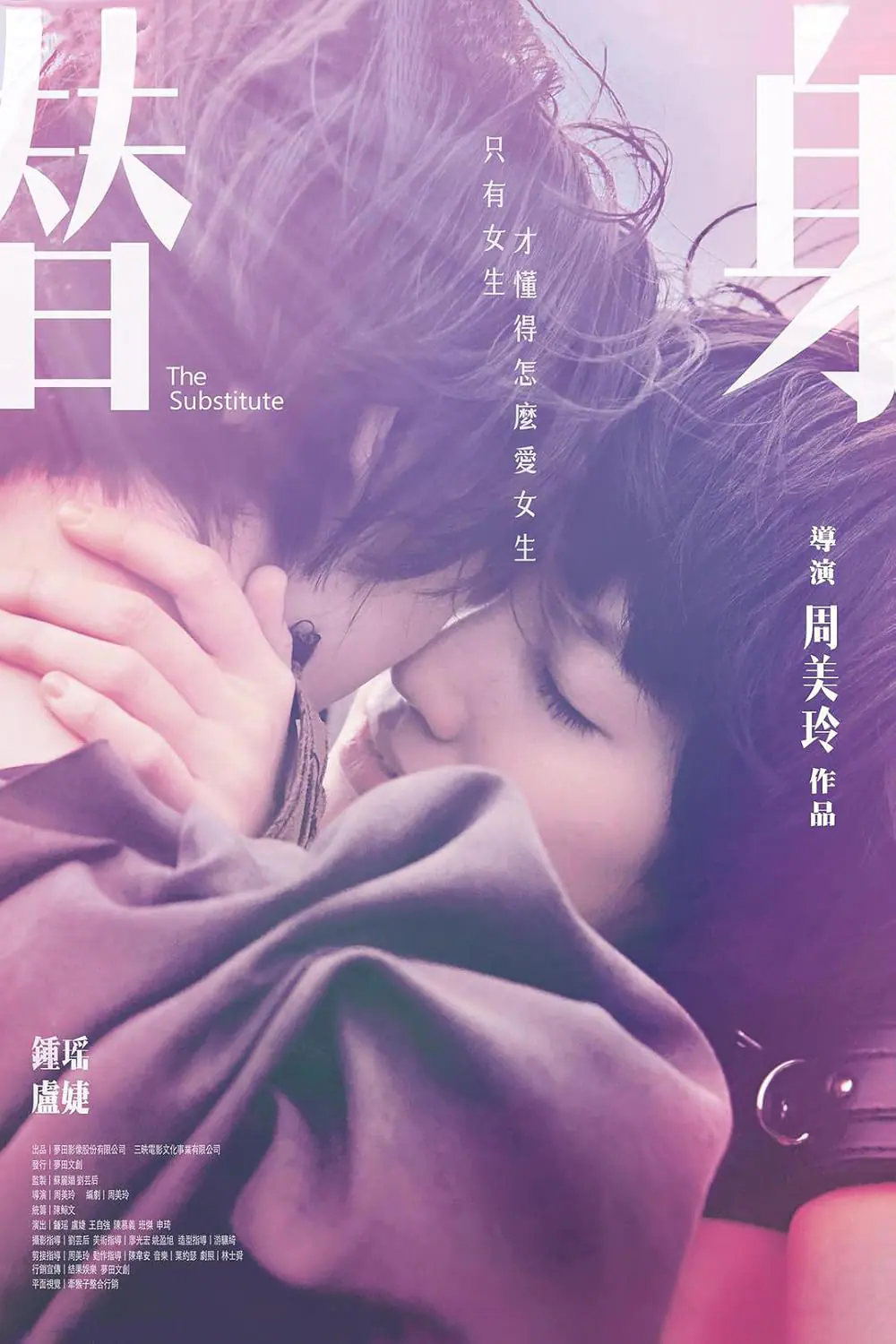
Directed by Zero Chou, a master of Taiwanese queer cinema, The Substitute (替身, 2017) is more than just a queer film that uncovers suppressed sexual orientation. It is a fierce and beautiful narrative of identity liberation. It follows two women who break free from the primal oppression of family to finally declare their true selves through the mirror of another wounded soul.
🌿 Moments Where This Film Resonates Deeply
- For souls weary of constant role-playingIt offers profound solace to those who feel they are living as “someone else’s substitute,” concealing their true selves due to parental expectations or societal duties.
- When two imperfect souls perfectly mirror each otherIt is highly recommended for those who long for an intimate solidarity and love where two women, each harboring their own deficiencies, embrace to heal wounds and become each other’s spectrum.
- To confront the solitude behind the glamorous spotlightIt appeals to the sensibilities of those who wish to savor the emotional shifts and mise-en-scène that unfold between the cold gymnasiums of Beijing and the humid sets of Taipei.
Why You Should Read to the End
This review offers an in-depth interpretation of how the two protagonists, bound by the sorrowful shackle of being “substitutes,” hold hands to emerge as the “true protagonists” on the stage of the world, capturing that brilliant moment of liberation.
🎞 Note Before Watching
Rather than focusing on physical sensationalism, this work is an emotion- and relationship-driven drama that densely traces the inner emptiness of the characters, their deepening feelings for one another, and the essence of their relationship. It focuses on delicately portraying the process of establishing self-identity and navigating the societal prejudices surrounding queer narratives.
🎬 Movie Information
- Title: The Substitute (替身, 2017)
- Director: Zero Chou (周美玲)
- Screenplay: Zero Chou (周美玲)
- Country: Taiwan
- Genre: Romance, Drama, Coming-of-Age
- Running Time: 87 minutes
- Platform: DVD, Chinese-language streaming platforms
- Cast:
- Aviis Zhong (鍾瑶) – Ni Ke (Niki)
- Jie Lu (路潔) – Han Lu (韓璐)
📖 The Substitute: The Divergent Trajectories of Two Women Who Became Substitutes [No Spoilers]
Han Lu, the captain of a Beijing judo team, grew up as a substitute for her older brother who died in childhood. Her mother, in the early stages of dementia, treats her not as a daughter but as her “dead son.” Consequently, Han Lu lives with a deep identity crisis concealed beneath a tough, tomboyish exterior.
One day, while longing for the confident and free-spirited Niki in the online space, Han Lu encounters her in person when Niki arrives as an exchange student. Drawn to each other’s stark differences through a judo match, the two quickly grow close. When Niki is cast as the lead in an action film, Han Lu becomes her stunt double. However, just before filming begins, Niki suddenly vanishes.
Three years later in Taipei, Han Lu, now a famous action star, is reunited with Niki, who has been living a grueling life on the run due to her father’s debts. Niki appears as Han Lu’s stunt double. With the roles of lead and double completely reversed, the two are swept once again into a tempest of emotions during a reunion charged with past anger and longing.
🥋 The Cruel Shackle of the ‘Substitute’ and the Symbolism of Patriarchal Deficiency
The core motif of the film, the “substitute” (替身), symbolizes the violent projection that patriarchal society inflicts upon women. The obsession shown by Han Lu’s mother represents a twisted grief born of the traditional Chinese preference for sons over daughters (zhongnan qingnv, 重男轻女). Forcing the male role onto her daughter to replace her deceased son acts as an oppressive force that entirely erases Han Lu’s worth as an autonomous woman.
The judo uniform and short hair Han Lu wears are not identities she chose for herself, but masks forced upon her to fill another’s void. Within this relentless cycle, Han Lu suppresses her identity and sexual orientation as a woman, hardening her isolated inner world.
🔄 The Role-Reversed Stunts: An Emotional Curve Mirroring Each Other
The first and second halves of the film maintain a symmetrical structure where the social status of Han Lu and Ni Ke is completely reversed. Han Lu, who was initially Ni Ke’s double, becomes the lead, and later, Ni Ke performs as the double for Han Lu’s dangerous cliff-jumping scene. This reversal of roles functions as a device that goes beyond a simple change in circumstance; by experiencing the other’s position, they gain a perfect understanding of each other’s loneliness and pain.
The precarious cliff-jump scene, in particular, is the moment where their relationship reaches its peak. By confirming their complete love and trust for each other—not as anyone else’s substitute—their long-held wounds finally begin to heal.
🔎 Reinterpreting the Ending: Casting Off the Mask to Face One’s True Self Through the Other
The ending of The Substitute presents a grand leap forward, as the two completely cast off the virtual space of the screen and the disguised roles of doubles to finally declare their authentic selves. The conclusion of the film is highly symbolic: instead of pursuing the glamorous lives of spotlighted actresses, they choose to begin anew as coaches, peacefully teaching judo together.
This ending signifies that they have chosen to end their lives as substitutes—conforming to the brilliant masks demanded by the world—and instead choose to exist by each other’s side as their most autonomous and complete selves.
- Han Lu and Ni Ke’s fresh start as judo coaches is an act of declaring that they have ended their lives as substitutes filling others’ voids and have instead reclaimed their complete autonomy.
- Though they have lost the external trappings of social fame and the gaze of others, they have successfully claimed the most vital core of life—their own dignity and true love—through these growing pains.
💬 The Substitute In-Depth FAQ: Limitations of Expression and Points of Reflection
Q1. The sudden shift in circumstances in the second half and the three-year gap feel somewhat contrived. What is the narrative interpretation of this?
Answer: It is true that the temporal leap and situational setup are directed somewhat dramatically to clearly illustrate the reversal of their substitute relationship. However, this can be interpreted as an aesthetic device designed to maximize the deep inner void the characters experience and to allow them to empathize fully with each other’s pain. It is precisely because of this three-year separation that their past immaturity gains the credibility needed to mature into a profound solidarity.
Q2. Does the flat and extreme depiction of homophobia through the male protagonist, Bi Sheng, detract from the film’s overall quality?
Answer: The blind hostility and homophobic remarks exhibited by the character Bi Sheng may feel somewhat conventional and one-dimensional. However, this functions primarily as an intentional directorial device to make visible the reality of the social pressure the two women face. By projecting the violent gaze of real-world society toward queer women into the symbolic figure of Bi Sheng, the director seeks to clearly visualize the invisible wall the protagonists must break through.
✨ The Substitute: A Radiant Territory of Solidarity Reached by Shedding the Mask
The Substitute is a work that demonstrates how those who have lived to fill the voids of others can restore their own dignity by reflecting one another. The film constantly asks us: “Are we living with our own true faces now, or are we living as substitutes defined by others?” For those of us in modern society who continuously edit ourselves to conform to the gaze and definitions of others, the struggle of these two women provides the courage to face our true selves.
“Love is not a roleplay of filling another’s void, but a liberating journey toward finding each other’s true face.”
✉️ Whose substitute are you living as right now?
In life, we often hide our true selves to meet the expectations or needs of others—whether as a parent’s ideal child, a company’s efficient component, or a partner’s perfect companion.
Are you standing tall as your authentic self by your own choice, or are you willingly wearing the mask of a substitute to protect someone precious to you? Please share your deepest thoughts in the comments.
🎬 Violet Screen’s Recommended Curation
- Our Love Story (연애담, 2016): A story that begins when Yoon-ju, an awkward art student, finds herself intensely drawn to Ji-soo, a free-spirited woman she crosses paths with at a convenience store and a junk shop.
- My First Summer (2020): A story of first love and healing shared between Claudia, who lives isolated from the world in a secluded forest home after her mother’s death, and Grace, a vibrant and warm-hearted girl who steps into her world.
To provide a more stable publishing environment, multilingual content, and better communication with our readers, we have moved our official publication to Substack.
All new film reviews and critical essays will be published on our new platform. This website will be closing down soon, so we would greatly appreciate it if you subscribed to our new space.
TODAY'S QUESTION
Which ending has stayed with you the longest?
Your answer isn't saved. Feel free to share it in the comments below.


You May Also Like

Aimée & Jaguar: The Most Fragile and Intense Solidarity Bloomed Amidst the Fires of War
Breaking the Girls: A Chilling Alliance Where Twisted Desire and Vivid Revenge Intersect