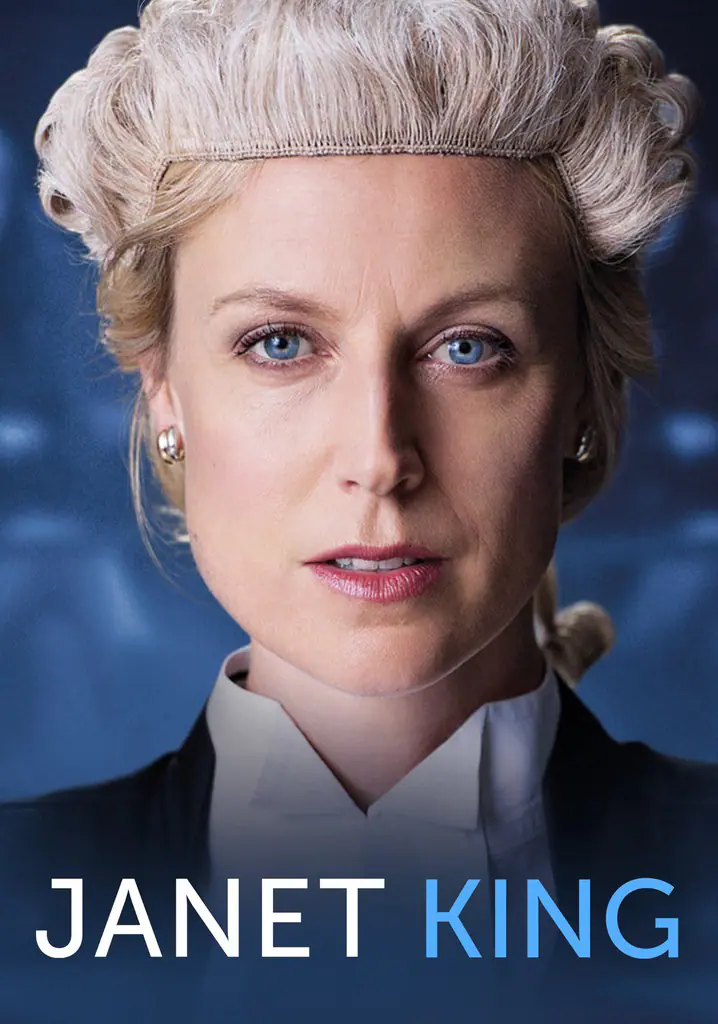
Janet King: A Judicial Interpretation of Salvation in Labor and Ruin in Love
When one armed with the most flawless logic is trapped in the deepest blind spot of emotion, what facet of humanity do we encounter? She is a sharp, relentless victor in the courtroom where she condemns the lives of others and the absurdities of society, yet she remains helplessly lost when facing the very relationships that sustain her own life. Janet King (2014) is an Australian courtroom thriller that coldly yet elegantly depicts the burning obsession blooming within the chilly air of the courtroom, and the weight of the deeply private loss one must pay as the price for that obsession.
🌿 Moments When This Drama Deeply Permeates
- When you want to confront the cold loneliness hidden behind the mask of the perfect professional demanded by the world.
- When you have experienced offering yourself at the altar of work just to numb the pain of loss.
- When you wish to witness the solidarity and collapse of mature, realistic women swaying on the boundary between devotion and obsession.
- Why you should read to the end: Through the narrative irony where a fierce victory in court leads to the most painful defeat in life, it deeply dissects the true meaning of human dignity.
🎞️ Notes Before Watching the Drama
This work densely covers complex legal battles and criminal investigation processes, and the level of psychological suppression and emotional conflict between characters is somewhat high. Rather than sensational depictions, it is a mature psychological thriller focusing on the internal tension generated by the trauma of loss and the collapse of relationships.
🎬 Drama Information
- Title: Janet King (2014–2017)
- Director: Peter Andrikidis, Grant Brown
- Screenplay: Jane Allen, Greg Haddrick
- Original Work: Spin-off of the TV series Crownies (2011)
- Country: Australia
- Genre: Courtroom Drama, Crime Thriller
- Running Time: 8 episodes per season (3 seasons aired in total)
- Platform: ABC, Acorn TV
- Cast: Marta Dusseldorp (as Janet King), Aimee Pedersen (as Ashleigh Larsson), Anita Hegh (as Bianca Grieve)
📖 Janet King, The Beginning of a Fracture Faced on the Border of Courtroom and Home [No Spoilers]
Returning as a prosecuting crown prosecutor after maternity leave, Janet King stands once again at the center of the courtroom as she takes on a complex web of gun crime and corruption cases involving the socially powerful. Armed with flawless logic and charisma, she appears to always go from strength to strength, but at home, she lives a life entirely immersed in her work, leaving all the burdens of domestic labor and childcare to her long-term partner, Ash. Amidst the pressure of an increasingly massive external conspiracy and case investigation, Janet’s isolation deepens, and the moment the balance between work and home begins to completely shatter, an unexpected tragedy turns her life upside down. With even her innermost sanctuary—which should be the safest place—invaded, Janet walks directly into the cold scene of the investigation to pursue the reality of the tragedy. On that path, she meets Federal Police Sergeant Bianca, entering a new phase of a relationship that goes beyond simple alignment.
⚖️ Janet King Interpretation: The Psychological Structure of Deficiency and Solidarity Constituted by Ash and Bianca
The two major relationships Janet King forms in the work serve as core axes that reveal her internal growth and defense mechanisms. The relationship with Ash, which dominates Seasons 1 and 2, symbolizes a perfect sanctuary and healing within a private space. Ash is the figure who embraces Janet not with the logic of the legal profession, but with pure emotional trust when she returns from fighting massive external corruption. Within this relationship, Janet could strip away her outer shell as a prosecutor and expose her vulnerability.
However, as Ash is murdered in Season 2 due to a warning crime directed at Janet, Janet’s psychological structure undergoes a severe inflection point. The loss of Ash leaves Janet with a massive sense of guilt that the pursuit of public justice brought about private ruin.
The new emotional line with Bianca Grieve that emerges in Season 3 expands not as a simple replacement for loss, but as healing through solidarity in the public sphere. Bianca is not a sanctuary that isolates Janet from danger like Ash did. As a police sergeant, she shares the exact same dangers as Janet and is a colleague who fights alongside her at the front lines of the crime scene. Through Bianca, Janet learns a new dimension of trust gained by sharing danger, rather than learning how to hide her vulnerability. The excellence of this drama lies in how it calmly portrays the process of an individual experiencing loss and the re-establishment of identity, without consuming the two women’s sexual orientation as a mere narrative element of conflict.
🔎 Reinterpretation of the Ending: Dignity and Declarative Unity Left by the Tragedy of Loss
The tragic ending of Ash’s death appears to leave an eternal fracture in Janet King’s worldview, but ultimately, it becomes the catalyst that completes the dignity of Janet as a character. The criminal forces snatched away her most precious partner to break Janet, but instead of collapsing or fleeing, Janet chooses to stand in the courtroom once again with cold rationality. This is an expression of her will to bestow honor upon her lover’s death through public justice, rather than sinking into private sorrow.
The subsequent flow leading to solidarity with Bianca demonstrates that life after the ending is by no means a repetition of the past. Janet lost her perfect sanctuary in Ash, but she gained Bianca as an equal subject capable of protecting each other even amidst danger. The ending of this drama is a structural victory that proves human dignity through systemic justice, rather than reducing a tragic loss to personal, private suffering. Learning how to live while carrying her grief, Janet autonomously reconstructs her life as a prosecutor and as a mother to her children.
❓ Janet King In-Depth Review: Modes of Female Representation and Narrative Validity
Q. Is Janet King a bad partner, or a multi-dimensional character who fulfilled her professional calling?
Some viewers criticize Janet King’s workaholism and indifference toward her partner as a selfish attitude that ruins the relationship. However, such immaturity and flaws are excellent aesthetic devices that smash the syntax of female characters who were previously standardized only as heroic or sacrificial figures in male-centered narratives. Her selfishness and obsession are not objects of moral condemnation; rather, they are reflections of the highly realistic and multi-dimensional anguish that a modern woman must face while conflicted between the two heavy values of ambition and family. By refraining from hastily glamorizing or punishing Janet, the work paradoxically asserts that the narrative of a flawed woman is also worthy of respect and exploration in its own right.
✨ Janet King, What is it That Makes Us Stand Until the Very End
Through Janet’s lonely figure from behind, this drama questions how noble and difficult it is to avoid letting go of the hand of the single person by your side, just as much as it is to establish social justice. If the grand values we pursue are actually tearing down the precious daily life right in front of our eyes, for what exactly are we fighting so fiercely? This cold courtroom thriller heavily warns that the space of solitude left by the obsession with justice is ultimately the full share of life that we must bear ourselves.
💬 Between Silence and Neglect, How Are We Proving Our Love?
Janet’s appearance—ignoring her loved one’s silence when they were by her side, and attempting to fill that vacancy with work only after losing them—resembles a facet within us. When a relationship with someone precious hitches, do you tend to confront it to solve the problem? Or, like Janet, do you choose a cowardly deferral from reality by immersing yourself in other work?
🕵️♀️ Another Trajectory of Relationships Suggested by Violet Screen
- Wentworth (2013–2021) – The Narrative of Franky and Bridget
- Reason for Recommendation: Within the extreme space of a prison, it crosses the forbidden boundary between an inmate and a counselor, showing an intense and deep solidarity between women that heals each other’s wounds and drives growth.
- Fingersmith (2005)
- Reason for Recommendation: It is a masterpiece that depicts the fatal attraction and solidarity of two women blooming amidst cold, deceptive conspiracies and class walls, rendered through delicate and classic mise-en-scène.
To provide a more stable publishing environment, multilingual content, and better communication with our readers, we have moved our official publication to Substack.
All new film reviews and critical essays will be published on our new platform. This website will be closing down soon, so we would greatly appreciate it if you subscribed to our new space.
TODAY'S QUESTION
Is there a film whose ending you wish had gone differently?
Your answer isn't saved. Feel free to share it in the comments below.


You May Also Like

Queendom (2025): From Nemeses to Soul Salvations, a True Interpretation of Love Attained Through Body-Swap GL

Lost Girl ‘Doccubus’ Ending Explained: The Structural Anatomy of Love Transcending the Impossible Boundary Between Human and Succubus