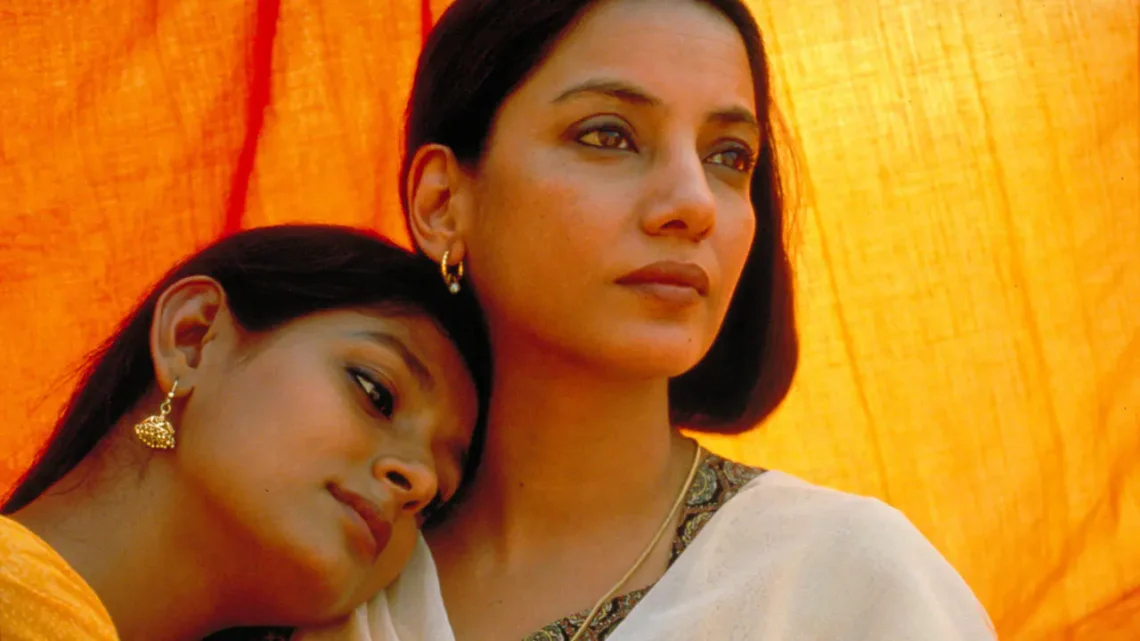
Flames Burning the Chains of Oppression: The Liberation of Female Narrative and Subversive Interpretation Proven by Fire
Isolation gnaws at the human soul from within, yet solidarity remains the most powerful light to fill those fractured crevices. Each of us, at some point in our lives, confronts our own invisible bars. Within the prisons built in the name of others’ expectations and social norms, facing one’s true self occasionally demands a monumental courage—one fierce enough to burn everything down.
This film is not merely a record of someone else’s life. The moment these two existences, suffocating under the weight of suppressed daily routines, discover and look straight at each other, the primal desire for liberation dormant within us awakens in tandem.
🌿 Moments When This Film Penetrates Deeply
- The moment a soul, withered and drained of its warmth under the intricate shackles of tradition, gradually reclaims its vitality.
- The moment a wordless gaze, quietly observing each other’s wounds, offers a deeper consolation than a hundred lines of dialogue.
- The moment of liberation when they resolve to cast off all moral censorship and guilt, choosing instead to desire solely each other’s existence.
The Reason to Read to the End: This review goes beyond the fossilized narratives of classical Indian texts to sharply dissect the structural meaning of ‘dignity and independence’—a theme that remains urgently valid for us living in 2026.
🎞 Note Before Viewing
Rather than focusing on physical exposure or provocative sensations, this work is a relationship-driven narrative that intimately traces the emotional communion and shifting curves of sentiment between two women blooming amidst the contradictions of the patriarchal system.
🎬 Film Information
- Title: Fire (1996)
- Director: Deepa Mehta
- Screenplay: Deepa Mehta
- Original Work: Based on the short story Lihaaf by Ismat Chughtai
- Country: India / Canada
- Genre: Romance / Drama / Social Criticism
- Running Time: 104 minutes
- Platform: Netflix (selected countries), YouTube (Paid), DVD
- Cast: Shabana Azmi (as Radha), Nandita Das (as Sita)
📖 A Chronicle of Oppression and Awakening Drawn by Fire [No Spoilers]
Under the strict discipline of a traditional joint Indian household, the new bride Sita begins a suffocating daily life alongside her indifferent husband, Jatin. Even after marriage, Jatin continues his relationship with his Chinese girlfriend, Julie, utterly ignoring Sita. Consequently, Sita confronts the harsh reality of performing domestic labor in a scorching kitchen all day long while caring for Biji, her paralyzed mother-in-law.
Radha, the other daughter-in-law of the household, has also been living in deep deprivation, forced for thirteen years into a soul-crushing ritual of religious asceticism by her husband, Ashok.
The untamed energy of the young Sita, who refuses submission, begins to shake the silent interior of Radha. The two resolve to become each other’s sole salvation and lovers, filling their respective voids at the very heart of the patriarchy, and step into a massive vortex of conflict.
🔥 Power Structures and the Aesthetics of Subversion in Fire: Interpreting Radha and Sita’s Desire
The Interior of the Joint Household as a Space of Oppression and the Curve of Emotional Shifts
The household within the film functions as an intricate prison that exploits women’s labor and sexuality in the name of tradition and religion. Ashok’s asceticism and Jatin’s indifference are by no means individual aberrations; they represent the archetypal ways in which patriarchal power structures marginalize women.
Within this suffocating space, the communion between Radha and Sita expands beyond mere escapism into a political act that fractures the system. The reclamation of agency is realized only through the physical solidarity of gazing at and touching one another, vividly illustrating the trajectory of liberation as women who once internalized oppression dismantle the norms themselves.
🔎 Reinterpretation of the Ending: A Declaration of Dignity and Independence Blooming Amid the Flames
In the final scene of the film, when the sari catches fire under Ashok’s passive compliance, Radha extinguishes the flames herself and walks out of the space. This conclusion proves that the relationship between the two is not a fragile escape involving running away to hide from the family; instead, it leaves a permanent rupture signifying an absolute break from the existing world.
Rather than completely losing herself to the sacrifice and the stigma of the ‘barren sinner’ imposed by the patriarchy, Radha gains absolute control over her own emotions and body, standing at the pinnacle of her growth. Realizing the metaphor of the person “who wants to see the ocean,” told by her mother during childhood, the ending where she reunites with Sita at a rain-slicked temple demonstrates that their union transcends mere romance to become a matter of collaborative survival.
This finale is a structural declaration of liberation by women who reject the yoke of obedience packaged as religious myth, recreating their lives through their own flames.
💭 Debates and Contemporary Implications Left by Fire
Q. How should we view the criticism that the film portrays homosexuality merely as an alternative escape from patriarchy?
Some critics point out that the union of the two protagonists resembles a passive escape stemming from their husbands’ neglect and deprivation. However, this is a reductive interpretation that overlooks the specific specificities of Indian society and the monolithic wall of patriarchy.
The film depicts the relationship between the two women not simply as a choice of sexual orientation, but as an existential solidarity where women who have lost their selves become mirrors for one another, awakening their hidden agency. Therefore, their union should rightly be read not as an escape, but as the most active form of social struggle and a journey toward salvation.
Q. Is the controversy valid regarding the scene where Radha is harmed at the end being a reproduction of the traditional practice of Sati?
This is a highly sophisticated aesthetic direction that modernly subverts the myth from the classical Indian epic Ramayana, where the goddess Sita had to enter the fire to prove her purity. Radha controls the flames generated by her husband’s anger by herself, survives, and walks out. This is an directorial device that directly upends the myth rather than blindly reproducing tradition.
Fire is no longer reinterpreted as a tool to purify or punish women, but as a medium of purification that burns away past subjugation and allows them to be reborn as new beings. How this is received is left entirely to the judgment of the audience.
✨ A Milestone of Noble Human Dignity Built Upon the Ashes of Patriarchy
This film throws questions at us living in contemporary society that remain valid and poignant, making its 1996 production date fade into irrelevance. To modern individuals living with their true selves castrated while trapped in roles demanded by institutions and customs, the choice made by Radha and Sita solemnly questions where the essence of true salvation and love resides.
This work is a grand declaration that fully encapsulates the weight of courage and pain we must endure to sever the invisible chains of social oppression. True liberation is not about obtaining a freedom permitted by others, but is completed only when one walks into the flames of life by oneself to draw up one’s own agency.
💬 Insight Awakening the Flame Within Us
“We spend our entire lives complacent inside a safe prison called tradition and the gaze of others. If a truth hot enough to burn your soul comes to find you, would you willingly open the door of that comfortable prison and walk out into the flames?”
🎬 Continued Curated Recommendations from Violet Screen
- Between the Seasons (2018) [Genre: Melodrama/Drama]
- Reason for Recommendation: It leaves a heavy, lingering resonance by intimately and densely portraying the emotional lines of two women walking cautiously together like a three-legged race, sharing each other’s secrets and wounds within the closed space of a small provincial city.
- Margarita with a Straw (2014)
- Reason for Recommendation: This is a gem of a film outside the mainstream domain, dealing with the love and identity confusion experienced by Laila, an Indian woman with cerebral palsy, as she leaves for New York. The vitality found in the communion of two women who honestly and confidently charge toward their desires—even when facing the multi-layered walls of disability and queerness—conveys a bright, solid sense of liberation quite distinct from the static depth of Fire.
To provide a more stable publishing environment, multilingual content, and better communication with our readers, we have moved our official publication to Substack.
All new film reviews and critical essays will be published on our new platform. This website will be closing down soon, so we would greatly appreciate it if you subscribed to our new space.
TODAY'S QUESTION
Is there a hidden gem you always recommend to friends?
Your answer isn't saved. Feel free to share it in the comments below.


You May Also Like

Uranus 2324: Eternal Reunion in the Multiverse, an Interpretation of Isolation and Solidarity as Love

Love’s Lone Flower (2005): A Sad and Radiant Chronicle of Women Who Bloomed and Faded Alone in the Midst of Turbulent History
