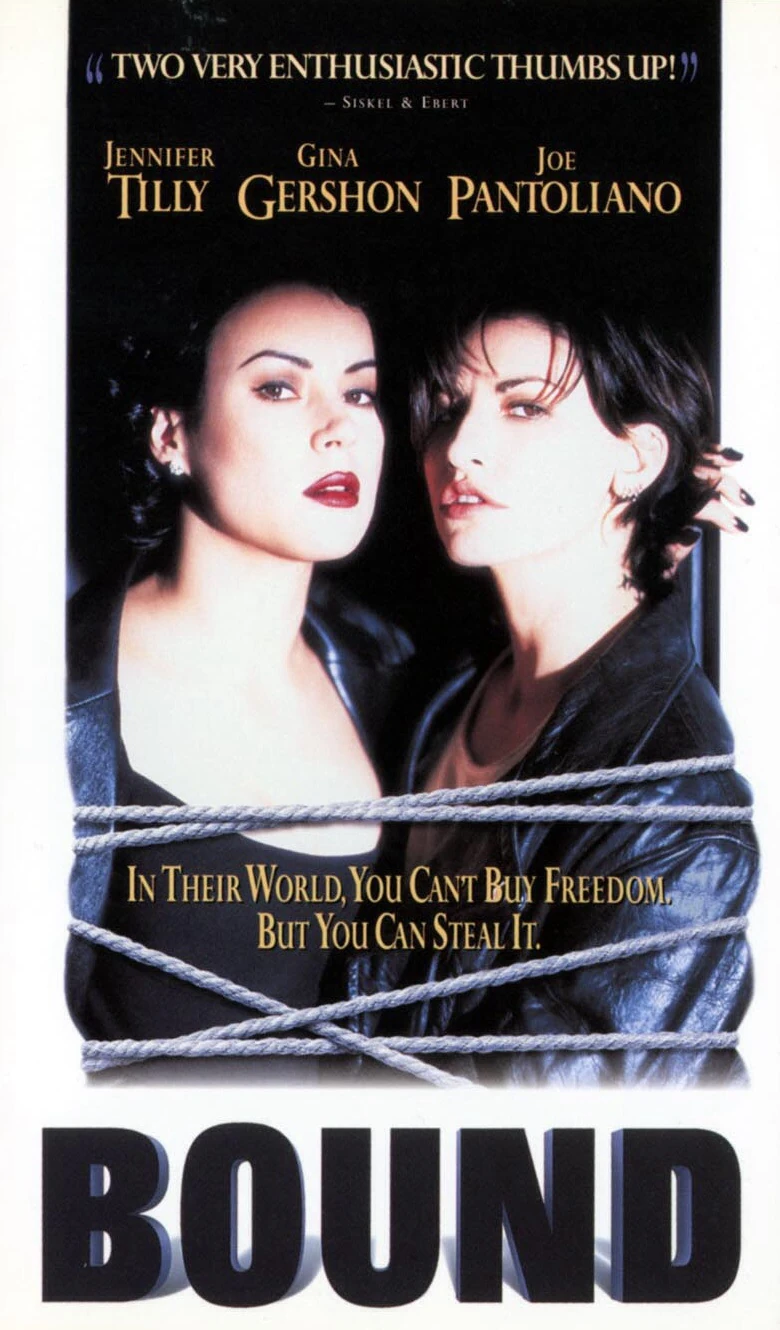
Bound (1996) Review: The Essence of Queer Noir Demonstrated by a Perfect Female Narrative
Desire blooming within an isolated space is always raw and perilous. The question of whether to remain complacent within a rigid prison constructed by others, or to reach out toward one another despite risking total destruction, never fails to stir our emotions.
The film Bound transcends the conventions of the standard crime thriller, serving as a masterfully crafted piece that sensually captures the fierce solidarity and love of two women fracturing an oppressive power structure.
🌿 Moments When This Film Resonates Deeply
- When you wish to boldly shatter the safe boundaries prescribed by society and reshape your life entirely through your own autonomy.
- When you desire to experience subversive pleasure and intense psychological tension within noir, a genre traditionally coded as male-centric.
- When you want to witness the chilling cleverness of human nature and the power of instinctive trust, both obscured by superficial prejudice.
Ultimately, the reason to read this review to the end is to fully appreciate the absolute union of two women who transcended the limitations of their era, along with the liberating aesthetics of the film’s conclusion.
🎞 Notes Before Viewing
In depicting the ruthlessness of the criminal underworld and the intense mutual attraction between the characters, this work contains a somewhat high level of violence and sensual sexual depictions. However, these do not function as mere superficial stimulation; instead, they serve as core narrative devices that meticulously build the relationship and psychological shifts between the two protagonists.
🎬 Film Information
- Title: Bound (1996)
- Directors: Lana Wachowski, Lilly Wachowski
- Screenplay: Lana Wachowski, Lilly Wachowski
- Country: United States
- Genre: Crime, Thriller, Noir, Romance
- Running Time: 109 minutes
- Platforms: WAVVE, WATCHA, Netflix (Availability varies by release window and streaming region)
- Cast: Jennifer Tilly, Gina Gershon, Joe Pantoliano, Christopher Meloni
📖 Bound: The Perilous Complicity and Altered Destinies of Two Women [No Spoilers]
Corky, an ex-convict and plumber recently released from prison, experiences a powerful attraction when she crosses paths with Violet, a captivating woman living next door to the apartment Corky is remodeling. Living a suffocating life under the shadow of her violent lover Caesar—who manages funds for the mafia—Violet extends a subtle temptation to Corky, and the two rapidly develop a deep emotional and physical relationship.
When Caesar temporarily stores $2 million of the syndicate’s money in the apartment, Violet proposes a highly dangerous plan to Corky: steal the cash and run away together to escape this suffocating prison. Leveraging the brutal inner workings of the mafia and Caesar’s paranoia, they devise a flawless alibi. However, as minor, unexpected variables arise, their conspiracy begins to spiral toward an unpredictable catastrophe and a precarious crossroads of life and death.
⛓️ The Subversion of Power Structures via Gaze and Space
The most prominent aesthetic feature in Bound lies in the arrangement of space and the gaze occupied by the two characters. While the environment Violet inhabits is a lavish yet closed prison exposed to mafia surveillance and violence, the space where Corky works is an emancipatory domain where walls are torn down and plumbing is repaired.
The Wachowskis visualize the psychological bond between the two through a mise-en-scène of white, black, and intense red tones. While the male characters operate under the illusion that they hold power through coarse language and brute force, the two women build an emotional solidarity through sound and gaze across a single wall, completely dismantling the male-dominated matrix of power from the inside out.
🔑 Autonomous Characterization Transcending Queer Noir Archetypes
This work entirely avoids the pitfall of externalization that conventional Hollywood films often commit when portraying female queer relationships. Violet, who superficially appears to be a passive “trophy wife,” actually demonstrates the essence of a vampiric, feminine femme fatale, orchestrating the board and manipulating the characters with supreme intelligence.
Corky, though wearing the exterior of a masculine antihero, does not seek to possess Violet; instead, she exists as a partner who fully trusts Violet’s autonomous planning. Within their relational dynamic, sexual identity does not function as a deficiency to be overcome or a catalyst for tragedy, but rather as an absolute indicator of mutual recognition and the definitive engine driving their escape.
🔎 Reinterpreting the Ending: Absolute Concurrence Shattering a World of Suspicion
In the latter half of the film, even at the critical juncture where the plan goes awry due to Caesar’s frantic rampage and Corky is bound, the trust between the two women allows for no fracture. Amidst a succession of precarious lies under interrogation regarding the whereabouts of the money, Violet successfully executes Caesar by turning the mafia’s own vocabulary—violence and suspicion—against him.
This dramatic resolution signifies more than a successful heist; it proclaims that by holding hands, they have finally achieved total liberation from the world of patriarchal power. The image of the two stepping into the same car, leaving behind the apartment stained with blood and filth, demonstrates that what they have gained is not merely a vast sum of capital, but dignity toward one another and the territory of an autonomous life.
The silent trust shared by the two women was the most powerful weapon destroying the male-centric world of suspicion.
💬 Bound: Interpretations on Female Representation and Generic Achievement
Q. How does this work overcome the limitations of the traditional ‘femme fatale’ in classic noir?
In traditional noir cinema, the femme fatale was frequently consumed as an instrumental or inherently evil entity that drives the male protagonist to ruin. However, Violet in Bound is depicted as an agent who designs the parameters and acts independently for her own desire and survival. The film secures psychological dimensionality for the character by reinterpreting her femininity not as a deceptive weapon, but as a clever tactic that blinds the men around her.
Q. What distinguishes the 1990s queer narrative presented in this film?
Unlike numerous contemporary queer films of that era that concluded with social prejudice, internal anguish, or tragic destruction, this work does not treat the protagonists’ identity as an object of guilt. Queer identity is merely a natural background unfolding the narrative and the foundation upon which the two firmly unite; it possesses a distinct modernity in that it simultaneously achieves generic pleasure and romantic liberation.
✨ Bound: The Eternal Liberation Attained by Those Who Joined Hands
The implication delivered by the film’s conclusion is distinct: to find absolute autonomy within a system of class and violence tightly woven by society, an individual must possess the courage to willingly connect and align with another.
Without being confined to the generic frameworks of mere romance or crime thrillers, the journey of these two women—who shattered systemic walls through trust, an emotion simultaneously most vulnerable and resilient—resonates deeply today. The most perfect escape erasing the limitations of the system begins with absolute faith in one another.
🖤 “Do you know the difference between trusting someone and relying on them?”
Before entrusting their lives to one another, Violet and Corky first sought to read each other’s breath and sincerity across the dividing wall.
In a cold world where suspicion has become a virtue, have you ever fully trusted someone, risking everything to alter the trajectory of your life? Or do you still remain behind a wall that is safe, yet suffocating?
🔮 Solidary Narrative Recommendations Capturing the Attention of Violet Screen
- Love Lies Bleeding (2024)
- Reason for Recommendation: A crime thriller depicting the frantic love of two women set against an oppressive Texas backdrop. It demonstrates an excellent, contemporary intensity that inherits the raw texture and neo-noir energy of Bound.
- Disobedience (2017)
- Reason for Recommendation: Dealing with the forbidden love and repression of two women reunited within the closed space of a strict Orthodox Jewish community, it precisely delineates a narrative of emotional density and autonomous growth exploding within a static atmosphere.
To provide a more stable publishing environment, multilingual content, and better communication with our readers, we have moved our official publication to Substack.
All new film reviews and critical essays will be published on our new platform. This website will be closing down soon, so we would greatly appreciate it if you subscribed to our new space.
TODAY'S QUESTION
Which ending has stayed with you the longest?
Your answer isn't saved. Feel free to share it in the comments below.


You May Also Like

Candy Rain (2008) Film Review & Interpretation: A Solidarity of Four Colors Born of Isolation and Longing

Vicky Cristina Barcelona: Artistic Solidarity of Two Women Filling Each Other’s Voids and the Collapse of Their Relationship